

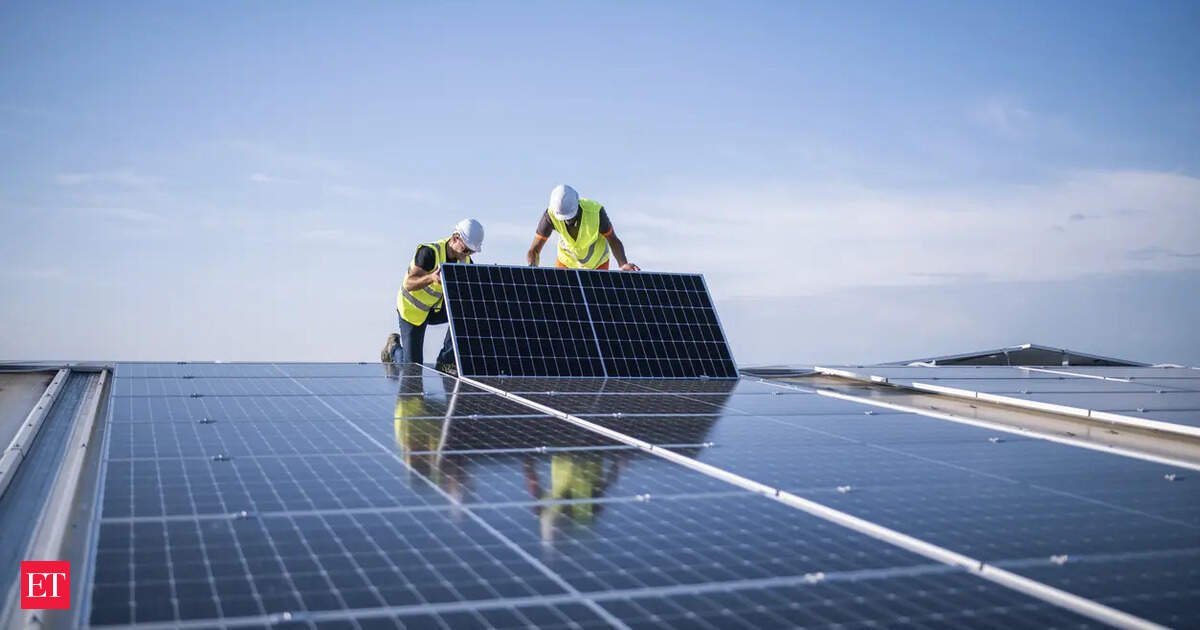
The utility-linked aggregation model under the scheme is designed to speed up implementation, particularly among underserved households.
Under the model, around 3 million rooftop solar installations have already been planned across states, with utilities playing a key role in facilitating faster adoption and execution.
This will benefit families consuming between 1 kW and 3 kW of electricity, he said. With more than 6.5 million applications already in the pipeline, the scheme is witnessing strong public participation and unprecedented momentum across the country, he said.
More than ₹22,750 crore in subsidies has been disbursed, including ₹2,743 crore in May alone.

Rooftop solar now accounts for nearly 45% of residential solar capacity, with deployment growth rising to 85% during 2024-26.
The scheme was launched in February 2024 with an outlay of ₹75,021 crore, with over 10 million households registered on the national portal.The minister launched a WhatsApp chat bot for easier registration by interested consumers. ET reported earlier the government was planning a fresh push for the scheme by addressing queries by a WhatsApp-based bot that will allow households to estimate rooftop solar subsidies and installation costs.
According to a report released by the Council on Energy, Environment and Water (CEEW) at the event, 57% of households surveyed by the agency were aware of the potential of rooftop solar in both rural and urban areas.
However, the study suggested that India’s next rooftop solar challenge is not awareness but converting interested households to install solar panels.