

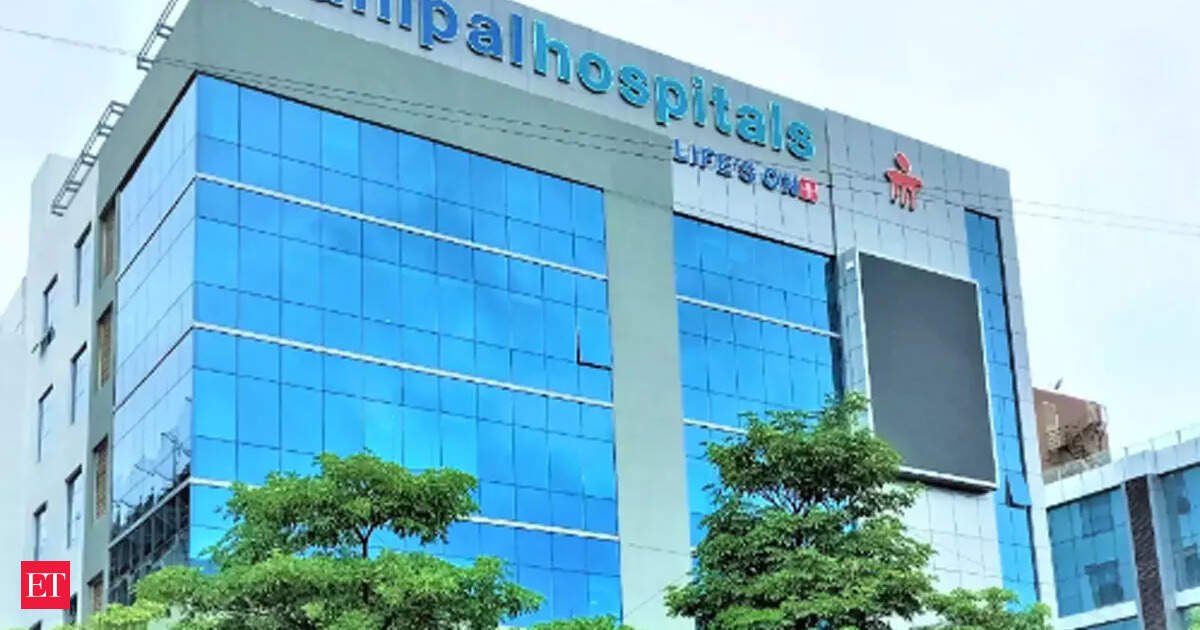
The property comprises three basement levels, a ground floor and 10 upper floors. Manipal Health Enterprises will pay a starting monthly rent of Rs 1.27 crore, translating into a rental rate of Rs 52 per sq ft per month. As part of the transaction, the company has provided a security deposit of Rs 7.64 crore.
Earlier this month, the company acquired a hospital property in Mumbai’s western suburb of Andheri for Rs 495 crore, marking one of the country’s biggest healthcare real estate transactions this year.
The healthcare operator has leased this multi-speciality hospital building at Venkatala, Yelahanka, developed by JKC Varma & Other, under a fresh lease agreement for a tenure of 29 years and 11 months, showed documents accessed through Propstack, a realty data analytics platform.
The lease agreement provides for a rent escalation of 10% in the sixth year. Thereafter, rentals will increase by 15% every three years for the remainder of the lease tenure, substantially increasing the overall rental commitment over the nearly three-decade period.

Based on the initial rent and the agreed escalation structure, the total rental outgo over the 29-year-and-11-month lease term works out to approximately Rs 816.12 crore.
Manipal Health Enterprises has been expanding across major Indian cities through acquisitions, brownfield projects and expansion of existing facilities.Manipal Hospitals, among India’s largest healthcare providers, widened its national footprint through the acquisitions of AMRI Hospitals in September 2023 and Medica in April 2024. The combined network now operates 37 hospitals across 19 cities with capacity of more than 10,500 beds and serves over 7 million patients annually.
ET’s email query to Manipal Health Enterprises remained unanswered until press time.
The transaction highlights the increasing preference among healthcare operators for long-term occupancy of institutional-grade assets in major urban markets. Bengaluru continues to see strong demand across healthcare, office and residential real estate segments, supported by sustained economic and population growth.
Large-format hospital assets typically involve long-duration lease structures given the significant investments required for medical equipment, fit-outs and operational infrastructure. Such arrangements provide occupiers with long-term business certainty while ensuring stable rental income for property owners.
Healthcare real estate is emerging as one of India’s fastest-growing institutional asset classes, driven by expanding hospital networks, rising healthcare demand and long-term occupancy requirements.
Unlike conventional commercial assets, hospitals typically require significant investments in equipment and fit-outs, making long-duration leases critical for operational stability. Transactions of this scale also highlight the growing convergence of healthcare and real estate, as operators increasingly secure strategic assets in key urban markets to support future expansion.