

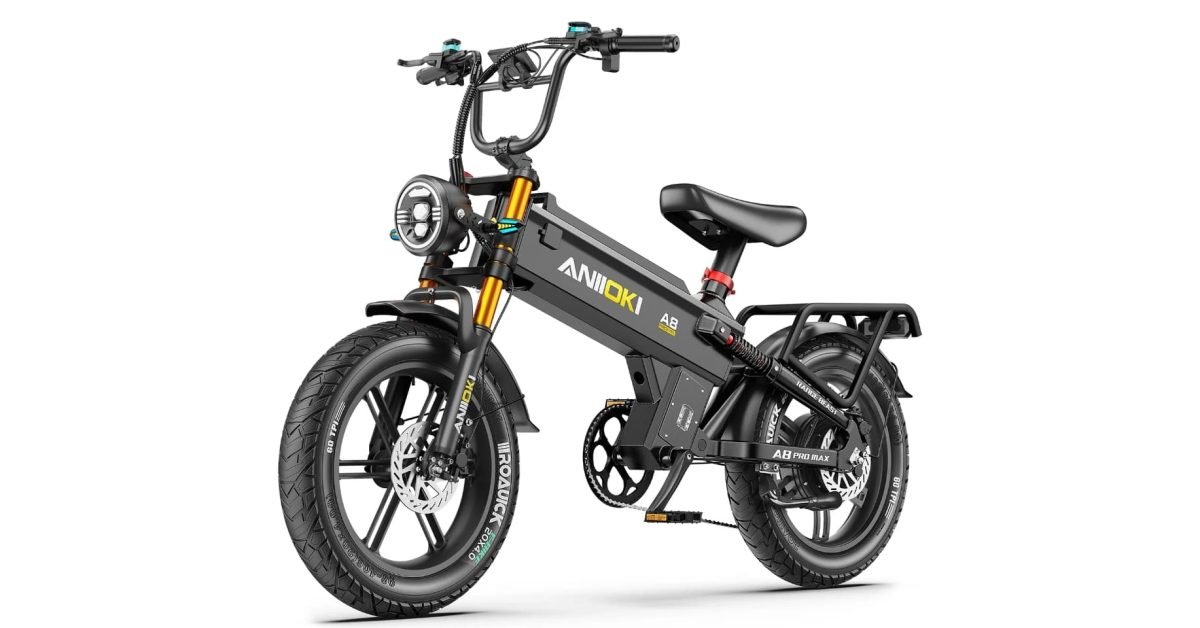
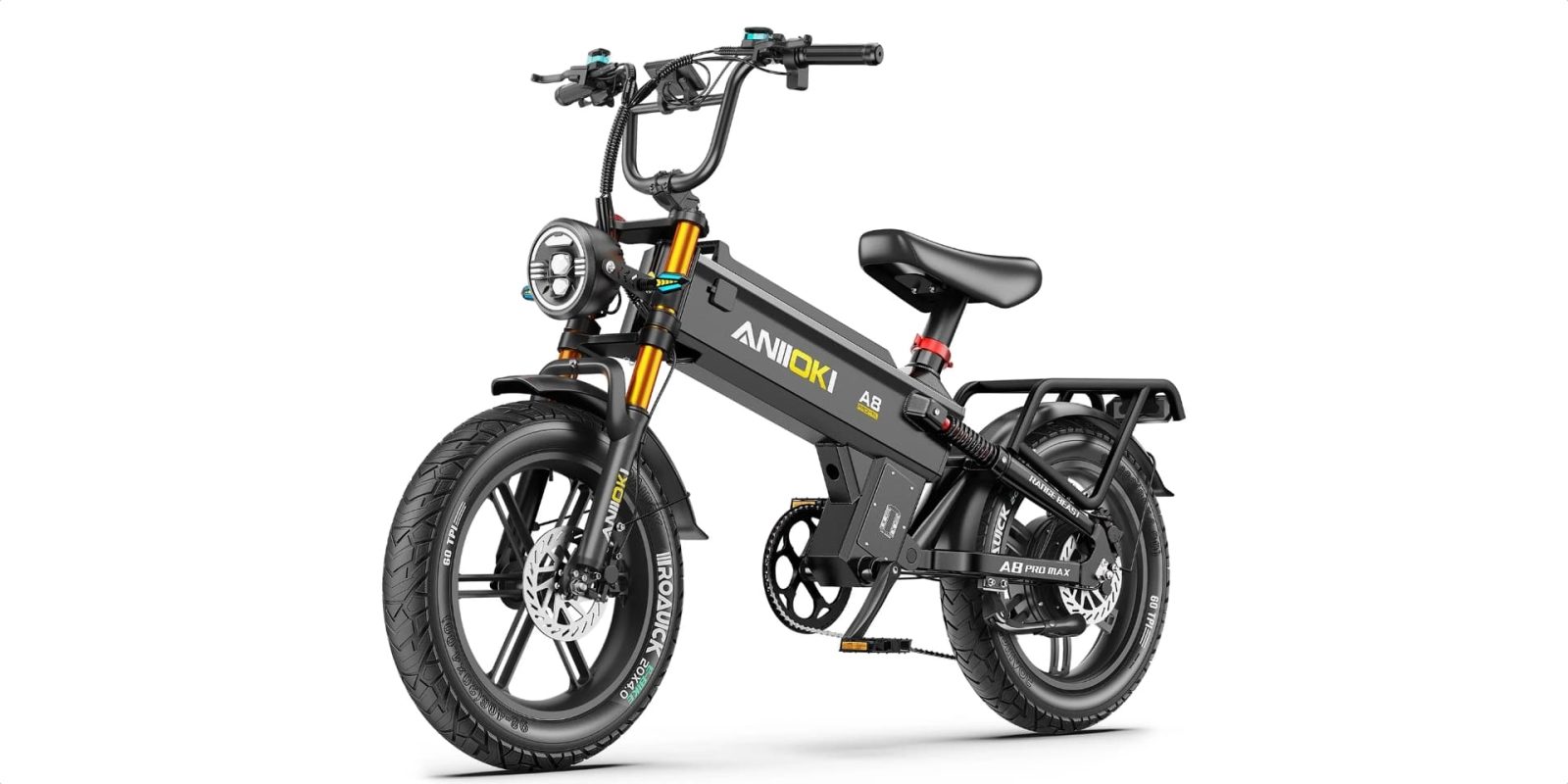
If there’s one trend that has defined the direct-to-consumer e-bike industry over the last few years, it’s the relentless race toward bigger numbers. Bigger batteries. Bigger motors. Higher top speeds. And now Aniioki has unveiled what may be one of the most extreme examples yet.
The company’s new A9 Pro Max Dual Motor 2.0 arrives with up to 6,000 watts of peak motor power, a claimed top speed of well above 50 mph (80 km/h) depending on the version, and battery options topping out at a staggering 5 kWh. Those numbers go beyond just big e-bike figures and pass well into legitimate electric motorcycle numbers.
At first glance, the A9 looks like a fat tire e-bike. It has pedals, a bicycle saddle, and 26×4.8-inch tires. The US $2,899 price tag isn’t even that lofty by high-power electric bike standards. Look a bit closer, though, and it quickly becomes clear that this machine is playing an entirely different game.
And while you could pedal it, those massive motors and the tempting throttle mean that the pedals are likely to become a set of splayed footrests for most people.
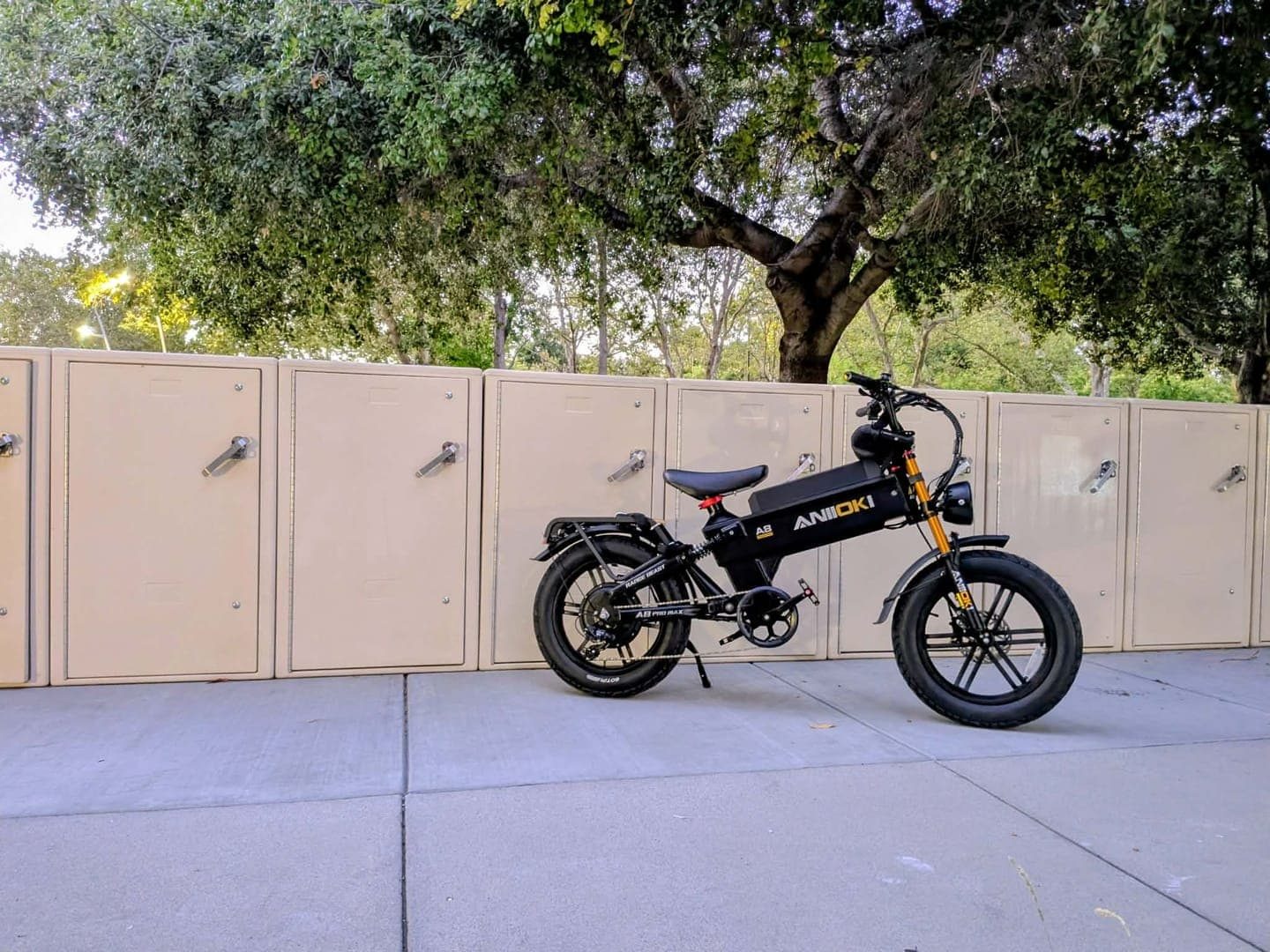
Aniioki is offering the bike in three different configurations.
The entry-level 60V 2.0 version uses dual 2,500W motors (6,000W peak combined) and reaches claimed speeds of 40-45 mph (64-70 km/h).
Step up to the 60V 3.0 model and output increases to dual 3,000W motors (7,000W peak combined), bumping claimed top speed to 51-55 mph (82-88 km/h).
Then there’s the flagship 72V version, which retains the dual 3,000W motors but pairs them with a higher-voltage electrical system and 72V battery. That pushes claimed speeds to between 54-60 mph (87-98 km/h) while also increasing torque, controller output, and climbing ability.
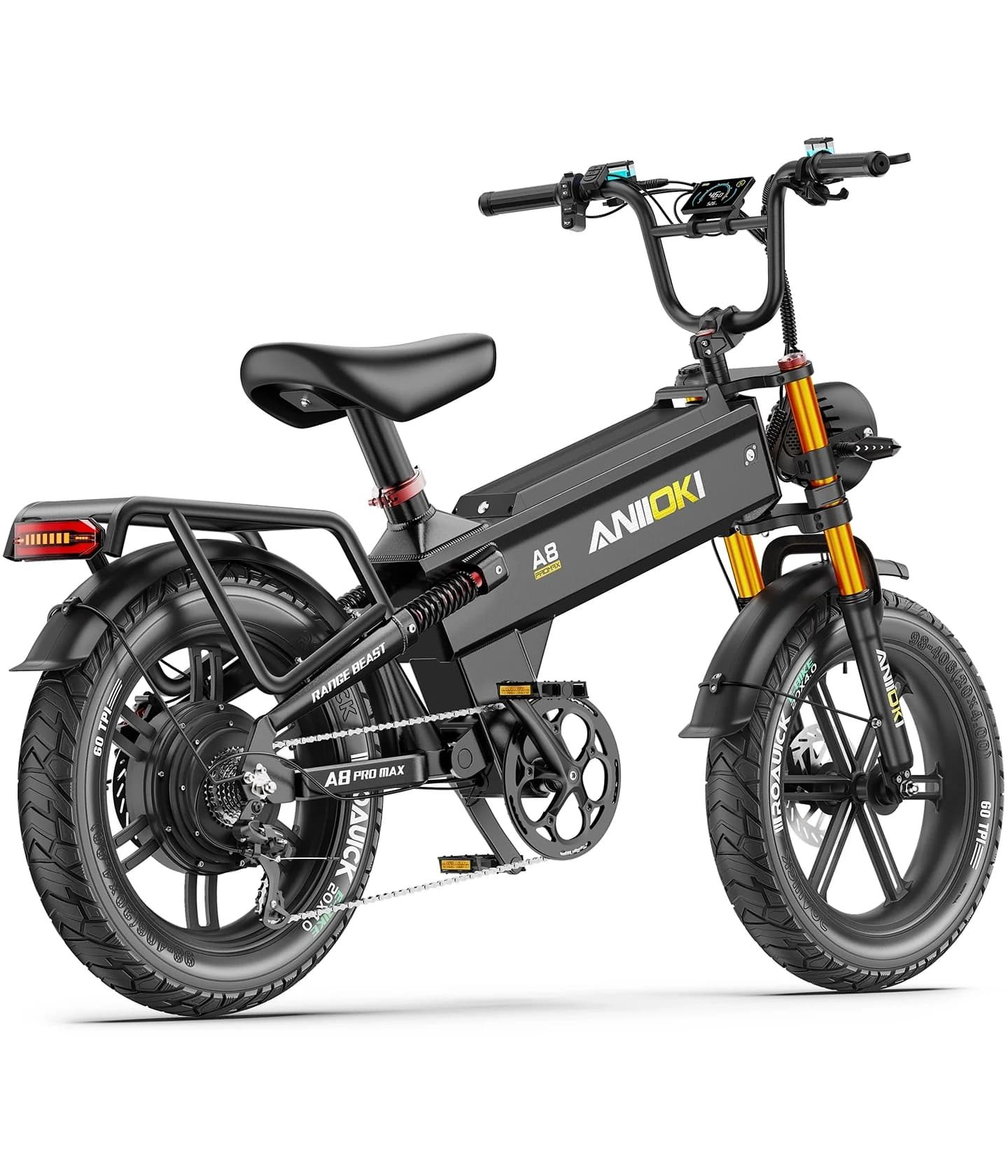
Those battery packs deserve some attention of their own. The 60V models are available with either 70Ah (4,200 Wh) or 80Ah (4,800 Wh) batteries. For comparison, many commuter e-bikes today carry around 600-800 Wh. Even cargo bikes often struggle to break 1,000 Wh.
A 5 kWh battery is entering small electric motorcycle territory, and in fact does surpass the battery capacity of many electric scooters and mini-motorcycles.
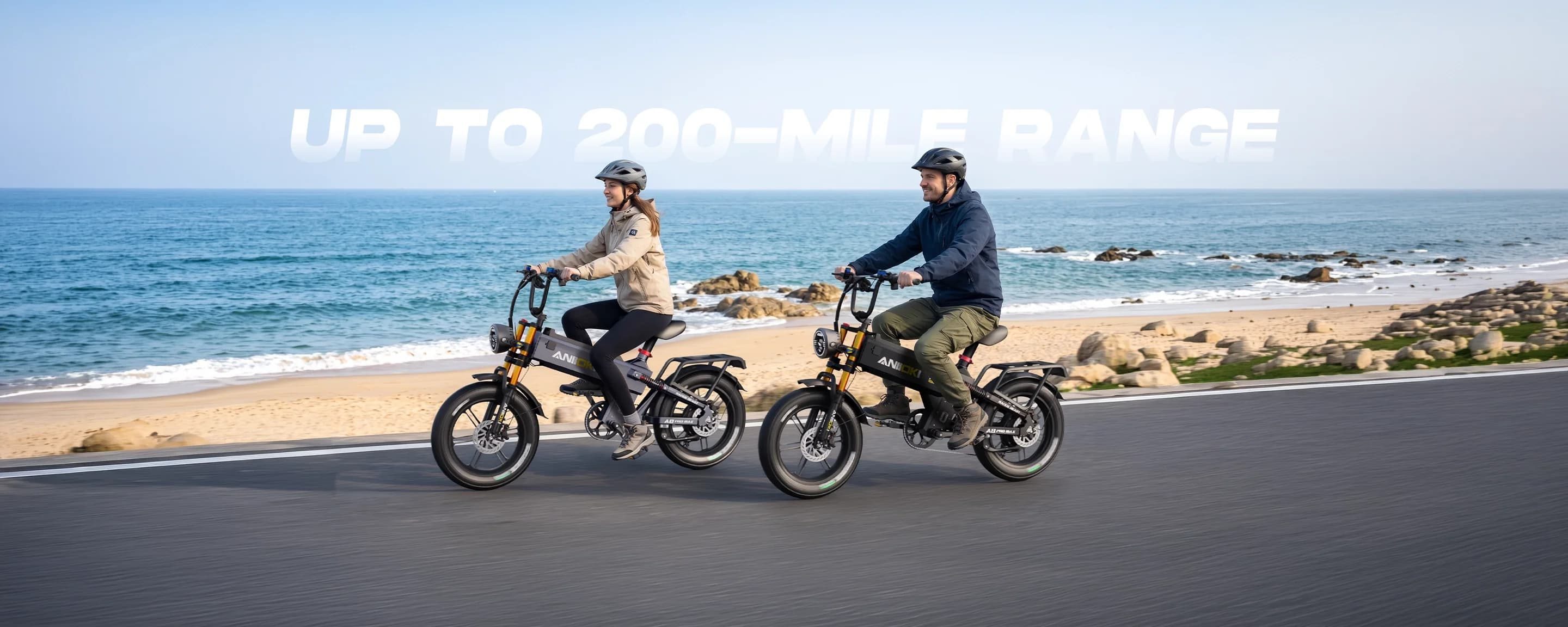
Aniioki claims up to 200 miles (320 km) of pedal-assist range under ideal conditions, though like all range estimates, actual performance will depend heavily on speed, terrain, rider weight, and how much throttle versus pedaling is involved.
The company has also focused heavily on safety and durability, highlighting a 4 mm-thick aluminum battery enclosure, semi-solid blade battery cells, battery management system protections, and a patented frame claimed to be twice as strong as conventional bicycle frames while supporting riders up to 400 lb (180 kg).
Stopping power has also received considerable attention. The company uses CBS (combined braking system) paired with oversized 300 mm brake rotors. The flagship 72V model upgrades further with eight-piston front calipers and six-piston rear calipers, hardware more commonly associated with motorcycles than bicycles.
And speaking again of motorcycles, this is where we have to address the elephant in the room.
Yes, it has pedals.
But once you’re talking about 50-plus mph, 6-7 kW of motor power, and a battery larger than many electric motorcycles, calling something an “e-bike” becomes increasingly difficult to justify outside of marketing language. Of course, we have to remember that the term “e-bike” is largely colloquial and rarely exists in any legal frameworks. For example, even California, which has some of the more strict interpretations of the three-class system, never uses the term “e-bike”. The vehicle we’re all thinking of is legally known as an “electric bicycle”, which is why “e-bikes” have long been a catchall for everything from cute little 250W European electric bicycles to 80 kW high power electric motorcycles.
So the argument of whether or not this thing is an e-bike is somewhat moot. The real question is whether or not it’s an electric bicycle. And legally speaking, it’s not.
In most jurisdictions, this would not qualify as a legal electric bicycle under Class 1, 2, or 3 definitions. Those regulations typically cap assisted speeds at 20-28 mph and motor power around 750 watts in the US. Depending on where it’s operated, the A9 Pro Max is likely much more appropriately categorized as an electric moped or lightweight electric motorcycle.
That doesn’t mean machines like this shouldn’t exist. There’s clearly a growing market for riders who want something that sits between an e-bike and a full motorcycle. Sales are booming, and the dollars speak for themselves. But it does highlight an increasingly awkward reality in the industry: simply bolting pedals onto an electric motorcycle doesn’t automatically make it an electric bicycle – at least not as far as the law is concerned.


FTC: We use income earning auto affiliate links. More.