

This is part of a series that celebrates border towns: the world’s most vibrant cultural crossroads—and its most contested frontiers.
As I step naked into the sauna, my skin immediately erupts with sweat. It’s well over 200 degrees Fahrenheit, and my throat burns with the intake of each breath. In the corner, hanging from a hook, is a leg of ham.
“For Easter!” exclaims my host, Reimi Kerdt, “This is a traditional Seto smoke sauna. We keep the windows closed for the whole day to build up the heat, then open them just before we get in to let the smoke out. So we might as well smoke the easter ham with it, too.”
I’ve come to Setomaa, southeast Estonia, 65 miles south of the country’s second city, Tartu, and up against the border with Russia. The land is flat, and still covered with snow, whilst the air is filled with a haze that diffuses the light and makes distances hard to judge.
.jpg)
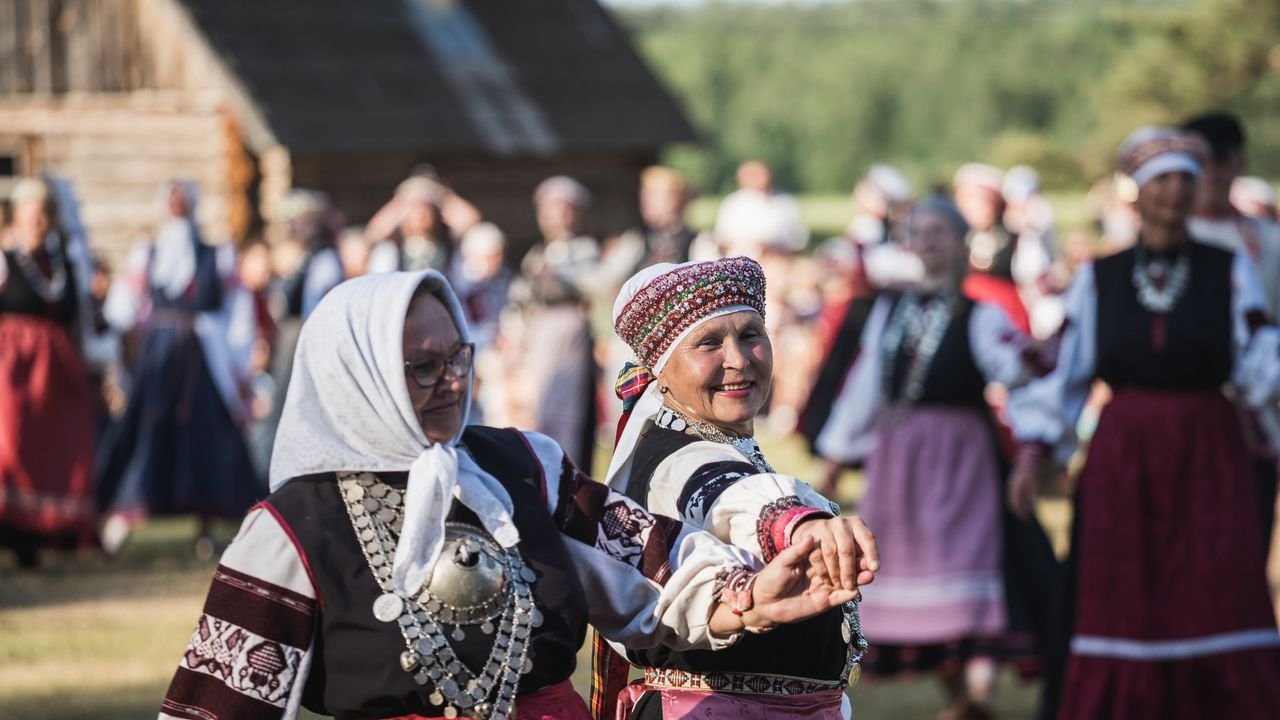
Setomaa means “the land of the Seto”, almost a mini-nation within Estonia, distinguished from the rest of the country by religion and dialect. I’ve been fascinated by the Seto, and their distinct identity, ever since I served in Estonia with the British Army Reserve, and I’m here to learn why Easter (which arrives in Setomaa before the rest of the country) is their most important celebration.
“Most Estonians are Lutheran,” explains Helen Külvik, a Setomaa native and local guide, “which has its origins in Germany. But Seto belief is rooted in Orthodox Christianity, which came to us from Russia, and which follows the Julian calendar, hence our early Easter.” She goes on to explain that while Setomaa is spread across both Estonia and Russia, when the Soviet Union ended, the new border split Setomaa in two, and separating people from their ancestral lands. “But the end of communism also led to a flourishing of Seto culture. We are proud to share it, and Easter is a very good time for you to experience it,” she adds.
.jpg)
