

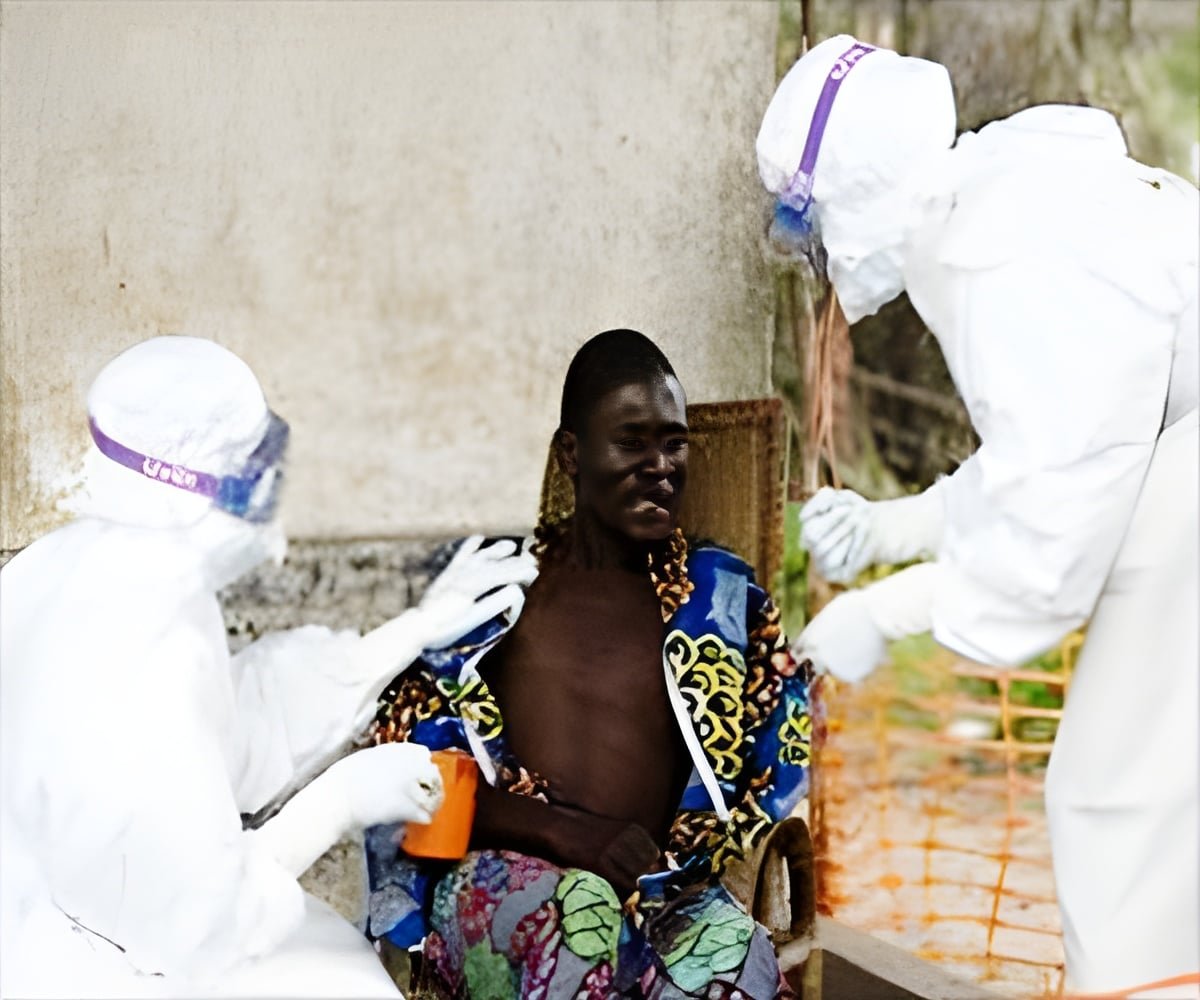
The Democratic Republic of Congo is battling its largest Ebola outbreak in years, with officials warning that moving infected bodies between provinces is accelerating the spread of the virus.
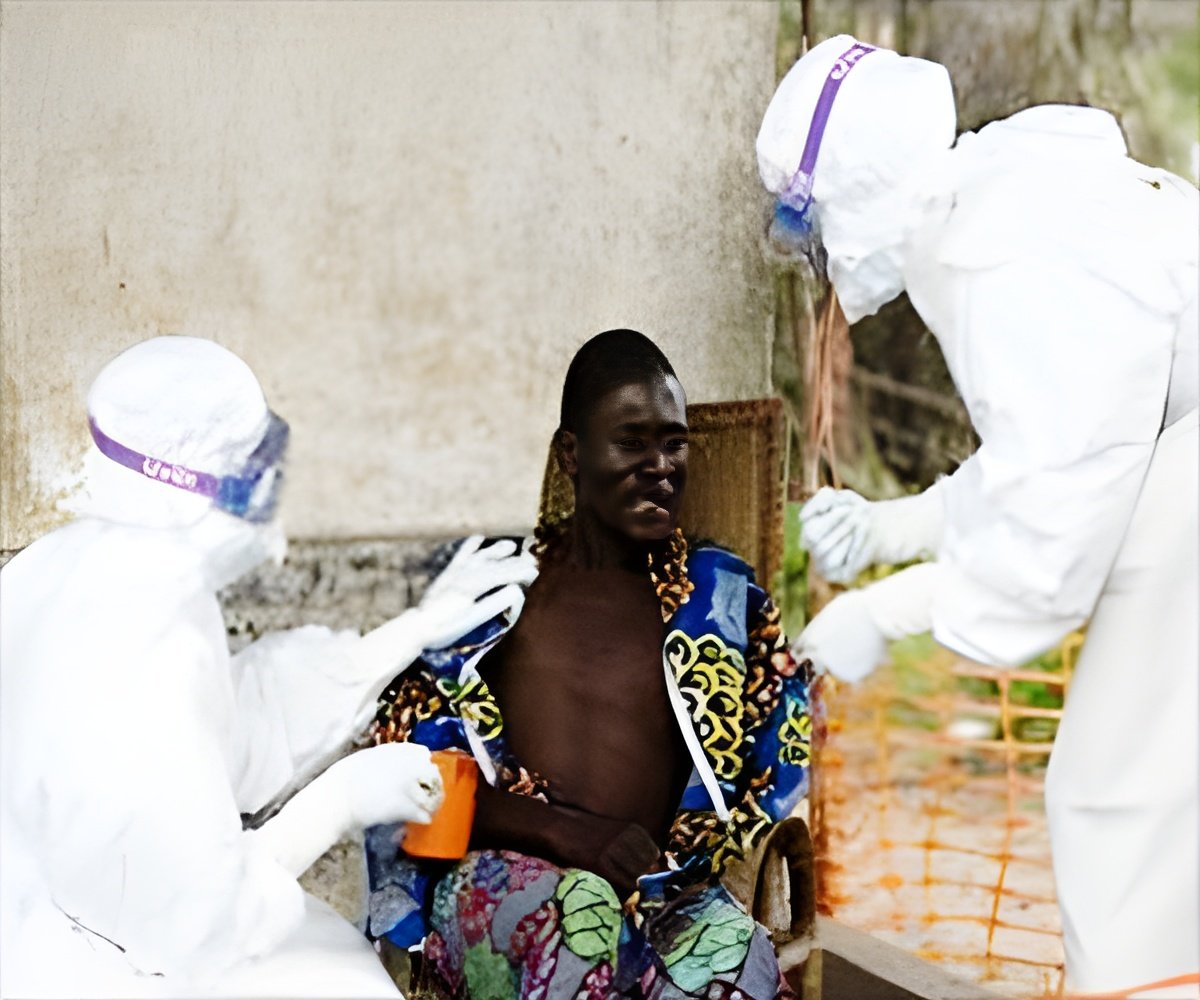
The movement of Ebola victims’ bodies across provinces has become a growing challenge in the Democratic Republic of Congo (DRC), where health authorities are battling the country’s largest Ebola outbreak in years.
Officials warn that transporting infected bodies for traditional funeral ceremonies is allowing the virus to spread into new communities. Evidence from previous outbreaks shows that safe and dignified burial practices can dramatically reduce Ebola transmission.
Advertisement
Why Is Transporting Ebola Victims’ Bodies Spreading the Virus?
According to the International Organization for Migration (IOM), many families choose to return the bodies of loved ones to their home villages for burial. While this is an important cultural tradition, the Ebola virus remains highly infectious even after death.
People who wash, dress, or touch the body can come into direct contact with infected blood and other bodily fluids. When bodies are transported across districts before burial, the virus can also spread to communities that previously had no reported Ebola cases.
The IOM says the current Bundibugyo strain outbreak has expanded rapidly, with more than 2,000 reported cases and over 700 deaths in the DRC and neighboring Uganda.
Nearly two-thirds of Ebola-related deaths have occurred outside hospitals, making it more difficult for trained response teams to safely manage the deceased before families take over burial arrangements.
More than 100 cross-district body transfers have already been documented, including one that was linked to new Ebola infections, while daily case numbers continue to rise.
Advertisement
How Much Difference Can Safe Burials Make?
Evidence published in the The Lancet Global Health shows that safe and dignified burials are among the most effective measures for controlling Ebola outbreaks.(1✔ ✔Trusted Source
Effect of a safe and dignified burial intervention on Ebola virus transmission in the eastern Democratic Republic of the Congo, 2018–19: a propensity score analysis
)
Researchers analyzed data from the 2018–2020 Ebola epidemic in eastern DRC, covering 3,194 confirmed and probable Ebola cases across 21 health zones. The study also evaluated 7,823 safe and dignified burials carried out during the outbreak.
The findings showed that:
- Successful safe burials reduced Ebola transmission by around 40%.
- Prompt, same-day burials were linked to fewer new infections.
- Better implementation of safe burials consistently lowered virus transmission.
- When more than 40% of safe burial responses were successfully completed, transmission dropped below the level needed for the outbreak to continue.
Researchers concluded that safe and dignified burials should remain a central pillar of Ebola control, alongside surveillance, contact tracing, and vaccination.
The study also found that community dialogue and culturally acceptable burial practices improved public trust, encouraging more families to cooperate with health teams instead of hiding deaths or conducting unsafe funerals.
Advertisement
How Can Families Honor Loved Ones While Staying Safe?
According to the World Health Organization (WHO), controlling Ebola does not require families to abandon their religious or cultural traditions. Instead, funeral practices can be adapted to remain respectful while reducing the risk of infection.(2✔ ✔Trusted Source
How to conduct safe and dignified burial
of a patient who has died from suspected or
confirmed Ebola or Marburg virus disease
)
WHO recommends that:
- Only trained burial teams should handle the body.
- Direct contact with the deceased should be avoided.
- Families should be informed and provide consent before burial procedures begin.
- Religious leaders and community representatives should participate in planning the funeral.
WHO’s 12-step safe and dignified burial protocol includes preparing protective equipment, placing the body in a secure body bag, disinfecting the environment, safely transporting the body, conducting a respectful burial, and maintaining community engagement throughout the process.
The guidance advises against washing or embalming the body. Instead, families can safely honor their loved ones by offering prayers, viewing the deceased without touching the body, sprinkling blessed water, placing religious symbols on the coffin, or participating in graveside ceremonies without handling the remains.
Health experts say combining culturally sensitive burial practices with rapid case detection, contact tracing, vaccination, and community engagement remains the best strategy to slow Ebola transmission while allowing families to honor the deceased with dignity.
References:
- Effect of a safe and dignified burial intervention on Ebola virus transmission in the eastern Democratic Republic of the Congo, 2018–19: a propensity score analysis – (https://www.sciencedirect.com/science/article/pii/S2214109X25002207)
- How to conduct safe and dignified burial of a patient who has died from suspected or confirmed Ebola or Marburg virus disease – (https://iris.who.int/server/api/core/bitstreams/a93fddb2-243a-40ec-a0a0-27967bfb99ee/content)
Source-Medindia