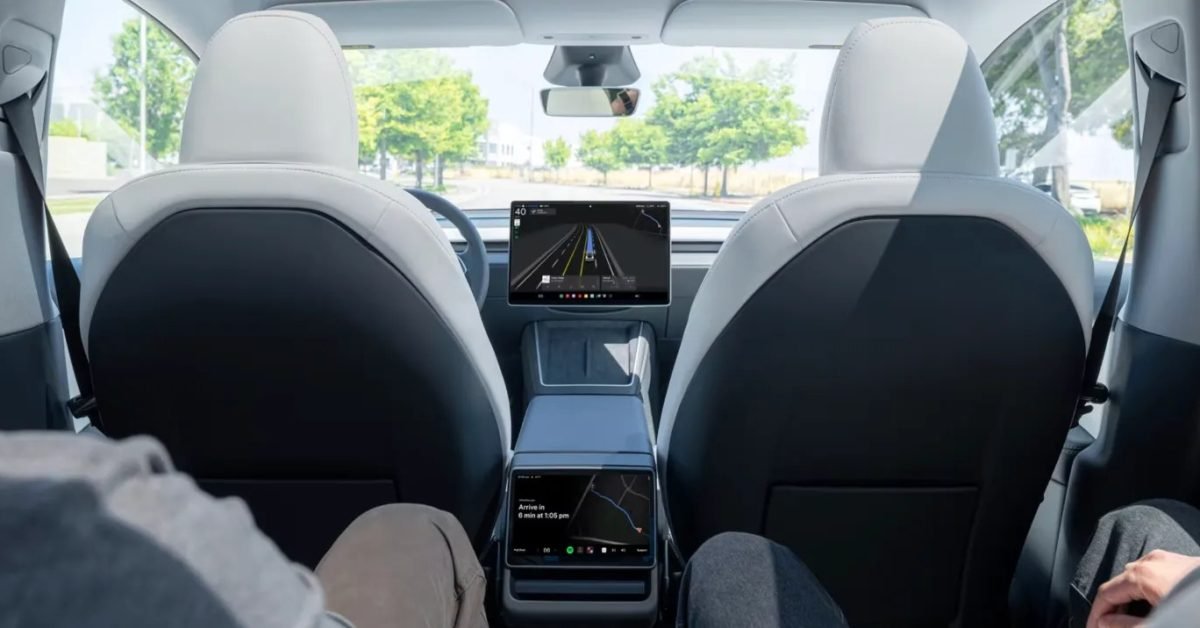
Tesla has quietly unredacted all 17 of its autonomous driving crash narratives filed with NHTSA, revealing for the first time what actually happened in each incident. The automaker had been the only ADS operator to fully redact its crash reports, marking every single narrative as “confidential business information.”
The data shows what we always suspected: most of Tesla’s crashes were not the fault of the autonomous system. But there are some genuinely concerning incidents buried in there.
Tesla was alone in hiding crash data
For the better part of a year, Tesla was the only autonomous vehicle operator filing crash reports with NHTSA under the agency’s Standing General Order 2021-01 that completely redacted its crash narratives. Every single one of Tesla’s reports contained the same boilerplate text: “[REDACTED, MAY CONTAIN CONFIDENTIAL BUSINESS INFORMATION].”
Meanwhile, Waymo, Zoox, Avride, May Mobility, and every other ADS operator provided detailed, multi-paragraph accounts of what happened in each crash.
Tesla even admitted it would “suffer financial harm” if its crash data became public, arguing that competitors could use the information to assess Tesla’s progress with autonomous systems.
We criticized that approach repeatedly. The lack of transparency made it impossible to determine whether Tesla’s crashes were minor fender-benders caused by other drivers or serious failures of the autonomous system. It purposefully muddied the waters, letting critics and supporters alike project whatever narrative they wanted onto the data.
Now, in the latest NHTSA data dump, Tesla has gone back and filed updated versions of all its older reports — specifically removing the confidential business information designation and making the narratives publicly available.
What the crash data actually shows
The 17 unique Tesla ADS incidents span from July 2025 through March 2026 — the entire period of the company’s “Robotaxi” testing in Austin. Every single one involves a 2026 Model Y with the ADS engaged and a safety monitor present.
The injury breakdown is relatively mild: 13 resulted in property damage only, 2 had no injuries reported, 1 involved a minor injury without hospitalization, and 1 — the most serious — involved a minor injury requiring hospitalization.
Here’s where it gets interesting. As suspected based on reports from other companies, a significant portion of the crashes were clearly not Tesla’s fault:
Several incidents involved the Tesla ADS being rear-ended while completely stopped — at red lights, stop signs, and in traffic. In one case, a passenger vehicle simply drove into the back of the stopped Tesla at an intersection. In another, a truck rear-ended it at a stop sign. A pedicab clipped the Tesla’s mirror while it was stopped at a red light. A city bus sideswiped it while making a turn. An SUV crept forward into the Tesla’s rear at a red light.
This is a pattern that mirrors what we see in Waymo’s crash data — autonomous vehicles tend to get rear-ended by human drivers who aren’t paying attention or don’t expect the AV to stop when it does.
The concerning incidents
Not all crashes were the fault of other drivers. Several reveal genuine limitations of Tesla’s autonomous system — and its teleoperator backup.
Two crashes happened when a remote teleoperator took over the vehicle. In July 2025, a safety monitor requested support because the ADS wasn’t proceeding forward. The teleoperator took control and drove the car up a curb and into a metal fence at 8 mph — resulting in the only non-hospitalization injury reported. In January 2026, a similar scenario played out: the safety monitor requested navigational help, a teleoperator took over, and drove the car into a construction barricade at 9 mph.
The ADS itself also had issues with spatial awareness. In one September 2025 incident, the system drove into a metal chain while entering a parking lot after making an unprotected left turn. In October, the ADS clipped a dump trailer’s gooseneck hitch that was sticking into the street. In January, it backed into a wooden electrical pole, and in another January incident, it hit a curb while reversing into a parking space.
The most serious crash by injury involved the Tesla creeping forward at 2 mph in a right-turn slip lane when it was rear-ended by an SUV. The safety monitor later reported pain and sought medical evaluation. While technically the other driver’s fault, the incident raises the same question that we’ve raised before about whether the ADS’s overly cautious behavior contributes to getting hit.
Here is the full context of every Tesla ADS crash
Below is the narrative Tesla provided for each of its 17 unique ADS incidents, ordered chronologically. All incidents involve a 2026 Model Y in Austin, TX with the ADS engaged.
July 2025 — Fixed object (metal fence), 8 mph, minor injury without hospitalization: The Tesla ADS was stopped on the right side of the street. The safety monitor requested support because the ADS wasn’t proceeding forward. The teleoperator took over and drove the car left, up a curb, and into a metal fence. No passengers were in the vehicle.
July 2025 — SUV, 0 mph, property damage only: The Tesla ADS was stopped at a red light at an intersection. An SUV that had been stopped behind the ADS crept forward and rear-ended it. No passengers were in the vehicle.
- July 2025 — SUV, 2 mph, minor injury with hospitalization: The Tesla ADS was in a right-turn-only slip lane with a yield sign, yielding for cross traffic. The ADS was stopped then crept forward up to 2 mph while continuing to yield and was rear-ended by an SUV behind it. The safety monitor later reported pain and sought medical evaluation.
- September 2025 — Animal (dog), 27 mph, no injuries: The Tesla ADS was proceeding straight in the center lane approaching a green light when a dog ran into the intersection from the right. The ADS reduced speed and steered left. The dog ran toward the Tesla and made contact with the bottom of the front right bumper, pushing it into the path of a van. The dog was later seen running away.
- September 2025 — Passenger car, 6 mph, property damage only: The Tesla ADS was proceeding straight in a parking lot when a passenger vehicle reversed from a perpendicular parking aisle in the wrong direction against markings. The ADS reduced speed and steered left, but the reversing vehicle made contact with the right side of the Tesla.
- September 2025 — Fixed object (metal chain), 6 mph, property damage only: The Tesla ADS made an unprotected left turn into a parking lot entrance and made contact with a metal chain. One passenger was present.
- September 2025 — Cyclist (pedicab), 0 mph, property damage only: The Tesla ADS was stopped at a red light. A pedicab approaching from behind in the bike lane clipped the right side mirror as it rode past.
- October 2025 — Trailer hitch, 18 mph, property damage only: The Tesla ADS made a left turn onto a residential street. As it passed a house, the ADS’s side mirror made contact with a dump trailer’s gooseneck hitch sticking out into the street.
- November 2025 — Motor scooter, 0 mph, no injuries: The Tesla ADS was stopped behind traffic at a red light. A person on a motor scooter approached from behind, moved into the gap behind the ADS, steered right, and made contact with the rear end. The scooter rider then hopped the curb and continued on the sidewalk.
- December 2025 — Fixed object (curb), 17 mph, property damage only: The Tesla ADS was proceeding straight when its rear right tire drove over uneven pavement that punctured the tire. As the ADS slowed to pull over, the deflated tire made contact with a curb. The ADS initiated a minimal risk condition maneuver. One passenger was present.
- January 2026 — Pole/tree (electrical pole), 1 mph, property damage only: The Tesla ADS started reversing after encountering a blocked alley. The rear end made contact with a wooden electrical pole.
- January 2026 — Fixed object (curb), 2 mph, property damage only: The Tesla ADS was reversing into an empty parking space when the right rear tire made contact with a corner of a curb.
- January 2026 — Heavy truck, 4 mph, property damage only: The Tesla ADS was proceeding straight on a narrow street with a parked heavy-duty tow truck on one side and a parked passenger vehicle on the other. The ADS’s left side mirror made contact with the tow truck’s bed. One passenger was present.
- January 2026 — Bus, 0 mph, property damage only: The Tesla ADS was stopped at a red light in the leftmost lane (the adjacent right lane was blocked by construction barriers). A city metrobus making a right turn from the perpendicular street sideswiped the ADS with its front bicycle rack. Two passengers were present.
- January 2026 — Fixed object (construction barricade), 9 mph, property damage only: The safety monitor requested navigational help. A teleoperator took over when the ADS was stopped and drove straight into a temporary construction barricade, scraping the front-left fender and tire.
- March 2026 — Passenger car, 0 mph, property damage only: The Tesla ADS was stopped at an intersection in the left turn only lane with a flashing yellow arrow. A passenger vehicle that had been stopped behind the ADS drove forward and rear-ended it.
- March 2026 — Pickup truck, 0 mph, property damage only: The Tesla ADS was stopped at a stop sign. A truck behind the ADS drove forward and rear-ended it. One passenger was present.
Electrek’s Take
We always said the context would matter. When Tesla was redacting everything, the crash count alone painted an incomplete picture. Despite being painted as “haters” by the Tesla fans, we were always clear that we suspected that many of the crashes were likely not Tesla’s fault — and that turned out to be correct. A good number of these incidents are rear-endings and sideswipes by inattentive human drivers, which is exactly what Waymo reports in the majority of its incidents too.
But Tesla’s decision to hide that context for nearly a year was a self-inflicted wound. Had this information been public from the start, the narrative around the “Robotaxi” program’s safety record would have been significantly different. Instead, Tesla let the crash count speak for itself while every competitor provided full transparency — and then argued that disclosing the data would cause “financial harm.”
That said, the teleoperator incidents are genuinely concerning. In two separate cases, a human operator took over because the ADS was stuck and then crashed the vehicle into objects. If Tesla can’t trust its ADS to navigate tricky situations and its teleoperators are crashing the cars when they intervene, that’s a real problem — especially as the company pushes to remove safety monitors entirely.
The spatial awareness issues — hitting chains, hitches, poles, and curbs — also suggest the system still struggles with detecting smaller or unusual obstacles, particularly while reversing. These are the kinds of edge cases that matter when you’re trying to scale an unsupervised robotaxi fleet.
I think it’s fair to suspect that ultrasonics and radars could have helped in those situations.
If you’re an EV owner or considering one, going solar is one of the best ways to reduce your long-term energy costs and maximize the environmental benefits of electric driving. Through EnergySage, you can get free quotes from vetted solar installers in your area, compare pricing side by side, and see how much you can save. Electrek readers can find out more and get started with a free quote from EnergySage right here.


FTC: We use income earning auto affiliate links. More.