

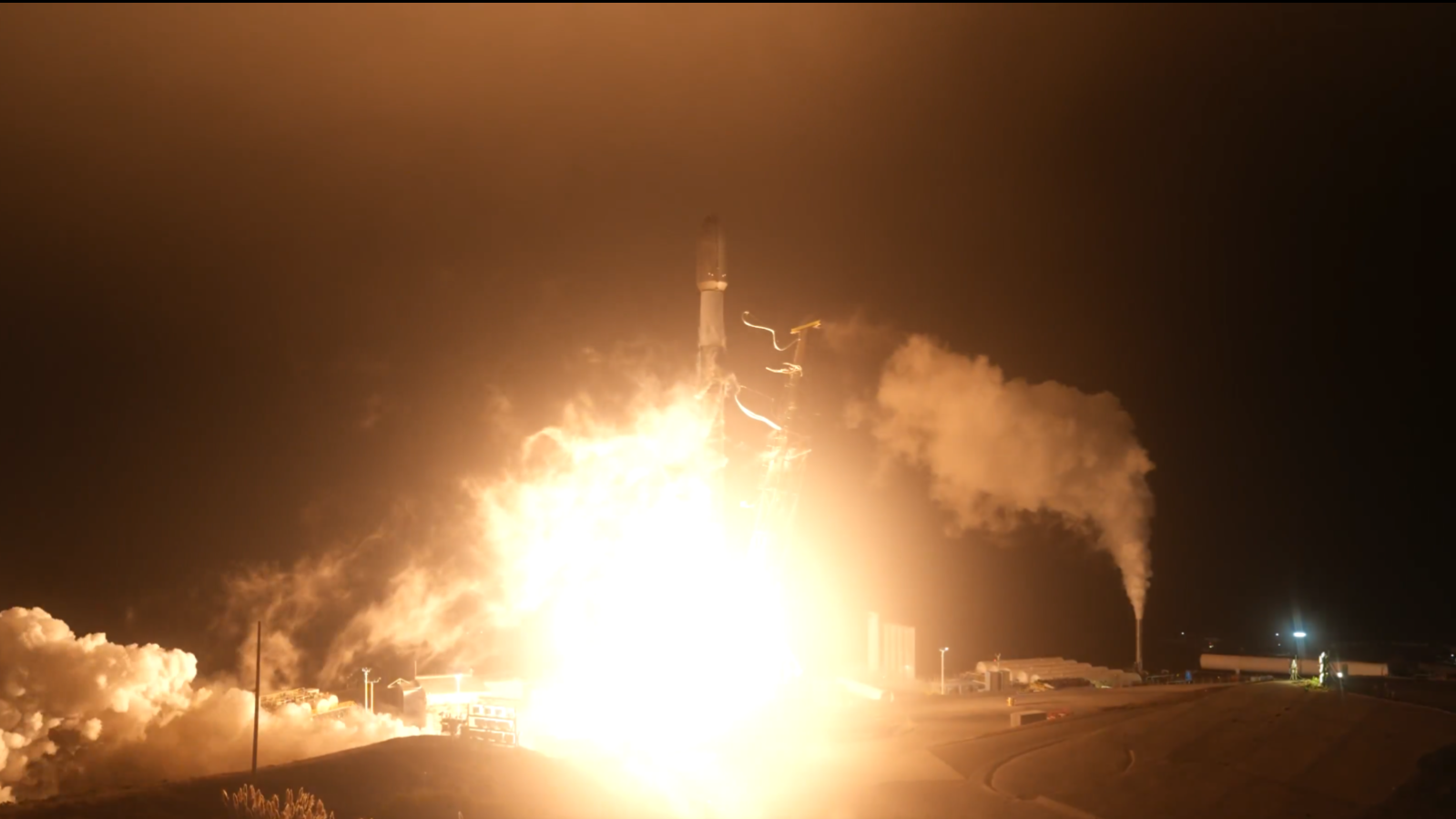
Just over 12 hours after its first liftoff of the day out of Florida’s Space Coast, SpaceX has delivered a second batch of Starlink internet satellites to orbit on a rocket lifting off from the company’s California launch site.
A Falcon 9 rocket lifted off from Vandenberg Space Force Base on Aug. 12, at 12:46 p.m. EDT (0346 GMT; 9:46 p.m. local time). The mission, Starlink Group 17-49, carried 24 of the broadband spacecraft to low Earth orbit (LEO) to join SpaceX’s growing constellation of more than 10,000 satellites.
About 8.5 minutes after clearing the tower, the Falcon 9’s first stage, Booster 1103 successfully landed on SpaceX’s “Of Course I Still Love You” droneship in the Pacific Ocean.” It was the fifth flight for this particular booster.
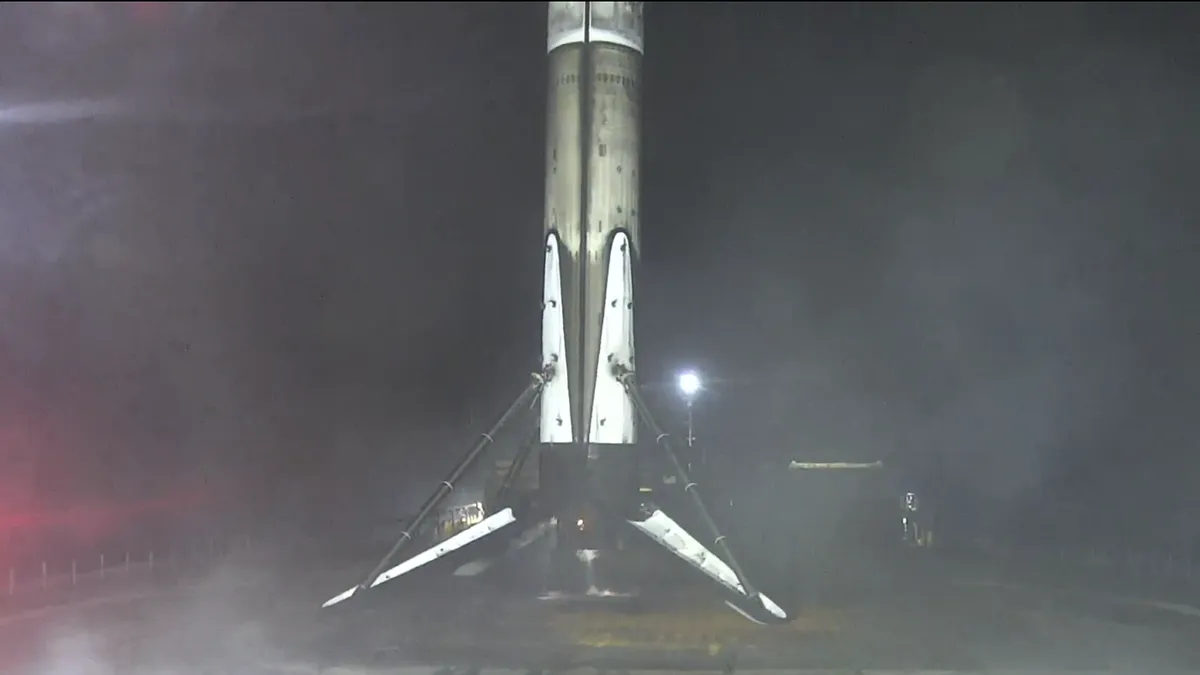
In addition to being its third Starlnk mission, B1103 also launched the NROL-179 and SDA-T1TL-E in support of U.S. national defense.
Following separation from Falcon 9’s main booster, the rocket’s second stage flew onward to LEO, delivering its 24 Starlink satellites about one hour after liftoff.
Previous Booster B1103 launches
Today’s liftoff was the 94th Falcon 9 launch of the year, 73 of which have delivered Starlink stacks to the growing constellation — the largest satellite constellation ever assembled.
Starlink currently consists of more than 10,900 active satellites, according to astrophysicist Jonathan McDowell. But SpaceX has even bigger megaconstellations in mind: The company has filed to operate 100,000 of its bigger, more capable Starlink V3 satellites, and SpaceX CEO Elon Musk has also stated his intent to launch a million AI data center satellites to Earth orbit as well.