

Close Menu

    Subscribe to Updates

    Get the latest news information from worldwide businesses.

    What's Hot

    The biggest video game of all time looks like a movie

    August 27, 2026

    Anthropic and OpenAI are joining the AI stage at TechCrunch Disrupt 2026 

    August 27, 2026

    Banks, companies better positioned to weather next downturn: CS Setty, SBI, Chairman

    August 27, 2026
    Facebook Instagram YouTube LinkedIn X (Twitter)
    Trending
    • The biggest video game of all time looks like a movie
    • Anthropic and OpenAI are joining the AI stage at TechCrunch Disrupt 2026 
    • Banks, companies better positioned to weather next downturn: CS Setty, SBI, Chairman
    • EU countries urged to invest in nature restoration plans and close €65bn annual shortfall
    • Piyush Goyal interview: Ready to act on feedback, expect Japanese investments to pick up pace | India News
    • Predicting each Power 4 conference champion ahead of the 2026 college football season
    • DU colleges offering admission based on Class 12 marks: List of colleges and courses | Education News
    • Empoderando a las comunidades guatemaltecas afectadas por el plástico
    Newspublicly
    • About Us
    • Advertise & Partner with us
    • Pitch Your Story
    • Contact Us
    Facebook Instagram LinkedIn X (Twitter)
    Subscribe
    • Home
    • World News
      • Asia
      • India
      • USA
      • UK & Europe
      • Middle East
    • Economy & Business
      • Global Economy
      • Corporate & Industry
      • Finance & Markets
      • Policy & Trade
    • Technology
      • Gadgets & Devices
      • Software & Apps
      • AI & Machine Learning
      • Robotics & Automation
    • Health & Medicine
      • Fitness & Nutrition
      • Research & Innovation
      • Disease & Treatment
      • Doctors, Clinics & Patient Care
    • Travel & Tourism
    • Automobile
      • Electric & Hybrid Vehicles
      • Auto Industry Insights
    • Sports
    • More
      • Education
      • Real Estate
      • Environment & Climate
      • Space & Astronomy
      • War & Conflicts
    Newspublicly
    Home»Health & Medicine»Research & Innovation»Scientists discover a brain “brake” that can shut down chronic pain
    Research & Innovation

    Scientists discover a brain “brake” that can shut down chronic pain

    AdminBy AdminAugust 27, 2026No Comments4 Mins Read0 Views
    Share
    Facebook Twitter LinkedIn Copy Link WhatsApp


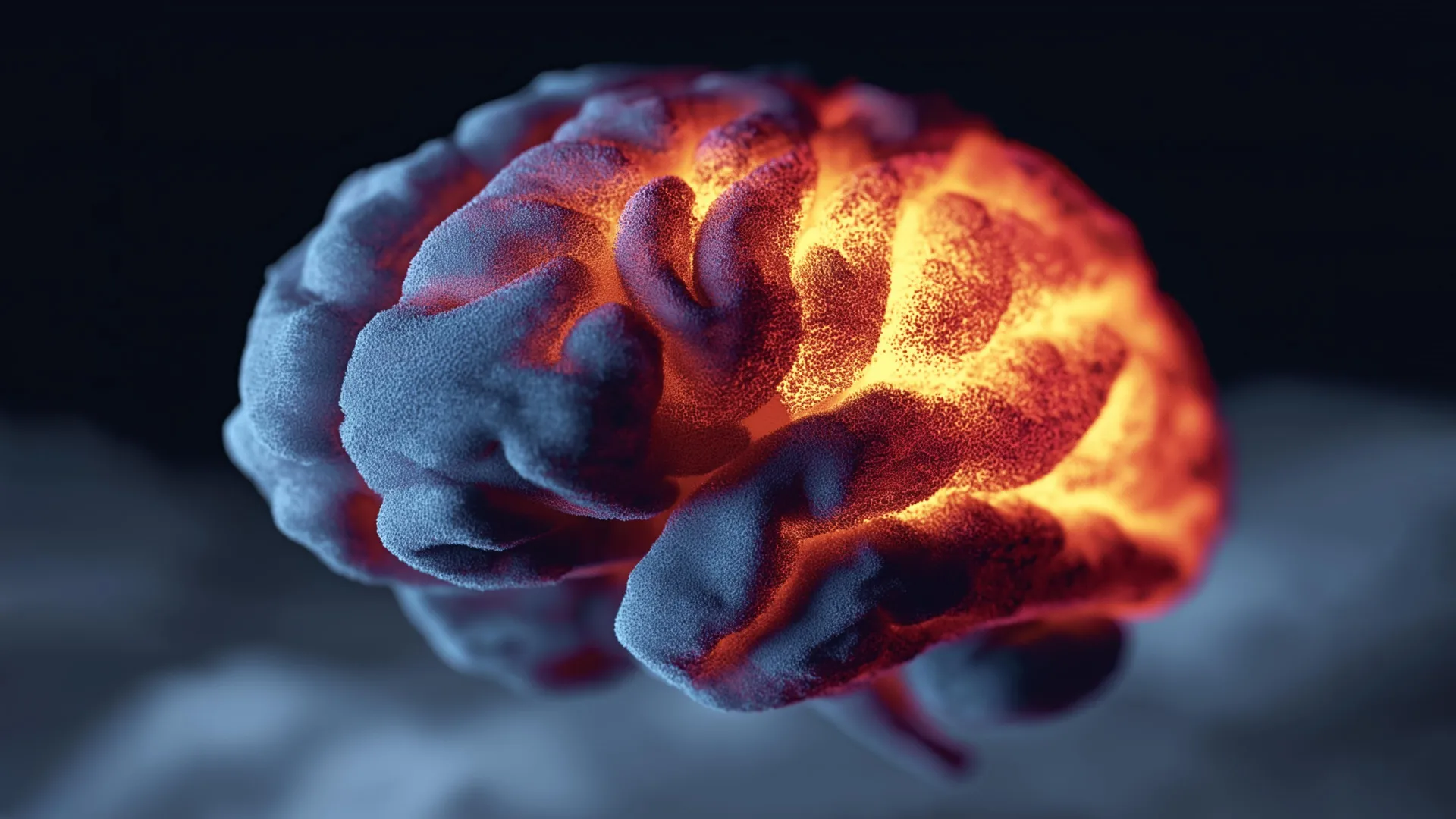
    Deep inside the brain, a small group of nerve cells helps control how strongly pain signals are felt. Under normal conditions, this system can suppress pain traveling through the spinal cord. After nerve damage, however, the same circuitry can become overactive and help sustain chronic pain.

    Researchers at Washington University School of Medicine in St. Louis have now identified a mechanism that helps explain this switch and may offer a way to reverse it. In mice, they found that receptors on cells in the brain’s main alert and stress center can act as biological brakes that restrain pain. These receptors were already known for their role in stress, but the new findings suggest they can also quiet a pain-producing circuit and reduce chronic neuropathic pain caused by nerve injury.

    The study, published Aug. 17 in Current Biology, points to the locus coeruleus as a possible target for future pain therapies designed to act more precisely within the brain.

    “Millions of adults live with chronic neuropathic pain caused by nerve damage,” said Jordan McCall, PhD, an associate professor in the Center for Clinical Pharmacology in the WashU Medicine Department of Anesthesiology and the study’s senior author. “The pain is difficult to treat, and traditional opioid medications bind to receptors throughout the entire body and brain, often leading to side effects, tolerance and addiction risk. Understanding how localized receptors in the locus coeruleus act as gatekeepers could lead to more targeted, effective pain therapies with fewer risks.”

    How Nerve Damage Can Turn Up Pain

    Neuropathic pain develops when injured nerve fibers repeatedly send abnormal signals to the brain. Those faulty messages can produce shooting, stabbing or burning sensations. Diabetes, viral infections and nerve compression are among the conditions that can lead to this type of pain.

    To investigate how the process might be stopped, McCall’s team, including co-first authors Chao-Cheng Kuo, PhD, a postdoctoral research associate, and Makenzie R. Norris, a former graduate student, focused on the locus coeruleus, a brain region already known to help regulate pain.

    The researchers first confirmed that nerve injury can transform the locus coeruleus into an active source of pain. When they temporarily silenced cells in this region in mice, animals modeling neuropathic pain became less sensitive to touch and heat compared with healthy mice.

    Opioid Receptors Act as a Biological Brake

    The team then examined opioid responsive receptors on cells in the locus coeruleus, focusing especially on mu opioid receptors.

    Mu opioid receptors are found throughout the brain and spinal cord. When naturally produced opioids in the body, or synthetic opioids such as morphine and fentanyl, bind to these receptors, pain signaling across the nervous system is reduced. Because the locus coeruleus contains many of these receptors, the researchers investigated whether they play a particularly important role in controlling pain there.

    They removed mu opioid receptors specifically from locus coeruleus brain cells in mice with neuropathic pain. Without those receptors, the animals became even more sensitive to touch and heat than mice whose locus coeruleus cells still had mu opioid receptors.

    When the researchers restored the receptors to the same neurons, that increased sensitivity was reversed, effectively switching off the heightened pain response.

    A More Precise Target for Chronic Pain

    The findings suggest that chronic pain may interfere with the ability of mu opioid receptors to restrain activity in locus coeruleus brain cells.

    The researchers are now investigating ways to alter activity in the locus coeruleus without affecting opioid receptors throughout the rest of the nervous system. Their goal is to develop therapies that engage mu opioid receptors specifically within this brain region, potentially delivering strong relief from chronic neuropathic pain while reducing the risks associated with drugs that act more broadly across the brain and body.

    Kuo CC, Norris MR, Dunn SS, Becker LJ, Kim JR, Vazquez CR, Borges G, Thang LV, O’Brien JT, Parker KE, McCall JG. Mu opioid receptors gate the locus coeruleus pain generator. August 17, 2026. Current Biology.

    This work was funded by the National Institutes of Health, grant numbers R01NS117899, R01NS135401, F31NS124301 and F31DA065440; the National Science Foundation, grant number DGE-2139839; the McDonnell Center for Systems Neuroscience; a Collaboration Support initiative for Translational Anesthesiology Research (COSTAR) award from the Department of Anesthesiology at Washington University School of Medicine; and the Rita Allen Foundation with added financial help from the Open Philanthropy Project. The content is solely the responsibility of the authors and does not necessarily represent the official view of the NIH.


    Source link

    Author

    • Admin

      NewsPublicly.com is News & Articles Platform that creating SEO-focused articles on travel, lifestyle, and digital trends.

    Admin
    • Website

    NewsPublicly.com is News & Articles Platform that creating SEO-focused articles on travel, lifestyle, and digital trends.

    Related Posts

    Smart nanoparticles light up brain cancer and destroy what surgery misses

    August 27, 2026

    324-million-year-old fossil reveals how insects conquered land

    August 27, 2026

    Scientists switch on a strange new form of magnetism in an ultrathin material

    August 27, 2026
    Leave A Reply Cancel Reply

    Demo
    Top Posts

    The Blue Moon rises on May 30— Where and when to see the second full moon of the month

    May 30, 202640 Views

    New SOCOM rifle allows barrel swapping and cartridge changes

    June 1, 202633 Views

    Indian economy shows recovery despite global uncertainties, private investment gains momentum: Report

    July 29, 202629 Views

    “Inside Gemini Robotics 1.5: How Robots Learn to Reason & Act

    November 22, 202527 Views
    Don't Miss

    The biggest video game of all time looks like a movie

    August 27, 20264 Mins Read0 Views

    I think I know why Rockstar Games debuted its “extended look” of Grand Theft Auto…

    Anthropic and OpenAI are joining the AI stage at TechCrunch Disrupt 2026 

    August 27, 2026

    Banks, companies better positioned to weather next downturn: CS Setty, SBI, Chairman

    August 27, 2026

    EU countries urged to invest in nature restoration plans and close €65bn annual shortfall

    August 27, 2026
    Stay In Touch
    • Facebook
    • Twitter
    • Instagram
    • YouTube
    • LinkedIn
    • WhatsApp

    Subscribe to Updates

    Get the latest creative news from SmartMag about art & design.

    Demo
    NEWSPUBLICLY
    Facebook X (Twitter) Instagram LinkedIn

    Home

    • About Us
    • Leadership
    • Advertise & Partner With Us
    • Pitch Your Story
    • Media Kit & Pricing
    • Career
    • FAQs

    Guidelines

    • Editorial & Submission
    • Partnership
    • Advertising & Sponsor
    • Intellectual Property Policy
    • Community & Comment
    • Security & Data Protection
    • Send Your Opinion

    Quick Links

    • Cookie Policy
    • Payment & Billing Terms
    • Refund & Cancellation
    • Copyright Policy
    • Complaint & Support
    • Sitemap
    • Contact Us

    Subscribe Us

    Get the latest news and updates!

    Copyright © 2026 Newspublicly (DIGITALIX COMMUNICATION). All Rights Reserved.
    • Privacy Policy
    • Terms of Use
    • Disclaimer