

3 min readNew DelhiMay 28, 2026 08:49 AM IST
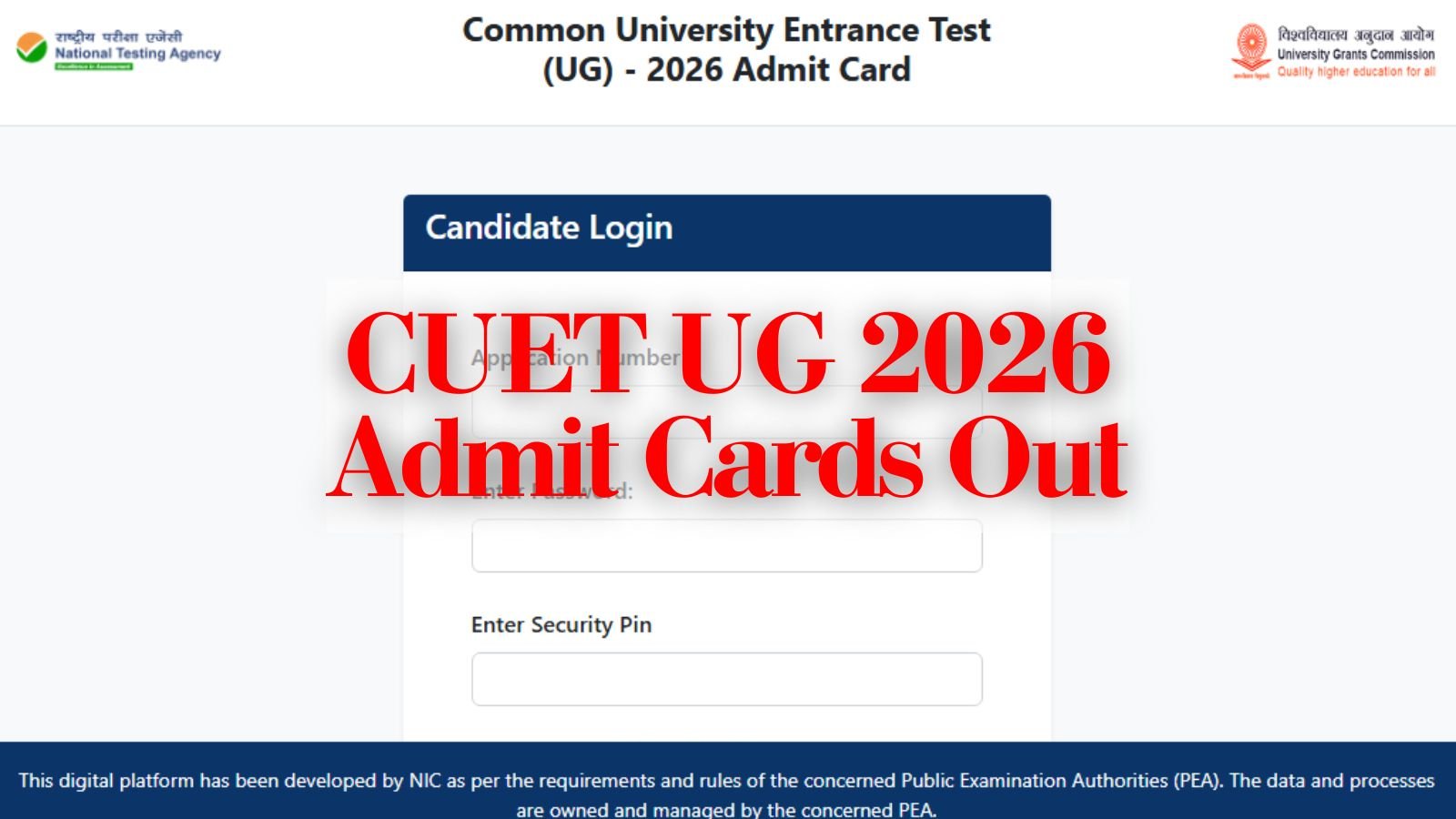
The National Testing Agency (NTA) has released admit cards for candidates appearing in the rescheduled Common University Entrance Test — Undergraduate (CUET UG) 2026 examination on May 31, 2026. The public notice, signed by Dr Archana Shukla (ISS), Director, NTA, confirmed that admit cards for candidates rescheduled to appear on June 6 or 7, 2026, will be released shortly.
The rescheduling follows a public notice issued on May 24, 2026, which announced the postponement of CUET (UG) 2026 examinations that had been originally scheduled for May 28, 2026, in both shifts. The changes in the dates were made due to a change in the date of Eid al-Adha. The two rescheduled exams will be held on May 31 and the other on June 6 or 7.

Candidates are required to log in to the official CUET portal at cuet.nta.nic.in using their registration credentials to download their updated admit cards. NTA has specifically advised all candidates to carefully read the instructions mentioned on the admit card before reporting to the examination centre.
CUET UG 2026 began earlier this month and is being conducted in multiple shifts for admissions to undergraduate programmes in central universities and other participating institutions across the country. The examination started on May 13 and was originally scheduled to continue till early June across various subject papers.
In case of any difficulty downloading the admit card or discrepancy in the details mentioned therein, candidates can reach the NTA Help Desk at 011-40759000 or write to NTA at cuet-ug@nta.ac.in. Candidates are also advised to regularly visit nta.ac.in and cuet.nta.nic.in for the latest updates.
This year, for CUET UG 15,68,866 candidates registered for the exam. The test design allows candidates to opt for up to five subjects, resulting in approximately 67.5 lakh test instances overall.
On average, candidates have opted for 4.31 subjects, with the largest group — over 8.6 lakh candidates — choosing five subjects. In total, 12,906 unique subject combinations have been recorded, reflecting wide variability in candidate preferences.
Story continues below this ad
To manage this complexity, the examination is being conducted across 35 shifts nationwide. NTA said the allocation process must simultaneously account for a candidate’s chosen city, subject combination, and the specific shift in which those subjects are scheduled.
A significant share of registrations, NTA says, about 43%, comes from Uttar Pradesh, Bihar, and Delhi alone. This concentration has placed pressure on the available computer-based testing infrastructure in high-demand cities.