

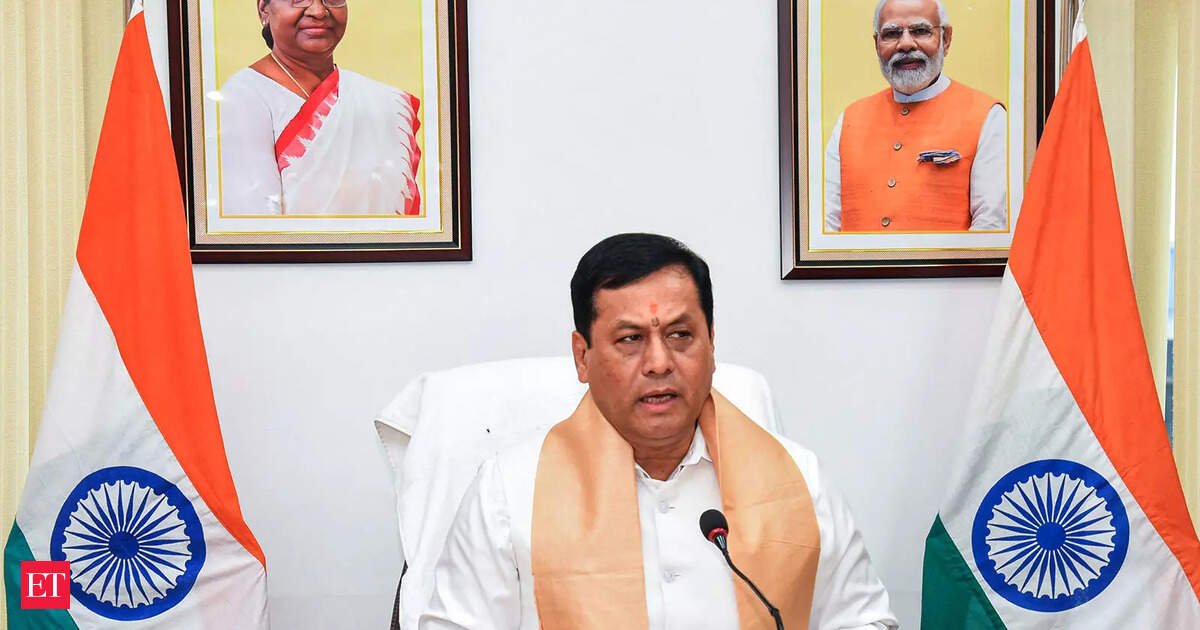
The minister said long-pending projects of inland waterways and port expansion in West Bengal are expected to pick up pace with the Bharatiya Janata Party (BJP) forming the government in the state.
He reiterated that no Indian flagged or linked vessels have been asked to pay a toll at the Strait of Hormuz. “West Asia crisis is, without doubt, one of the most significant disruptions to global shipping,” he said, adding India has repatriated over 3,000 seafarers since the situation escalated.

According to official data, shipping services to alternate ports in West Asia have been aggressively scaled up-from 105 sailings in February to 232 in April.

“This ensures connectivity is maintained even as traditional routes face disruption. I have personally chaired multiple high-level review meetings to ensure that no issue lingers unresolved, and that no stakeholder is left without an answer,” Sonowal said.
Increasing domestic tonnage
India has aggregated demand for 437 vessels worth around ₹2.2 lakh crore across key government-backed stakeholders. These will be procured over the next two decades and bids will have preference for domestic suppliers.
Sonowal said his ministry has put a structured shipbuilding model in place.
“Even for complex vessels like very large gas carriers (VLGCs), the model ensures that only one out of four are constructed at a global yard, while the rest (are built) in India,” he said.
Dugarajapatnam in Andhra Pradesh is being developed as India’s first mega shipbuilding cluster with an expected capacity of 1.2 million gross tonnage.