

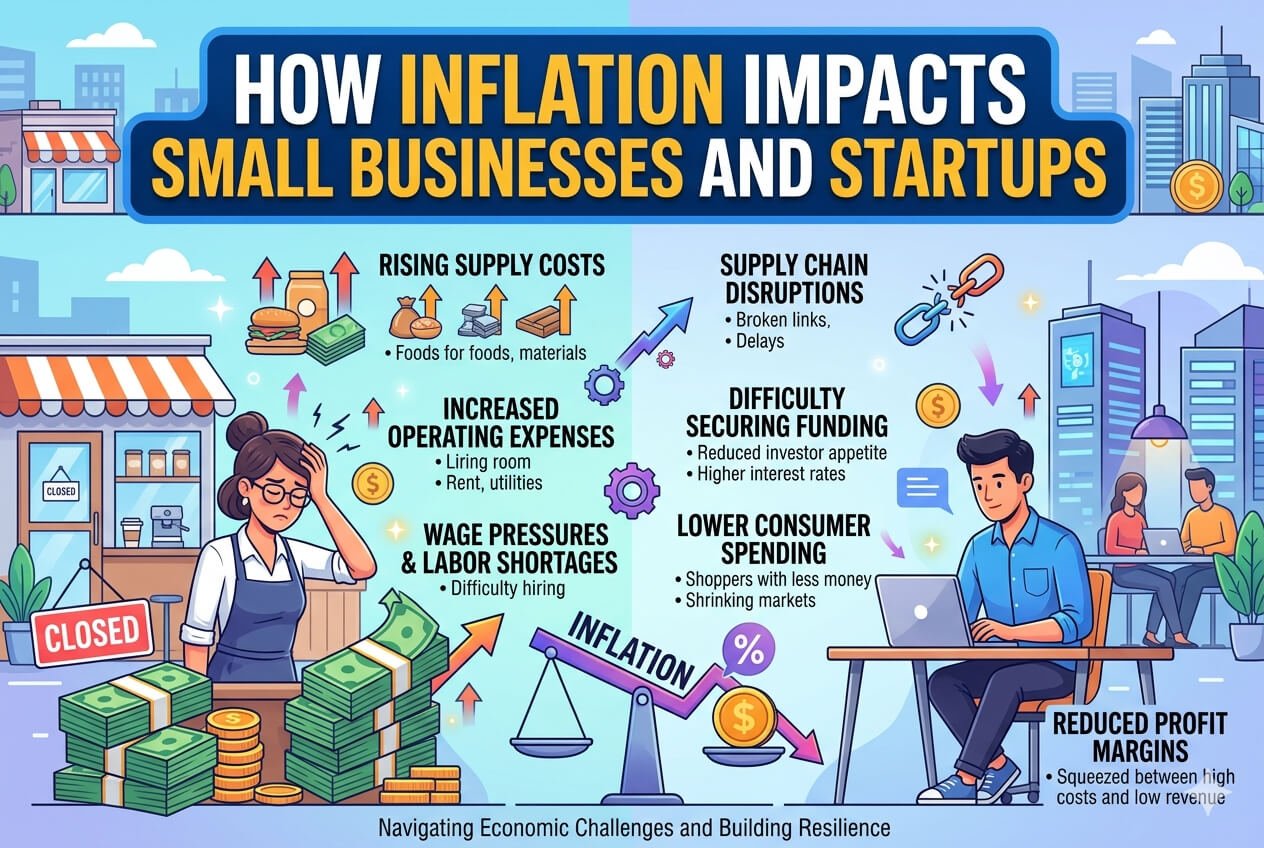
Inflation is more than just a buzzword in economic news—it’s a powerful force that directly affects businesses of all sizes. However, small businesses and startups often feel its impact more intensely than large corporations. With limited resources, tighter margins, and less negotiating power, these businesses must adapt quickly to survive in an inflationary environment.
In this blog, we’ll explore how inflation affects small businesses and startups, the challenges they face, and practical strategies to navigate rising costs.
What Is Inflation?
Inflation refers to the gradual increase in the prices of goods and services over time, which reduces purchasing power. When inflation rises, businesses must pay more for raw materials, labor, transportation, and other operational costs. While large corporations may have buffers and economies of scale, smaller businesses often struggle to absorb these increases.
Rising Costs of Raw Materials and Supplies
One of the most immediate effects of inflation is the increased cost of raw materials. Whether it’s a bakery paying more for flour and sugar or a tech startup facing higher costs for hardware components, inflation drives up input prices.
For small businesses, this creates a tough choice:
- Absorb the increased cost and reduce profit margins
- Pass the cost onto customers through higher prices
Both options come with risks. Reducing margins can hurt sustainability, while increasing prices may lead to losing customers, especially in competitive markets.
Increased Operational Expenses
Inflation doesn’t stop at raw materials—it impacts nearly every aspect of business operations. Rent, utilities, transportation, and logistics costs all tend to rise during inflationary periods.
Startups, in particular, often operate on tight budgets. An unexpected increase in expenses can disrupt financial planning and cash flow. For example:
- Higher fuel costs increase delivery expenses
- Increased electricity bills raise manufacturing costs
- Rising rents affect office or retail space affordability
These cumulative costs can significantly strain small businesses.
Wage Pressures and Talent Retention
As the cost of living rises, employees demand higher wages to maintain their standard of living. This creates additional pressure on small businesses and startups, which may not have the financial flexibility to offer competitive salary increases.
The result?
- Difficulty retaining skilled employees
- Increased hiring costs
- Lower employee morale if wages don’t keep up with inflation
Startups, which often rely on small teams, can be especially vulnerable to losing key talent.
Reduced Consumer Spending
Inflation reduces consumers’ purchasing power. When people spend more on essentials like food, fuel, and housing, they cut back on non-essential purchases.
For small businesses, this often means:
- Lower sales volume
- Decreased customer demand
- Longer sales cycles
Startups offering new or non-essential products may struggle even more, as consumers prioritize spending on necessities.
Cash Flow Challenges
Cash flow is the lifeblood of any business, and inflation can disrupt it in multiple ways:
- Increased costs lead to higher outflows
- Reduced sales lead to lower inflows
- Delayed customer payments become more common
Startups, which often rely on investor funding or limited reserves, may find it difficult to maintain liquidity. Poor cash flow management during inflation can quickly lead to financial distress.
Difficulty in Accessing Capital
Inflation often leads to higher interest rates as central banks attempt to control rising prices. This makes borrowing more expensive.
For small businesses and startups, this results in:
- Higher loan interest rates
- Reduced access to funding
- Stricter lending criteria from banks
Startups that depend on external funding may find it harder to raise capital, slowing down growth and expansion plans.
Pricing Dilemmas
Pricing becomes a major challenge during inflation. Businesses must carefully decide how much of the increased cost to pass on to customers.
If prices are increased too much:
- Customers may switch to competitors
- Demand may drop
If prices are not increased:
- Profit margins shrink
- Business sustainability is threatened
Finding the right balance is critical but often difficult.
Supply Chain Disruptions
Inflation is often accompanied by supply chain issues, such as shortages and delays. These disruptions can:
- Increase lead times
- Raise transportation costs
- Create uncertainty in inventory management
Small businesses, which typically lack strong supplier relationships or bulk purchasing power, are more vulnerable to these disruptions.
Impact on Business Growth
Inflation can slow down business growth, especially for startups that are in their early stages. Increased costs and reduced demand make it harder to:
- Invest in marketing and expansion
- Launch new products
- Scale operations
Many startups may shift their focus from growth to survival during high inflation periods.
Strategies to Manage Inflation
While inflation presents significant challenges, small businesses and startups can take proactive steps to mitigate its impact.
1. Optimize Costs
Regularly review expenses and identify areas where costs can be reduced without compromising quality. This may include renegotiating contracts with suppliers or switching to more cost-effective alternatives.
2. Adjust Pricing Strategically
Instead of sudden large price hikes, consider gradual increases or value-based pricing. Offering bundled products or services can also help justify higher prices.
3. Diversify Revenue Streams
Relying on a single source of income can be risky. Explore new products, services, or markets to create additional revenue streams.
4. Improve Cash Flow Management
Monitor cash flow closely and maintain a buffer for emergencies. Encourage faster customer payments and manage inventory efficiently to avoid unnecessary expenses.
5. Leverage Technology
Using digital tools can improve efficiency and reduce operational costs. Automation, cloud-based solutions, and data analytics can help businesses make smarter decisions.
6. Strengthen Customer Relationships
Building strong relationships with customers can increase loyalty, even during price increases. Focus on delivering value and maintaining trust.
7. Explore Alternative Funding Options
Consider options such as venture capital, crowdfunding, or government schemes designed to support small businesses during economic challenges.
Opportunities Hidden in Inflation
While inflation is often seen as a threat, it can also create opportunities:
- Businesses that adapt quickly can gain a competitive edge
- Innovation becomes essential, leading to better products and services
- Efficient businesses can outperform less agile competitors
Startups that are flexible and innovative may find ways to thrive even in challenging economic conditions.
Conclusion
Inflation is an unavoidable economic reality, but its impact on small businesses and startups can be particularly severe. From rising costs and reduced consumer spending to cash flow challenges and limited access to capital, the obstacles are significant.
However, with the right strategies—such as cost optimization, smart pricing, and strong financial management—businesses can navigate inflation effectively. Adaptability, innovation, and resilience are key to not just surviving but thriving in an inflationary environment.
For small businesses and startups, inflation is not just a challenge—it’s also an opportunity to rethink strategies, improve efficiency, and build a stronger, more sustainable future.
FAQs
- What is inflation?
Rising prices that reduce purchasing power. - How does inflation affect small businesses?
Increases costs and reduces profits. - Do startups suffer more from inflation?
Yes, due to limited funds and resources. - Why do prices increase during inflation?
Higher input and operational costs. - How can businesses handle inflation?
Control costs, adjust pricing, manage cash flow. - Does inflation affect customer demand?
Yes, spending decreases as prices rise.
