

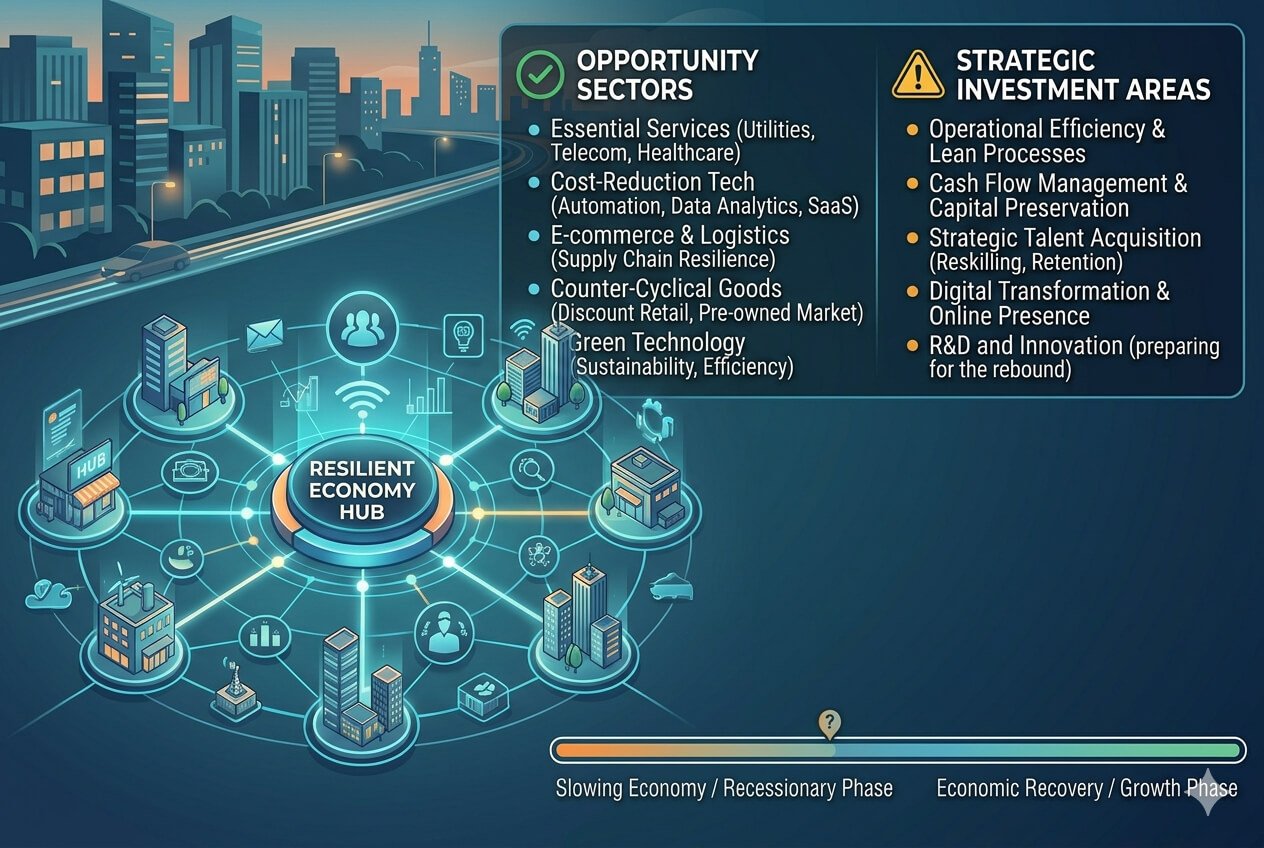
As global markets show signs of slowing down, businesses and investors are facing a critical question: Where should you invest when growth is uncertain? A slowing economy often brings reduced consumer spending, tighter credit conditions, and cautious business expansion. However, history has shown that economic slowdowns also create unique opportunities for smart investors and entrepreneurs.
In this article, we explore the sectors and strategies that continue to thrive—even when the economy slows.
Understanding a Slowing Economy
A slowing economy doesn’t necessarily mean a recession, but it does indicate reduced growth. Factors such as rising inflation, higher interest rates, and global uncertainties can contribute to this slowdown. Businesses may cut costs, hiring may slow, and consumers may prioritize essential spending.
While this environment can be challenging, it also forces innovation, efficiency, and strategic investment—often leading to long-term gains.
Why Invest During an Economic Slowdown?
Many successful investors follow a simple rule: invest when others hesitate. During slowdowns:
- Asset prices may be lower
- Competition may decrease
- Long-term opportunities become more visible
For entrepreneurs, it’s also a time to identify gaps in the market and offer solutions that address changing consumer needs.
Top Business Opportunities in a Slowing Economy
1. Essential Goods and Services
When consumers cut back, they still spend on necessities such as food, healthcare, and utilities. Businesses in these sectors remain stable regardless of economic conditions.
Opportunities include:
- Grocery and food supply chains
- Healthcare services and pharmacies
- Repair and maintenance services
These industries are considered “recession-resistant” and offer steady demand.
2. Discount and Value-Based Businesses
As people become more price-conscious, demand for affordable options rises significantly.
Investment ideas:
- Discount retail stores
- Budget-friendly brands
- Second-hand marketplaces
Consumers shift from premium to value-based spending, making this sector highly profitable during downturns.
3. Digital and Online Businesses
Even in a slowing economy, digital transformation continues to grow. Businesses are investing in technology to reduce costs and improve efficiency.
High-potential areas:
- E-commerce platforms
- Digital marketing services
- SaaS (Software as a Service) solutions
Online businesses often have lower operating costs and can scale quickly, making them attractive investment options.
4. Financial Advisory and Consulting Services
Economic uncertainty increases the need for expert financial guidance. Both individuals and companies seek help managing money, reducing risks, and planning for the future.
Key opportunities:
- Investment advisory firms
- Tax and financial planning services
- Business consulting
If you have expertise in finance or strategy, this sector can be highly rewarding.
5. Renewable Energy and Sustainability
The global push toward sustainability continues regardless of economic conditions. Governments and organizations are investing heavily in green energy.
Investment opportunities:
- Solar and wind energy projects
- Electric vehicle infrastructure
- Eco-friendly products
Sustainability is not just a trend—it’s a long-term economic shift.
6. Freelancing and Gig Economy Platforms
As companies reduce full-time hiring, they often turn to freelancers and contract workers. This creates growth in the gig economy.
Potential areas:
- Freelance marketplaces
- Remote work tools
- Skill-based services (design, writing, coding)
This sector benefits from flexibility and lower costs for businesses.
7. Education and Skill Development
During economic slowdowns, many individuals invest in learning new skills to improve job prospects.
Opportunities include:
- Online courses and coaching
- Professional certification programs
- Skill-based training platforms
Education businesses can thrive as people prepare for future opportunities.
8. Real Estate (Selective Investment)
While real estate may slow down, it also presents buying opportunities at lower prices.
Smart strategies:
- Invest in rental properties
- Focus on affordable housing
- Look for distressed assets
Long-term investors often benefit by entering the market during downturns.
Smart Investment Strategies for Uncertain Times
Diversification Is Key
Avoid putting all your money into one sector. Spread investments across industries to reduce risk.
Focus on Cash Flow
Businesses that generate consistent income are more reliable during slow periods.
Think Long-Term
Short-term volatility is common, but long-term trends often remain strong.
Avoid High-Risk Speculation
Economic slowdowns are not the best time for risky or untested investments.
Challenges to Watch Out For
While opportunities exist, investors must also be cautious of:
- Reduced consumer demand
- Limited access to funding
- Market volatility
- Changing government policies
Careful research and planning are essential before making any investment decisions.
The Role of Innovation
Economic slowdowns often spark innovation. Companies are forced to find new ways to operate efficiently and meet customer needs.
For example:
- Businesses adopt automation to reduce costs
- Startups create affordable alternatives to premium services
- Technology drives smarter decision-making
Innovation can turn challenges into opportunities, making it a key driver of success during tough times.
Conclusion
A slowing economy may seem like a period of uncertainty, but it is also a time of transformation. While some industries struggle, others adapt and thrive. By focusing on essential services, digital innovation, value-based offerings, and long-term trends like sustainability, investors can find profitable opportunities even in challenging conditions.
The key is to stay informed, think strategically, and remain patient. Economic cycles are temporary, but smart investments made during downturns can lead to significant growth in the future.
FAQs
1. Is it safe to invest during a slowing economy?
Yes, if you choose stable sectors and focus on long-term growth rather than short-term gains.
2. Which industries are safest during a slowdown?
Essential goods, healthcare, and discount businesses are generally more stable.
3. Should I avoid stocks completely?
Not necessarily. Look for strong, established companies with consistent performance.
4. Is real estate a good investment right now?
It can be, especially if you find undervalued properties with long-term potential.
5. What is the biggest risk during an economic slowdown?
Investing without proper research or focusing on high-risk opportunities.
6. How can small businesses survive in a slow economy?
By cutting costs, focusing on customer needs, and adapting to market changes.