

5 min readRanchiUpdated: Aug 3, 2026 11:43 AM IST
Resham Fatma’s name means ‘silk thread’, and like it, she is remarkably resilient. In her 29 years, Resham has seen much: stalking and harassment from those closest to her, an acid attack at 17 that left her scarred for life, and public apathy that threatened to reduce her to the worst day of her life.
Today, this 29-year-old from Ranchi has become India’s first acid attack survivor to receive the UK government’s prestigious Chevening Scholarship, and will pursue an MSc in Gender, Development and Globalisation at the London School of Economics (LSE).

“For me, it’s not just another degree. It is deeply personal. Everything I have lived through has brought me here,” she tells The Indian Express.
Born in Jamshedpur in 1997, Resham was in Class 11 and living with her grandparents in Lucknow when her mother’s cousin, Riyaz, a man two decades her senior, asked to marry her. He was allegedly rebuffed, but the consequences were grave.
In February 2014, Riyaz allegedly offered to drop her home from coaching classes.
“He told me he would drop me home after my coaching class. I trusted him because he was family. Instead, he drove towards the highway and poured an entire bottle of acid over my head. At first, I thought it was petrol, but it began to burn,” she says.
Soon, he allegedly pulled a knife and held it to my throat. “I remember thinking, ‘So this is what death feels like’,” she says.
Story continues below this ad
She gathered strength, allegedly pushed him away and began to run.
“The burning was unbearable. An autorickshaw driver stopped. I begged him to help me, saying my family would pay him anything. I had to remove my jeans inside the auto because it felt like my skin was on fire… the driver covered my legs with a cloth kept in the auto,” she says.
At the nearest police station, crowds gathered, but nobody was willing to take her to the hospital, she says. “Not a single person came forward,” she says. “Then, an elderly man took me to the hospital and let me rest my head on his shoulder.”
Over the next few years, life oscillated between classes and the hospital. Surgeries and doctor visits mounted, social visits fell dramatically, and Resham spent most of her time studying from home. “Still, I completed Class 12 with 87% marks in the science stream,” she says.
Story continues below this ad
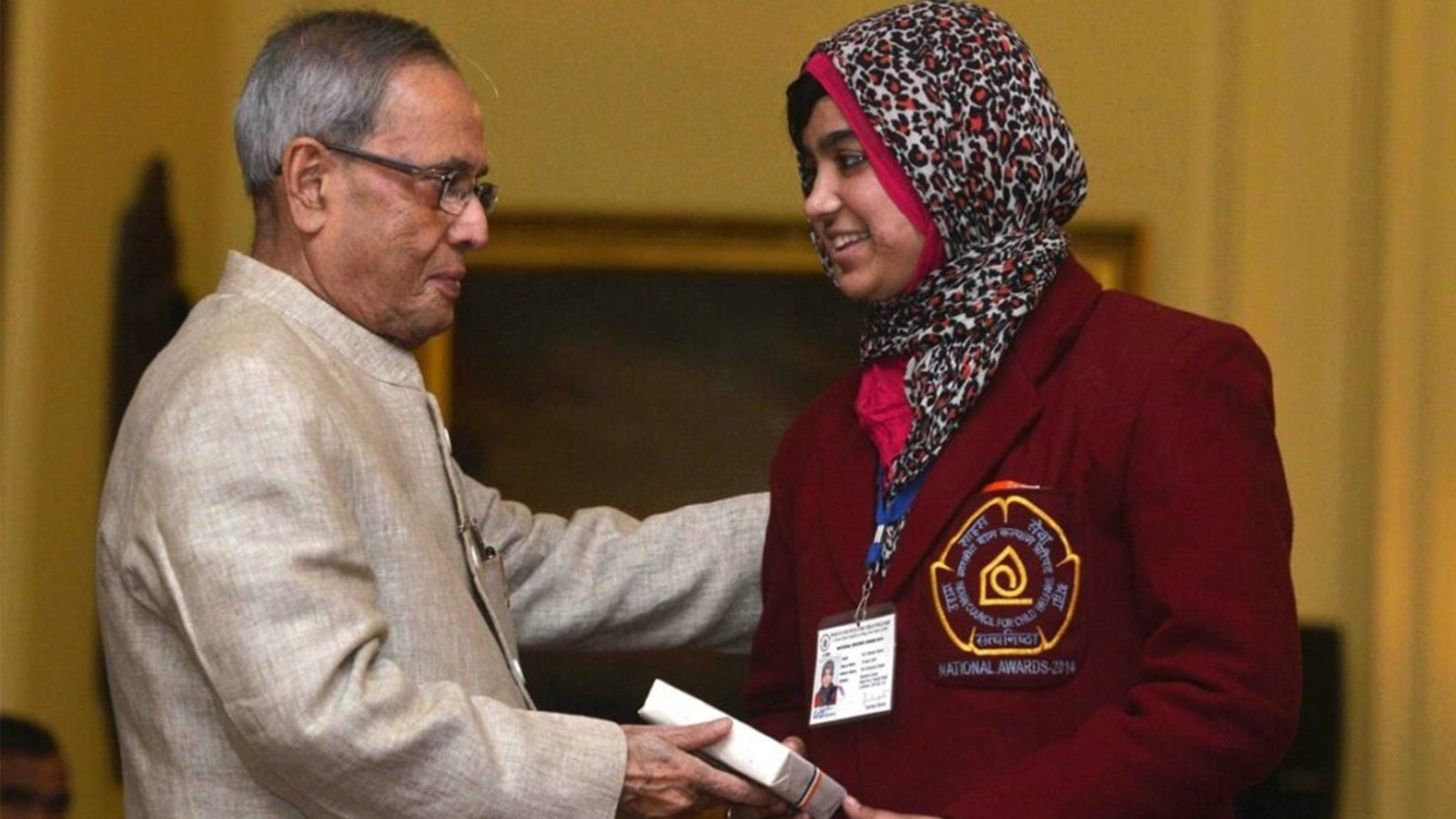
Other milestones followed: a BSc Physics (Honours) at Delhi’s Jamia Millia Islamia in 2018, and the Bharat Award — the highest national bravery award for children — at the Republic Day celebrations in 2015.
Wedged between these milestones were the grimmer realities of everyday life: the stares, the uncomfortable questions, and, worst of all, pity.
“I didn’t want their pity,” she says. “I wanted them to see me as someone capable.”
Although she initially planned to take up the civil services, Resham switched to a master’s degree in Politics and International Relations from Jawaharlal Nehru University (JNU). In 2023, while still studying at JNU, she launched the Ebrah Foundation, an initiative that mentors young Muslim women on education, careers and financial independence.
Story continues below this ad
In 2024, she married her now-husband, Asghar, who encouraged her to apply for the Chevening Scholarship.
“Even after moving to London, work on the Ebrah Foundation will continue, with plans now afoot to introduce spoken English classes for girls back home,” she says. “Muslim women often stand at ‘the margins of the margins’ — facing discrimination as women as well as members of a minority community. If girls become financially independent, they become more confident in making their own decisions.”
But while life moves on, memories of the trauma remain etched in the mind — and in her scars. In 2015, Resham heard that her uncle, Riyaz — the man allegedly responsible for the acid attack — died by suicide while still in jail awaiting trial. The death came months after she received the bravery award.
When she first heard the news, Resham’s reaction surprised even herself. “I didn’t want him to die,” she says. “I wanted him to stay alive and see me succeed. I wanted him to see that he couldn’t destroy my life.”
Story continues below this ad
Over the years, she has chosen to move on. But it’s not easily forgotten. “This is not a kind of trauma you leave behind,” she says. “You carry it with you every single day. The only way is to accept it and move forward.”