

The bill, cleared by a voice vote, seeks to strengthen the legal framework governing delayed payments to micro, small and medium enterprises by prescribing timelines for dispute resolution, enabling recovery of mediated settlement agreements and arbitral awards, and addressing liquidity constraints faced by the sector.
Also Read: MSME Bill introduced, looks to speed up payments
One of its key provisions empowers courts to direct buyers to deposit at least 50% of the amount awarded to an MSME supplier if an application challenging an order remains pending for more than six months.
Soon after the bill was passed, the Upper House was adjourned for the day.

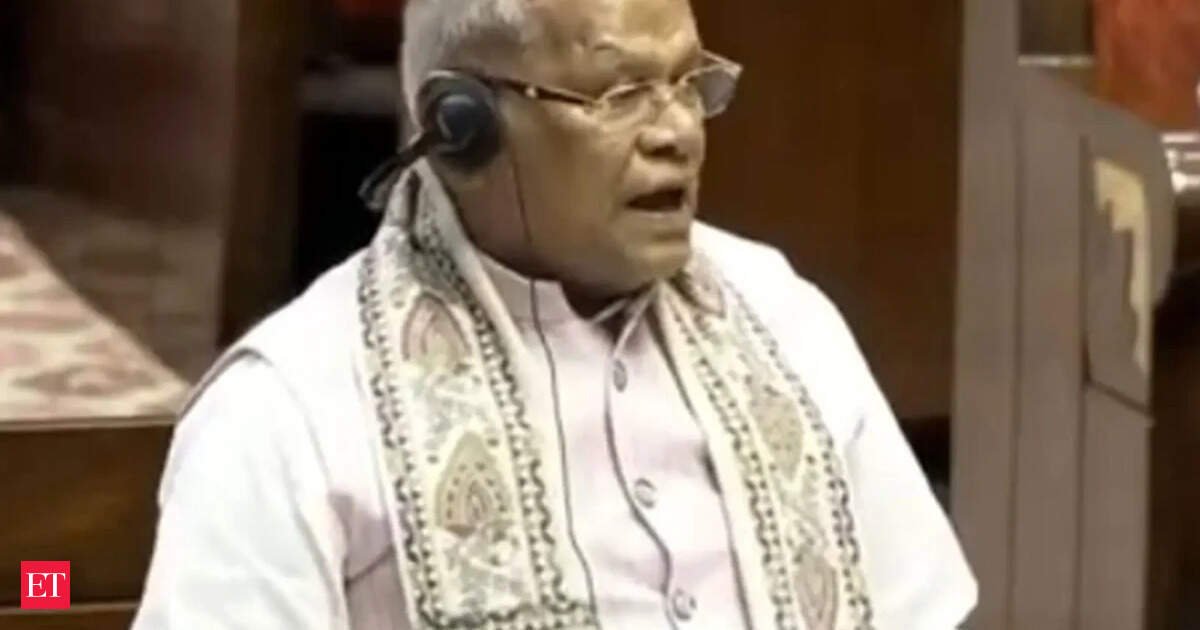
Replying to the debate, Union MSME Minister Jitan Ram Manjhi said the proposed legislation would address long-standing challenges faced by the sector by improving its administrative framework and payment mechanisms.
“We expected our opposition allies to support, cooperate, and pass this bill, but today they are opposing … I am surprised, but despite this, I propose before the House that this bill be passed by amending the 2006 Act,” Manjhi said.Also Read: Monsoon Session: Parliament to take up anti-paper leak Bill today, MSME, others on agenda
He said the legislation seeks to strike a balance between the interests of MSMEs and buyers while remaining consistent with constitutional principles.
“Its objective is to balance the interests of all concerned parties while maintaining constitutional principles and the interests of businesses,” the minister said, adding that the government remained committed to the growth of the MSME sector.
Describing MSMEs as the backbone of the Indian economy, Manjhi said the sector contributes 31% to the country’s GDP, 36% to manufacturing output and 41% to exports.
“The outstanding credit disbursed to MSMEs, which stood at Rs 10 lakh crore in 2014-15, has today increased to over Rs 38.35 lakh crore, denoting that the credit flow to MSMEs is rising steadily, he told the House.
He added that the ministry was committed to building “Champion MSMEs”.
The legislation also provides for recovery of mediated settlement agreements and arbitral awards as arrears of land revenue. It proposes to decriminalise certain offences by replacing conviction-based fines with graded penalties, including a warning for first-time violations. In addition, it enables the government to notify a national digital platform for free and voluntary registration of MSMEs.
Opposition protests dominate proceedings
The debate unfolded amid continuous sloganeering by Opposition members, who demanded the presence of Home Minister Amit Shah to respond to police action against students protesting the alleged NEET examination paper leak.
Members repeatedly raised slogans such as “we want justice”, disrupting proceedings throughout the discussion and the bill’s passage.
Tensions flared even before the debate began after Leader of the Opposition Mallikarjun Kharge was not allowed to speak. Questioning the decision, Kharge asked whether “the sky would fall” if he was allowed to speak for five minutes.
Leader of the House J P Nadda maintained that the minister had already moved the bill and the discussion had commenced.
Congress MP Ajay Maken termed the development “unfortunate”, saying, “It has never happened that when LoP wants to speak, he is denied… Indian citizens are watching.”
Nadda objected, saying Maken had not spoken on the bill and urged the Chair to expunge his remarks.
When Maken turned to the proposed legislation, he alleged discrimination between large corporates and MSMEs, saying, “Haircut is allowed for big corporates, but not for MSMEs,” before again attempting to raise the protest issue.
Parliamentary Affairs Minister Kiren Rijiju accused Maken of “trying to lower the dignity of the House” despite being given multiple opportunities to speak.
The disruptions continued through the debate, with several Opposition members—including Dola Sen (TMC), Santosh Kumar P (CPI), Neeraj Dangi (Congress), Praveen Chakravarthy (Congress) and V Sivadasan (CPM)—attempting to raise the issue of police action against students at Jantar Mantar whenever they were called to speak on the bill. Deputy Chairman Harivansh repeatedly urged members to confine themselves to the legislation, but his appeals largely went unheeded.
Participating in the discussion, Sumitra Balmik (BJP) defended the government’s record on MSMEs and recited a couplet aimed at protesting members: “Aandhiyan bujhati chirag, Modi ne toofan mein chirag jalaye hain.”
Members from several parties, including the BJD, TDP, BRS, YSRCP, AIADMK, NCP, BJP, UPPL and BSP, broadly supported the legislation while seeking additional measures such as better cash-flow support, production-linked incentives, infrastructure assistance, relief during natural calamities and improved access to credit for MSMEs.