

Why agriculture is strategic
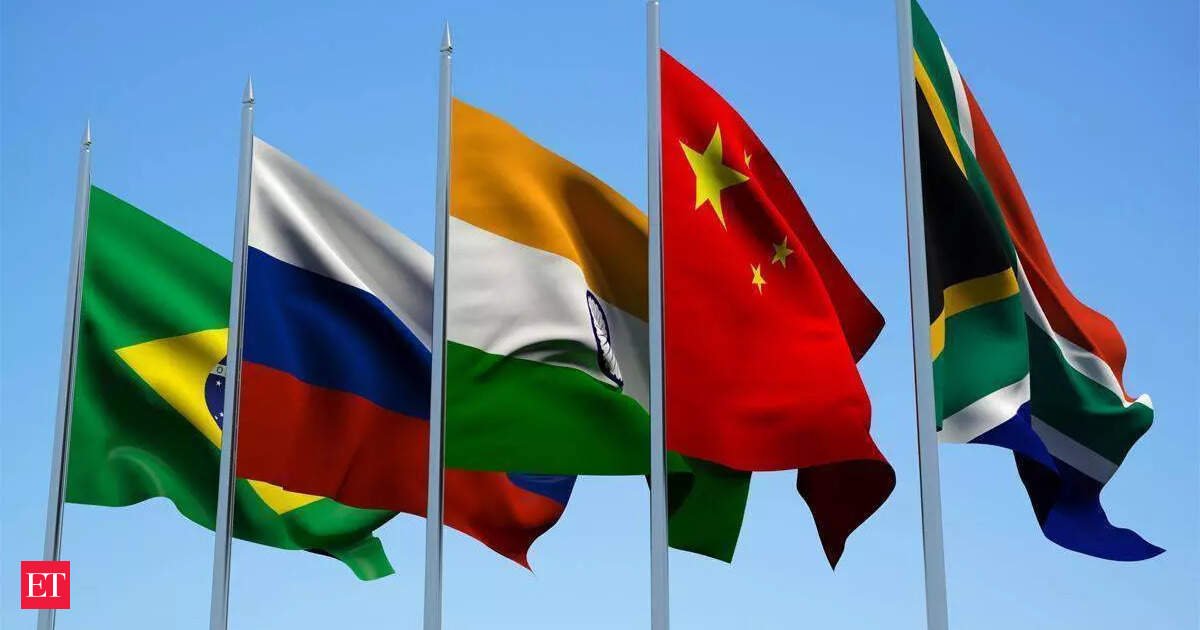
After the expansion of membership, the grouping now represents nearly half the world’s population, around 40 per cent of global GDP and about a quarter of global trade. UNCTAD’s recent assessment shows that intra-BRICS merchandise trade has expanded more than thirteen-fold since 2003, reaching US$1.17 trillion in 2024. Agriculture may be only one part of this larger trade story, but it is among the most politically and socially sensitive. When food prices rise, fertiliser supplies are disrupted or shipping routes become uncertain, the impact is felt directly by farmers, consumers and governments. This makes agriculture one of the most strategic frontiers of India’s chairship
The agricultural complementarities within the grouping are evident. Brazil is a major exporter of soyabean, meat and sugar. Russia is important in grains and fertilisers. India has strengths in rice, marine products, spices, buffalo meat and a wide range of smallholder-based commodities. China is a large food importer and processor. South Africa connects the grouping to important African agri-food markets. The newer members add further dimensions: the UAE and Saudi Arabia bring logistics, finance and food-security investment interests; Egypt and Ethiopia represent major food-system concerns in Africa; and Indonesia adds palm oil, fisheries and tropical agriculture.
From complementarity to mechanisms
Yet scale and complementarity do not automatically create resilient trade. The forthcoming BRICS Agriculture Ministers’ meeting gives India an opportunity to steer cooperation towards practical mechanisms: trusted trade infrastructure, resilient input supply chains, market intelligence, and women- and youth-inclusive smallholder value chains.
Trusted trade infrastructure should be an early priority. The 2024 BRICS Principles on Trade Facilitation in Agriculture already recognise the building blocks of modern agri-trade: SPS and TBT cooperation, equivalence, lower trade costs and digital trade facilitation. India’s leadership can add value by moving this agenda towards implementation through interoperable digital certificates, credible traceability systems, faster regulatory communication and capacity-building for producers and exporters.

A second priority is resilient input supply chains. Food trade cannot be separated from fertiliser, energy, feed, seed, logistics and finance. For India, this is not an abstract concern: more than half of its fertiliser and energy imports come from BRICS members, making input security central to agricultural resilience. Recent crises in West Asia have shown that production can be disrupted long before food reaches the market. Cooperation should therefore include early-warning systems for fertiliser and input markets, transparent information on stocks and prices, and mechanisms to reduce sudden disruptions in essential agricultural inputs.
A third priority is market intelligence. The BRICS Grain Exchange idea points to the need for better transparency, price discovery and food-security preparedness. India could build on this by proposing an agricultural market intelligence function within the BRICS Agricultural Research Platform, which is already being positioned as a “Knowledge-to-Action” hub. Such a function could track food stocks, crop prospects, SPS alerts and commodity outlooks, helping countries respond before disruptions become crises.
Making trade farmer-centred
A fourth priority is women- and youth-inclusive smallholder value chains. If agri-trade remains confined to large commodity flows, its developmental value will be limited. The Delhi Declaration emerging from the Global Conference on Women in Agri-Food Systems (GCWAS) 2026 provides a useful starting point by placing women’s agency and leadership at the centre of agri-food transformation. India can carry this spirit into the agri-trade agenda by ensuring that smallholders, especially women farmers and rural youth, are supported not only to produce for markets, but to participate more effectively in value chains.
These priorities are not about creating a closed food bloc. They are about ensuring that agricultural trade works better for food security, farmers and consumers in a more uncertain world. India is well placed to shape this agenda because it brings together experience in food security management, smallholder agriculture, digital public infrastructure and agricultural research.
India’s chairship offers a timely opportunity to give this agenda practical shape. Even modest but well-designed cooperation can make agri-trade more reliable during crises, more transparent in its rules and more accessible to farmers. That would mark an important step towards a more resilient, trusted and farmer-centred agri-trade order.
Dr. ML Jat, Director General, ICAR and Secy. DARE
Dr. Smita Sirohi, ICAR- National Professor, MS Swaminathan Chair and former Joint Sec (G20/BRICS) DAF&W