

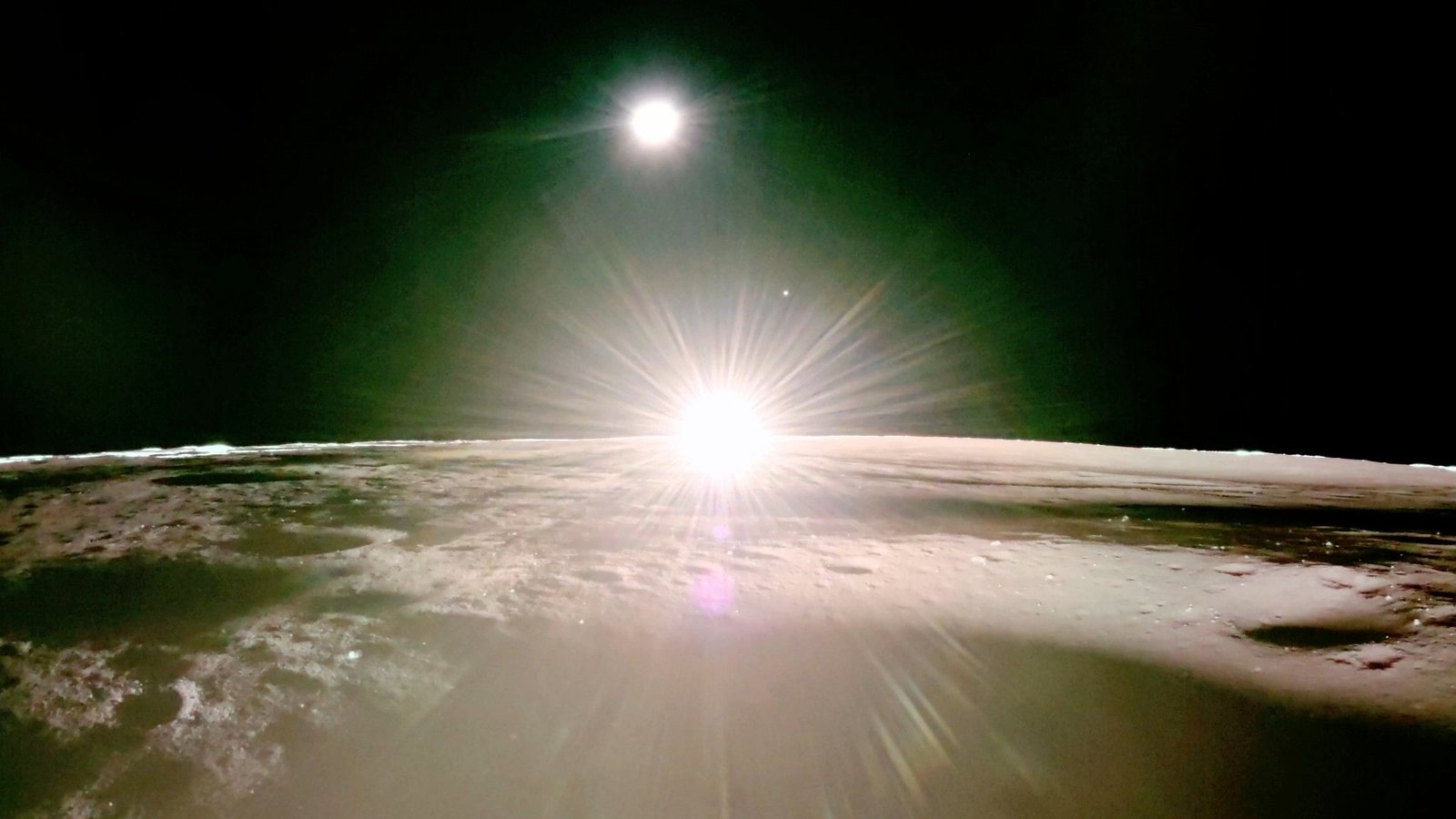
This rocket wasn’t supposed to die so dramatically.
On Wednesday (Aug. 5) at about 2:35 a.m. EDT (0635 GMT), the upper stage of a SpaceX Falcon 9 rocket will slam into the moon, blasting out a crater about 89 feet (27 meters) wide.
The rocket body has been loitering lazily high above Earth for more than 18 months. What jolted it out of its unremarkable senescence and put it on a kamikaze course for the moon?
It didn’t take much, as the rocket regularly crossed into the moon’s neck of the woods.
The Falcon 9 launched in January 2025, carrying aloft two private robotic lunar landers — Firefly Aerospace’s Blue Ghost and Resilience, which was built by the Tokyo-based company ispace. (Blue Ghost landed successfully and carried out its historic mission, but Resilience crashed during its touchdown attempt.)
Falcon 9 first stages are famously reusable, but the vehicle’s upper stages fly just once. SpaceX usually deorbits these rocket bodies shortly after launch, guiding them back for controlled destruction in Earth’s atmosphere. That wasn’t possible on the Blue Ghost-Resilience launch, however, as getting the lunar probes to their distant deployment point used up almost all of the upper stage’s fuel.
As a result, the 8,800-pound (4,000 kilograms) rocket body “was abandoned in a moon-crossing high-Earth orbit,” according to a recent study about the coming impact led by Benjamin Fernando of Los Alamos National Laboratory in New Mexico.
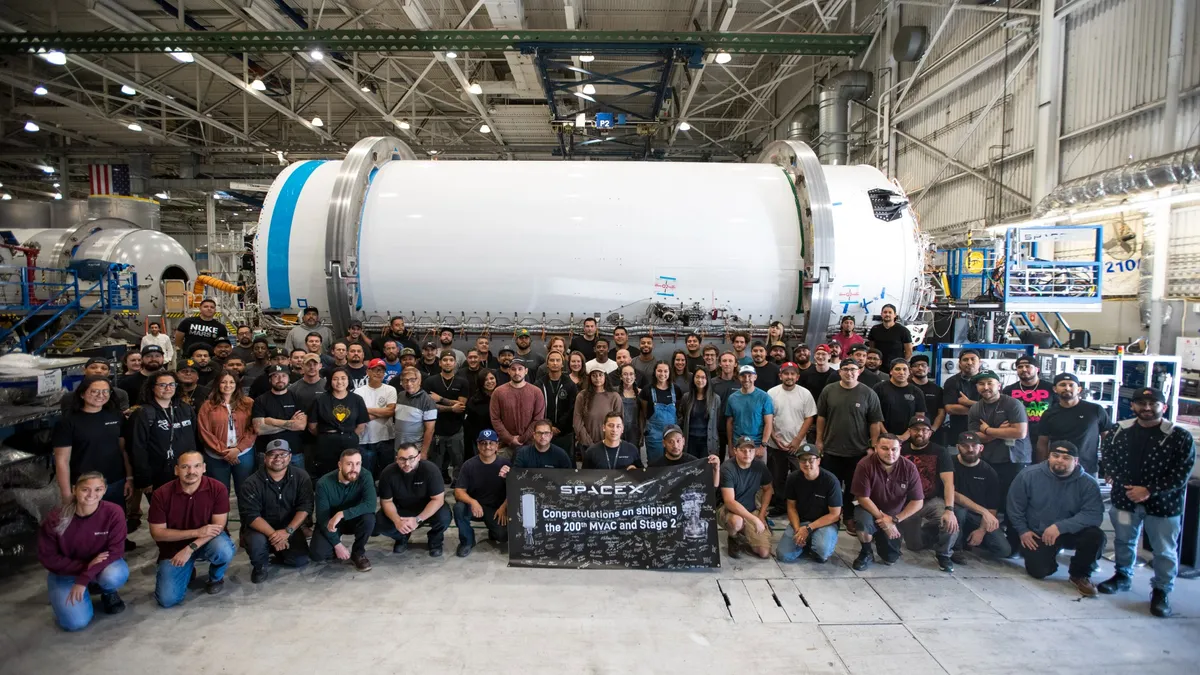
SpaceX performed “a different maneuver [than deorbiting] to ensure that the second stage itself is safe per the appropriate rules and regulations,” Julianna Scheiman, director of NASA science and Dragon programs at SpaceX, said today (Aug. 3) during a press conference discussing the company’s Crew-13 astronaut launch to the International Space Station, which is targeted for Sept. 12.
That maneuver did not lock the hunk of space junk into a stable location, however; natural forces still acted upon it and, it turns out, changed its trajectory.
“What has happened is, essentially, a mixture of solar activity and gravity forces have put it on a path towards the moon,” Scheiman said.
Astronomers and lunar scientists are looking forward to the upcoming impact, even though it will occur on the sunlit side of the moon and therefore likely won’t be visible to most observers here on Earth (though skywatchers with good telescopes might be able to catch a glimpse of the resulting ejecta plume).
The event “provides an opportunity to test pipelines for measuring flash properties to locate impact events seismically, and to better understand the multi-modal hazards posed to future lunar infrastructure and astronauts from space debris impacting the moon,” Fernando and his colleagues wrote in their paper.
Those hazards won’t be purely hypothetical for much longer, if all goes to plan: NASA aims to build a base near the moon’s south pole over the coming decade via its Artemis program, and to keep that outpost staffed over the long haul. Scheiman said that SpaceX is looking into ways to minimize the chances that spent rocket bodies could rain down on an occupied moon in the future.
“It’s one of the things that we’re working in partnership with NASA and the other appropriate agencies,” she said. “What is the best future disposal path for high-energy missions that are in the sun-Earth-moon system?”

This Falcon 9 won’t be blazing an entirely new trail to the moon. The third stage of NASA’s Saturn V moon rocket struck the lunar surface on multiple Apollo missions, for example. And, on March 4, 2022, a mysterious rocket body slammed into the moon, blasting out a weird double crater.
That shape revealed the impactor’s identity — the upper stage of the Long March 3C rocket that sent China’s uncrewed Chang’e 5-T1 mission around the moon in October 2014.