

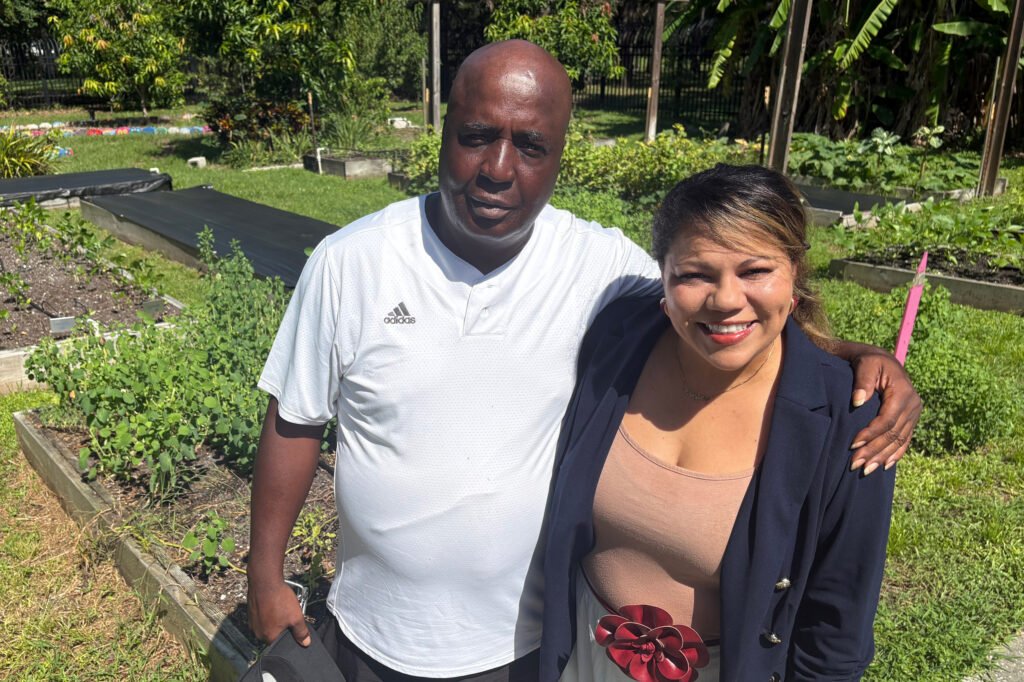
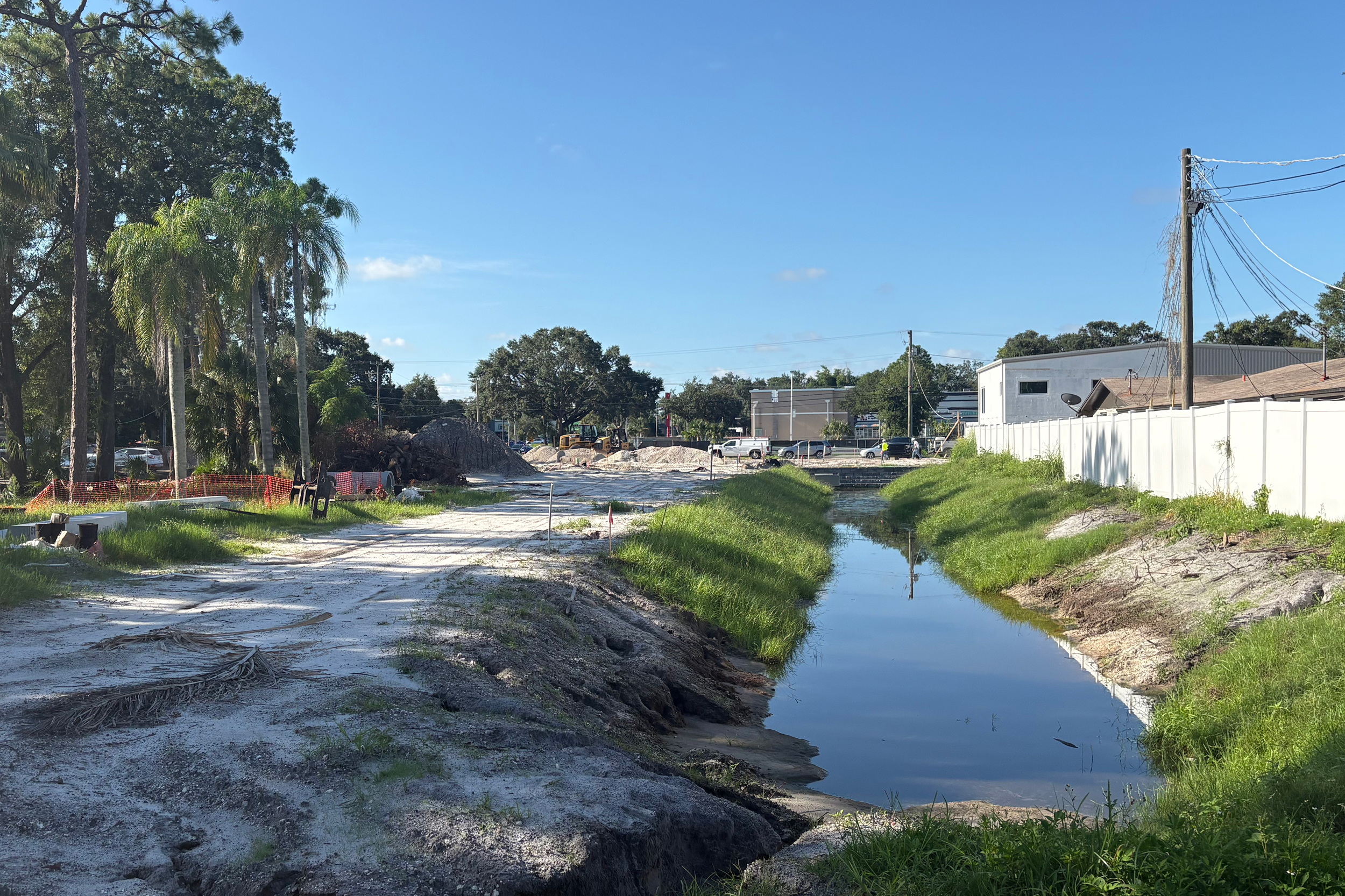
TAMPA, Fla.—Ross Fabian’s low-slung apartment building sits beside a pond that sometimes smells of dead fish. He has seen dead dogs in the pond.
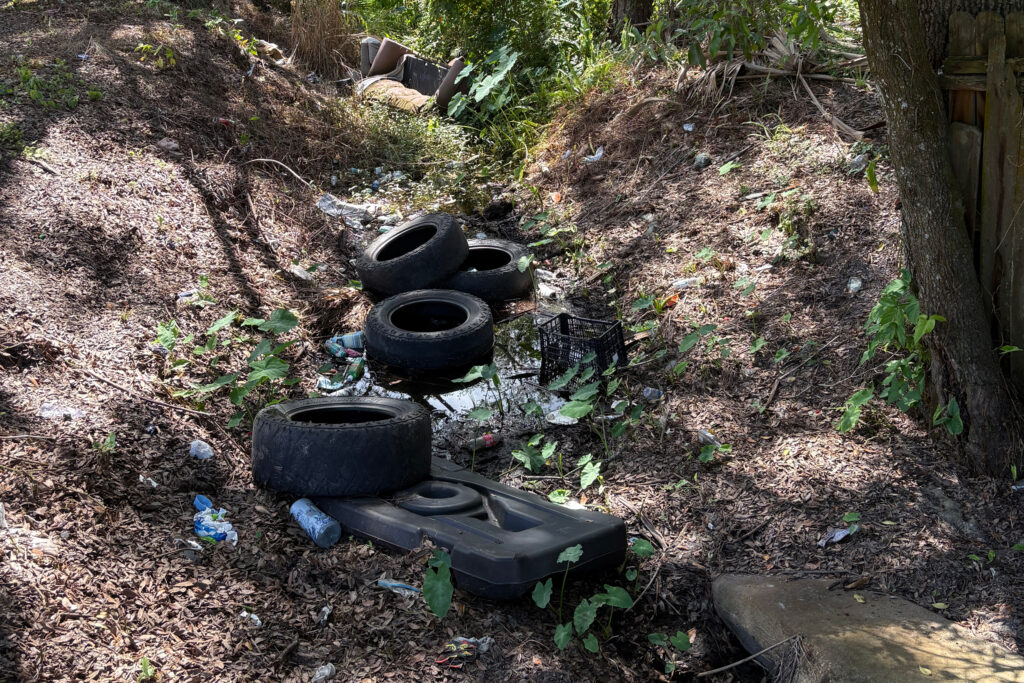
For many years the pond has served an important purpose, as a repository of sorts for the pollutants and contaminants that flow with Florida’s heavy rains from the industrial sites, brownfields and failing septic systems in Fabian’s unincorporated community, which neighbors the University of South Florida and is known as the University Area.
Called Aarans Pond, it is part of a network of such artificial waterbodies across the region where stormwater collects before cascading through a series of culverts and weirs, eventually flowing into the Hillsborough River and Tampa Bay. The system helps filter the pollutants that within the region’s namesake bay would foster more of the harmful algae blooms and seagrass losses that have beleaguered treasured waterways across Florida.
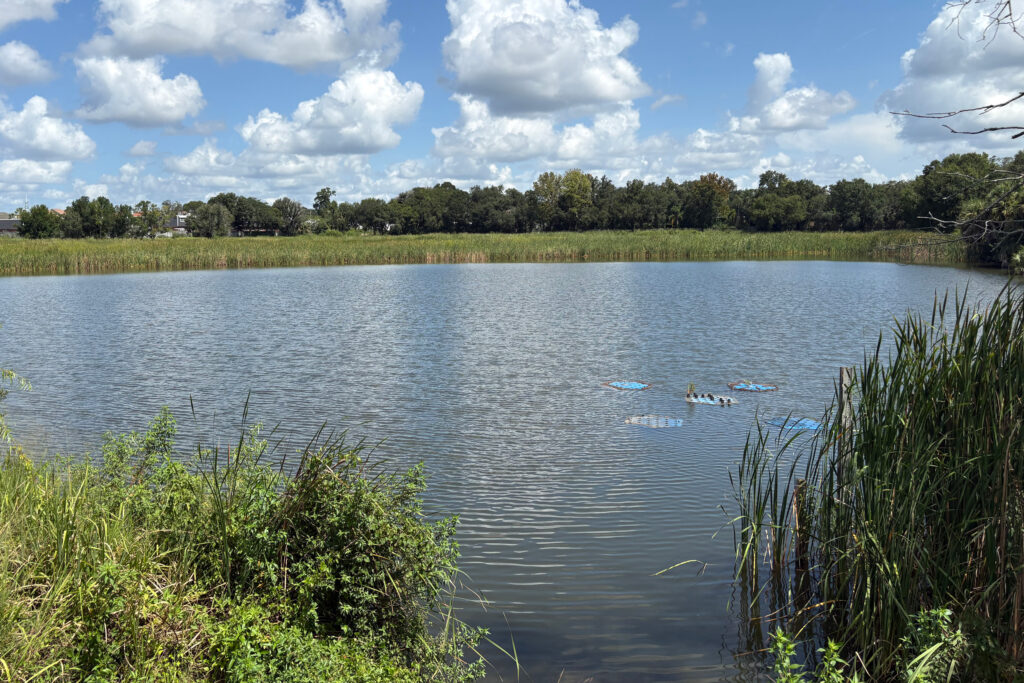
But in the University Area, a community of some 10,000 residents where the per capita median income is about $12,000 and 33 percent of residents are unemployed, Aarans Pond and two others like it are impaired, a consequence of the scope of pollutants here on the north edge of Tampa and also intensifying rain events and flooding as the global climate warms.
To help address the problems, the Environmental Protection Agency in December 2024 awarded the University Area a $15 million grant. The funding was among 350 such grants offered under a Biden-era program to communities nationwide where a legacy of segregation and systemic lack of investment have left residents disproportionately vulnerable to environmental degradation and climate impacts such as flooding and less equipped to deal with the issues.
In the University Area, residents celebrated and characterized the opportunity as transformational for their community. Plans called for restored ponds, improved flood control, cleaner drinking water and also a new community center offering job training, health care and a small business incubator, among other services.
“We had all these plans to do all these great things,” said Christian Wells, professor of anthropology and director of the Center for Brownfields Research and Redevelopment at the University of South Florida. “Then they pulled the rug out from under us.”
By May 2025 the Trump administration had taken back all the grant funding under the Environmental and Climate Justice Block Grant program and cancelled the program itself, part of a widespread dismantling of environmental and equity-related initiatives across the federal government. This past July a federal judge ruled the EPA must resume administering the program through the end of September, when the grants originally were scheduled to expire; the federal government has already appealed the ruling.
In the meantime, communities still are without funding.
“It ain’t about race. It’s about communities itself. Just give us the same resources you give everybody else. It’s plain and simple,” said Fabian, 61, a local youth footfall coach who has lived in the University Area for 40 years. “I deserve the same as you do in the suburbs.”
Pollution and Bad Water
In the University Area most residents live in apartment buildings, duplexes or trailers within close proximity of industrial sites or brownfields, such as abandoned warehouses or former gas stations or automotive shops. Habitat for Humanity has provided a few single family homes. There are 18 biomedical waste facilities, 27 hazardous waste facilities and five solid waste facilities, among other such sites, within its boundaries, according to the grant proposal the community submitted to the EPA. Stoves populate many front porches because cooking inside with no air conditioning is too hot. Half of residents identify as Hispanic and just over a quarter identify as Black.
Drinking water and sanitation are big concerns. Residents describe their water as smelling “bad” or like “sewage” or “eggs.” They say the water tastes “funny,” “bad” or like “metal,” and more than half of residents “always” use bottled water, according to the grant proposal. Some 20 percent of residences do not have piped water or sewer access and rely on private wells and septic systems, an important detail in a community with so much pollution.
The Environmental and Climate Justice Block Grant program was established in 2022 as part of the Inflation Reduction Act. The program offered $3 billion in grants for community-driven initiatives involving things like enhancing natural disaster preparedness, expanding workforce development opportunities, improving air quality, mitigating stormwater and flood damage and combating high energy costs. It was also designed to amplify the voices of those in communities that historically had little say in the decisions that affected them.
In rural Virginia, an environmental nonprofit planned to put the funding toward projects in five communities where declining coal resources have challenged the economy, according to federal litigation filed on behalf of grant recipients over the cancellations. Sacramento, California, intended to plant new trees to shade underserved communities where temperatures are up to 15 degrees hotter. Another grant was awarded to the Village of Kipnuk, Alaska, which was built upon permafrost that is thawing. Most residents identify as part of the Yup’ik culture, speak the Native language and maintain traditional practices such as subsistence hunting, fishing and gathering.
“There has been a history of communities that are well-connected getting earmarks, and many communities year after year are left out,” said Kym Meyer, litigation director at the Southern Environmental Law Center, one of the groups involved in the federal litigation. “And so there was a very deliberate focus on doing things differently and really ensuring the funding went to smart projects and communities that had been overlooked.”
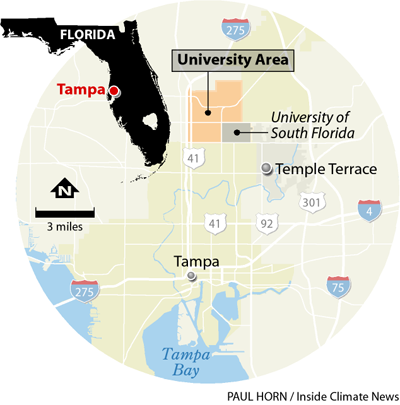
Tampa’s University Area, selected from 2,700 applicants, was among 105 communities to receive so-called Community Change Grants. The award represented the culmination of several years of research by the University of South Florida and previous EPA-funded work aimed at addressing the pollution and environmental degradation in the community, Wells said. The proposal was submitted by the University of South Florida and University Area Community Development Corp. (CDC), a community-based nonprofit.
The proposal called for a pond restoration effort that also would help address some of the flood control concerns in the low-lying community. The ponds are designed to help prevent flooding, but they can contribute to high water when clogged with excess debris or vegetative overgrowth. The problems were a factor in the damaging flooding the community experienced during hurricanes Helene and Milton in 2024.
The proposal also called for water service connections at 50 multifamily complexes and septic-to-sewer conversions at 25 of the properties, affecting hundreds of residents. In addition, a 12,000-square-foot, two-story community center would be built called the Prosperity Center, housing several community-based nonprofit groups. Had the grant not been rescinded, construction on the community center was projected to be complete by 2026, with an opening planned for the spring or early summer.
“It was fabulous,” said Sara Roman, 42, who lives in the community with her two children. “At the time I was buying my house, so I knew it was the right moment to buy the house and stay in University Area because I knew it would bring development to the area.”
Fabian was more skeptical.
“I sat back and smoked my cigar and said, ‘I’m going to see how this works,’” said Fabian, a thoughtful no-nonsense man with a round face and warm manner. “They don’t do what they’re supposed to do to this community, and it’s been like that for a while. When you’ve been somewhere 40 years you get kind of used to it. It’s upsetting.”
Two Executive Orders
The University Area was awarded the grant in December 2024. Work just was getting under way when Trump issued two executive orders soon after his inauguration in January 2025. The first, entitled “Unleashing American Energy,” directed federal agencies to stop disbursing funds allocated under the Inflation Reduction Act. The other, called “Ending Radical and Wasteful Government DEI Programs and Preferencing,” mandated that all equity-related grants or contracts be terminated within 60 days. The EPA subsequently moved to terminate the Environmental and Climate Justice Block Grant program.
With no funding, some grant recipients were forced to reduce staff, cancel contracts and tell their communities they no longer would be able to continue urgently needed projects, according to the federal litigation.
This story is funded by readers like you.
Our nonprofit newsroom provides award-winning climate coverage free of charge and advertising. We rely on donations from readers like you to keep going. Please donate now to support our work.
“One of the most shocking things to me in the immediate aftermath,” Meyer said, “people were even terrified to go to court because they were afraid there may be retribution taken against them by the government. So it’s hard to imagine how any of that trust gets put back in the future.”
The EPA told Inside Climate News that “in keeping with a longstanding practice, EPA does not comment on pending litigation.”
In the University Area the proposal’s architects learned their funding was cancelled because it centered on racial and ethnic minorities, Wells said. The EPA said the team would have to revise its work plan to “scrub” references to race and ethnicity and banned terms such as variations of “culture” and “community.” The EPA provided a form listing the disallowed words and a decision tree used to flag projects that did not comply with the new guidelines.
“I felt like I sold them a dream,” said Serena Echols, a recent graduate at the University of South Florida with master’s degrees in anthropology and public health. She was part of the research team in the University Area. “Like, I was guilty in some way, shape or form even though it wasn’t my fault.”
After much discussion and consternation in the community, the team in February 2025 set about revising the work plan. Residents said they desperately needed the resources, understood the mechanics of structural racism and were willing to work from within the system to dismantle it, Wells said. The team spent a couple of weeks replacing terms such as “environmental justice” with “integrated brownfields challenges” and references to race and ethnicity with different forms of the word “impoverished.” The work plan retained the community’s vision even though the language had been changed for the Trump administration, he said. In May 2025 the team received a letter from the administration with the news that the grant had been cancelled.
“My sort of bigger picture thinking on this is it really is showing us how much our system is broken,” Meyer said. “What is most galling to me is there is not a single court or really even the EPA itself that has said this was legal. No one is saying what they did was legal. They’re just essentially saying there is nothing you can do about it. And that’s really a tough place to be.”
Hope and Trust
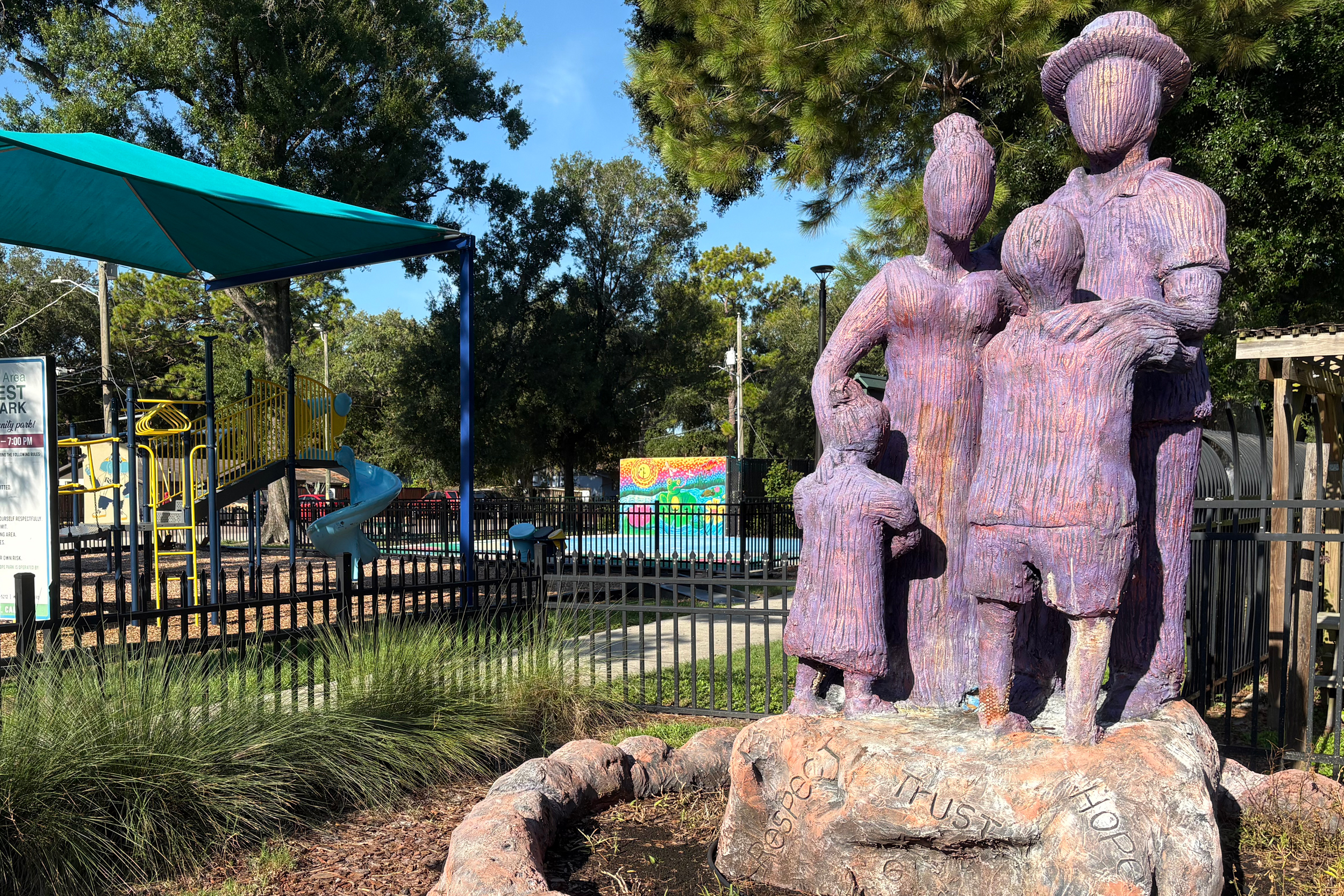
In the University Area there is hope. In 2023 the community celebrated the completion of the first phase of a brownfield redevelopment project that involved the restoration of a separate pond and construction of a park and community gathering place called Harvest Hope Park. The property features a vegetable garden, playground, splash pad and artfully painted facility where residents can come together for cooking classes and food distribution events, among other occasions.
The Prosperity Center included in the grant proposal was to be situated adjacent to Harvest Hope Park, representing the second phase of the brownfield redevelopment project. With no funding the work remains on hold, although Erica Moody, chief executive officer of the University Area CDC, said the community is pursuing private funding. Despite the federal judge’s ruling in July, the community is not planning on funding from the EPA at this point.
“We have not given up in any way,” she said. “You can’t give up because when you give up, you’ve given up on the community.”
The loss of the funding has been hard on the University Area. The situation has further eroded trust for the government in a community that long has felt marginalized, overlooked and betrayed, residents said. Fabian’s voice rose as he considered the Trump administration’s backlash against equity-related policies such as the Environmental and Climate Justice Block Grant program, on the basis that such policies unlawfully show a bias when it comes to race.
“Be fair to us. We’re not asking for a handout. We’re asking for us to be the same as you treat others,” he said. “You want to make it about race? You’re the one making it about race.”
About This Story
Perhaps you noticed: This story, like all the news we publish, is free to read. That’s because Inside Climate News is a 501c3 nonprofit organization. We do not charge a subscription fee, lock our news behind a paywall, or clutter our website with ads. We make our news on climate and the environment freely available to you and anyone who wants it.
That’s not all. We also share our news for free with scores of other media organizations around the country. Many of them can’t afford to do environmental journalism of their own. We’ve built bureaus from coast to coast to report local stories, collaborate with local newsrooms and co-publish articles so that this vital work is shared as widely as possible.
Two of us launched ICN in 2007. Six years later we earned a Pulitzer Prize for National Reporting, and now we run the oldest and largest dedicated climate newsroom in the nation. We tell the story in all its complexity. We hold polluters accountable. We expose environmental injustice. We debunk misinformation. We scrutinize solutions and inspire action.
Donations from readers like you fund every aspect of what we do. If you don’t already, will you support our ongoing work, our reporting on the biggest crisis facing our planet, and help us reach even more readers in more places?
Please take a moment to make a tax-deductible donation. Every one of them makes a difference.
Thank you,

Reporter, Florida
Amy Green covers the environment and climate change from Orlando, Florida. She is a mid-career journalist and author whose extensive reporting on the Everglades is featured in the book MOVING WATER, published by Johns Hopkins University Press, and podcast DRAINED, available wherever you get your podcasts. Amy’s work has been recognized with many awards, including a prestigious Edward R. Murrow Award and Public Media Journalists Association award.