

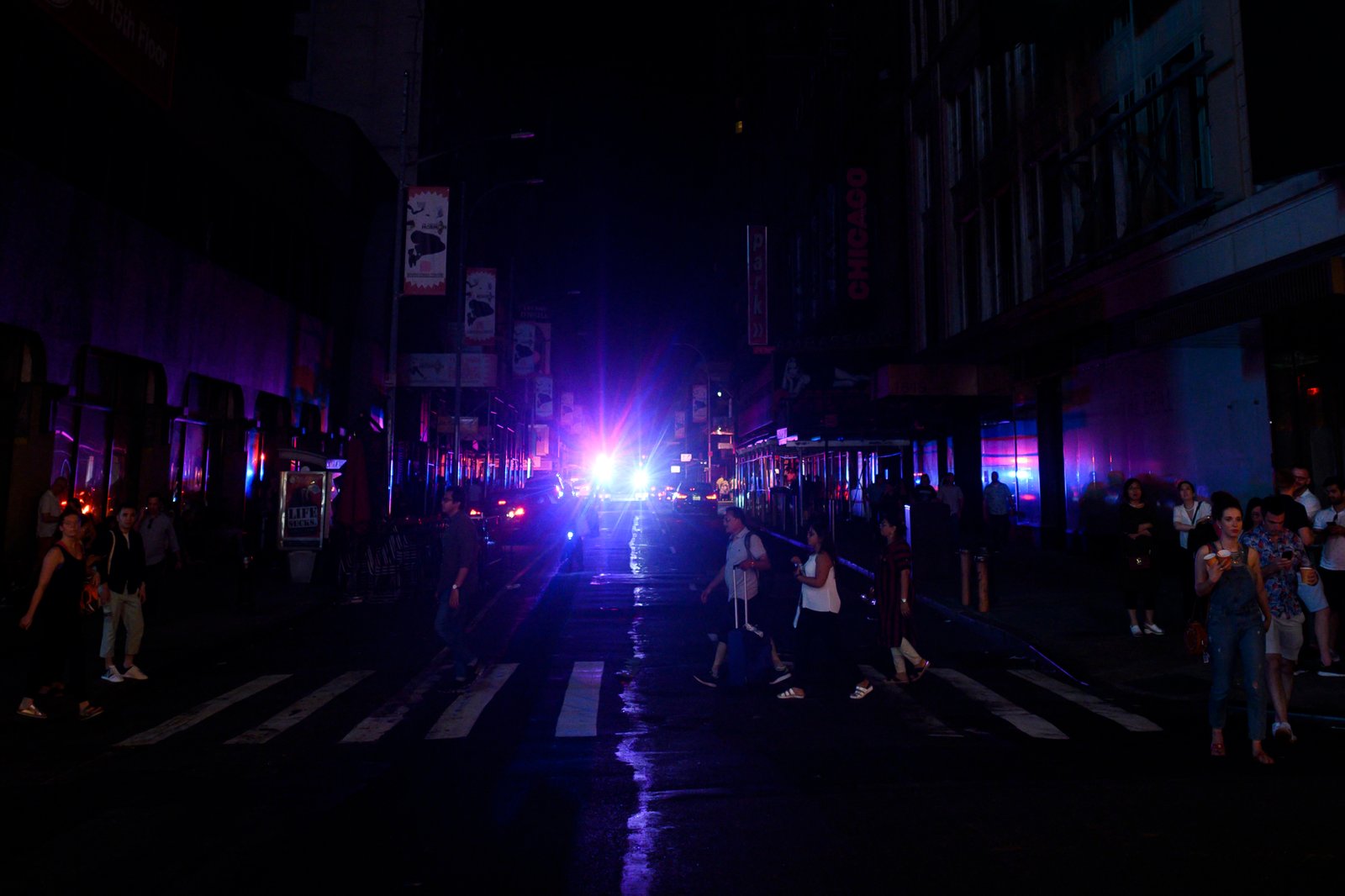
NEW YORK—When nearly 10,000 people in Southeast Queens lost power during a July heatwave, Mayor Zohran Mamdani called on residents to keep their air conditioners at 78 degrees to reduce the pressure on the grid. The New York Independent System Operator, which manages the state’s electricity grid, issued an energy watch the same month, but it wasn’t the first time it sounded the alarm.
In 2025, the NYISO activated its demand response program—which pays participants to reduce electricity use—22 times to prevent overloads during peak demand; 18 of those occurred in summer. During the previous 10 years, it had not activated that program more than eight times in any single year.
The North American Electric Reliability Corporation released a report in January concluding that New York faces an elevated risk of future energy supply shortfalls, meaning demand could exceed available supply during extreme weather conditions. The state’s highly variable demand forecast leaves open the possibility of such shortfalls.
Building electrification, including the shift to electric heating and stoves, is expected to increase electricity use, while chip manufacturing facilities, including Micron’s planned facility in central New York, and the planned growth of data centers could further drive demand. The changes could put additional strain on the grid, potentially overwhelming it when electricity use spikes, such as when everyone is using their air conditioners on a hot day.
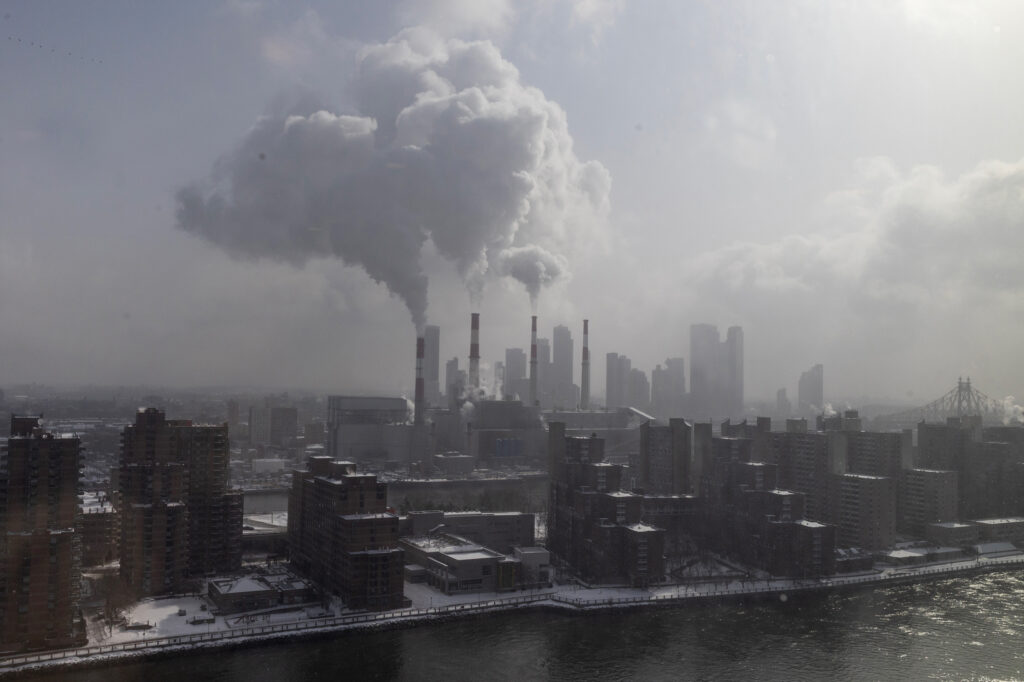
The natural gas power plants that much of southern New York state relies on are among the oldest in the country, and rising electricity demand has delayed retirement for many of them.
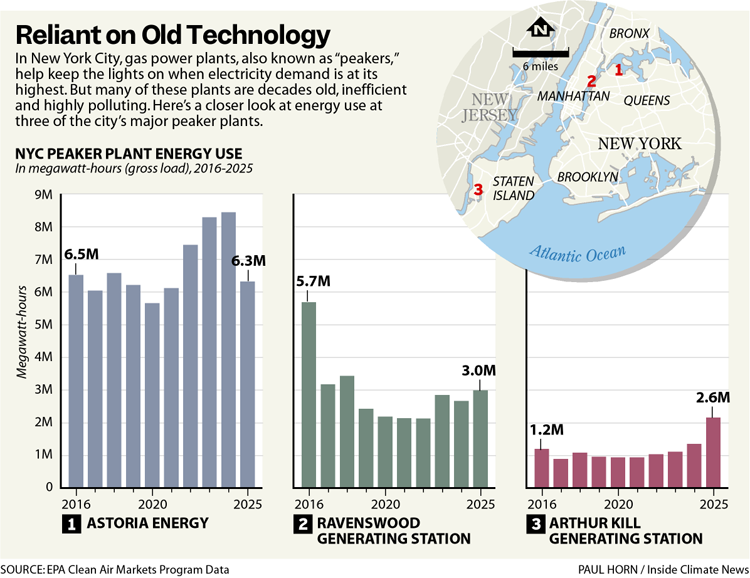
State law requires the retirement of aging natural gas power plants as long as it does not interfere with the NYISO’s ability to keep the lights on. Many of these plants are located in the city; they are less efficient and more polluting than newer plants equipped with modern technology. Environmental Protection Agency records show that three major city plants have been activated often over the past decade.
But until the state builds enough clean power and battery storage to meet demand, these “peaker” plants will continue to run, said Kate Boicourt, the New York state director at the Environmental Defense Fund.
“If we don’t use them, that can result in grid failure,” she said.
In recent years, the threat of blackouts has loomed large in the city. In 2025, during a particularly brutal period of extreme heat, over 6,200 lost power, and another 166,000 were asked by Con Edison to reduce power usage to alleviate pressure on the grid.
To address the problem, state and city leaders have advocated for a greater focus on small energy projects in the city.
In downstate New York, including New York City, around 90 percent of energy production comes from oil and gas, according to a 2026 NYISO report. But more clean power is reaching the city. The Champlain Hudson Power Express, a massive transmission line that runs hydropower from Canada to the city, has recently come online—though it has already experienced several outages.
Boicourt argues that an aggressive expansion of renewable energy, along with battery storage, could lower the state’s dependence on natural gas, which can have unpredictable pricing.
State and city politicians have been trying to cut some of the red tape for homeowners and renters who want to install solar panels, or for developers who want to build distributed energy resources. These are small power generators or battery storage projects spread out across a region that help meet electricity demand.
They are only connected to the grid through the distribution system, which is the smaller power lines that connect homes and businesses to the grid, rather than the larger so-called transmission lines, which connect big power generators to entire regions. Sometimes they can even be what is known as “behind the meter,” meaning they are not connected to the grid and only supply energy to the home or business.
These smaller projects are about all the city has room for. Mark Levine, the city comptroller, recently released a report in which he argues that more city-owned land should be used to support the energy transition. Municipal building roofs, parking lots and fleet depots could be used for solar generation or battery storage, he said.
The SUNNY (Solar Up Now New York) Act, which passed both state chambers in May and is now on Gov. Kathy Hochul’s desk, would make it easier for New Yorkers to install plug-in solar panels on their balconies. A spokesperson for the governor told Inside Climate News that her office “will review the legislation.”
Hannah Birnbaum, co-founder and chief of advocacy for Permit Power, a nonprofit that advocated for the bill’s passage, said that the regulations surrounding small power generators don’t reflect their simplicity.
“We subject [small projects] to the same kind of bureaucratic and costly approval process as a bigger project or a permanent installation, even though it’s effectively an appliance,” she said.
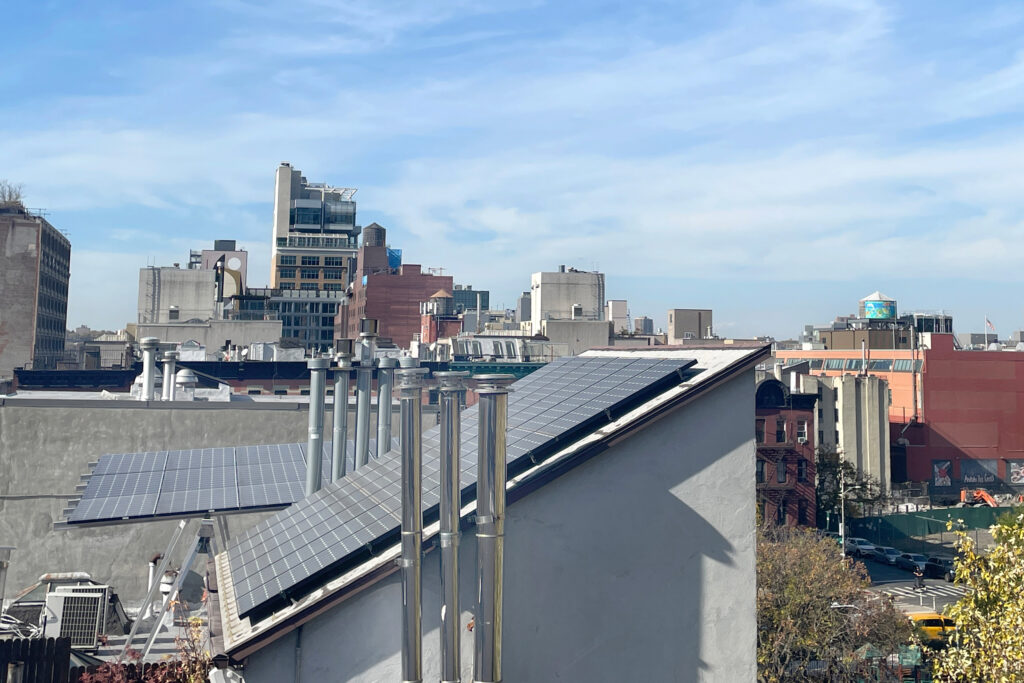
This makes it “virtually impossible,” she said, to install small batteries and solar panels in people’s homes, which could help power appliances during times of peak demand, taking pressure off the grid.
Some small in-home batteries have passed inspection by the city’s fire department—last year, some residents installed induction ovens with built-in batteries in their homes. But the approval process can take years.
The development of bigger clean energy projects is also facing headwinds. Gavin Donohue, the president and CEO of the Independent Power Producers of New York, a statewide association that represents independent power generators, said the pandemic compounded many delays, including supply chain disruptions and labor shutdowns.
“It’s not just the industry’s fault,” he said. “It’s not like we’re sitting here and there’s no private companies wanting to build.”
Big power generation projects, after planning and permitting are done, often wait longer than a year for the NYISO to evaluate them, a process that determines the cost of connecting the project to the state grid.
Some developers have abandoned projects because of high costs. According to the NYISO, of the more than 100 projects that have completed the interconnection process since 2019, only 14 had started construction by June of this year.
This story is funded by readers like you.
Our nonprofit newsroom provides award-winning climate coverage free of charge and advertising. We rely on donations from readers like you to keep going. Please donate now to support our work.
This is also a problem for smaller projects undergoing similar processes with local utilities. New York Focus has reported that Con Edison, the city-based electric utility, is trying to pass on the high costs of grid infrastructure upgrades to community battery storage developers.
Because empty land is scarce in the densely populated city, large clean energy projects in the southern part of the state are often developed as offshore wind projects. The power generated from these projects was expected to help the state reduce greenhouse gas emissions by 2050.
The Trump administration’s opposition to offshore wind has slowed progress on ongoing projects and canceled many more. While construction continues on the Sunrise Wind and Empire Wind projects, at least two New York offshore wind leases previously held by Total Energies and RWE have been sold back to the federal government.
State Attorney General Letitia James is challenging the legality of the Total Energies sale. The confusion surrounding offshore wind has complicated efforts to meet electricity demand, said Seth Kaplan, a vice president at Grid Strategies, a power-sector consulting firm.
As the private sector struggles to build additional power generators, the Public Service Commission requested comments earlier this year on the potential impacts of utilities owning renewable energy projects, such as wind and solar. New York City’s legal team commented that the move would be “anti-competitive,” and that “it could expose customers to upward pressure on their utility bills.”
In New York, utilities own only the means of distributing power, not power plants. In 1996, then-New York Gov. George Pataki forced utilities to sell off their generators, arguing that they were passing on the costs of construction delays and failures to captive customers.
Donohue said that letting utilities build generators again will “send a very, very anti-investment signal to the private sector, will increase rates for ratepayers, and cause further delays.”
Boicourt, of the Environmental Defense Fund, said that limiting large new electric loads until energy supply can better keep pace with demand could help, along with better long-term planning for renewable energy and battery storage—particularly smaller projects.
Ultimately, a grid failure in the summer would mean a “public health emergency,” she said.
About This Story
Perhaps you noticed: This story, like all the news we publish, is free to read. That’s because Inside Climate News is a 501c3 nonprofit organization. We do not charge a subscription fee, lock our news behind a paywall, or clutter our website with ads. We make our news on climate and the environment freely available to you and anyone who wants it.
That’s not all. We also share our news for free with scores of other media organizations around the country. Many of them can’t afford to do environmental journalism of their own. We’ve built bureaus from coast to coast to report local stories, collaborate with local newsrooms and co-publish articles so that this vital work is shared as widely as possible.
Two of us launched ICN in 2007. Six years later we earned a Pulitzer Prize for National Reporting, and now we run the oldest and largest dedicated climate newsroom in the nation. We tell the story in all its complexity. We hold polluters accountable. We expose environmental injustice. We debunk misinformation. We scrutinize solutions and inspire action.
Donations from readers like you fund every aspect of what we do. If you don’t already, will you support our ongoing work, our reporting on the biggest crisis facing our planet, and help us reach even more readers in more places?
Please take a moment to make a tax-deductible donation. Every one of them makes a difference.
Thank you,

Reporter, New York City
Lauren Dalban is a New York City-based reporter with a background in local journalism. A former ICN fellow, she now covers environmental issues in all five boroughs. Originally from London, she earned a B.A. in History and English from the University of Virginia, and an M.S. from Columbia Graduate School of Journalism.