

A tragic moment turned into a global controversy after a Pakistani journalist was seen laughing and recording a video at the crash site of the Indian Air Force’s Tejas fighter jet during the Dubai Airshow 2025. His insensitive comments—made while India mourned the loss of a decorated fighter pilot—ignited a storm of criticism across international media, diplomatic circles, and social platforms.
The clip was widely shared on X (formerly Twitter), Instagram, and YouTube, triggering widespread condemnation from users who questioned the ethics, professionalism, and humanity of the journalist involved. What should have been a moment of silence and respect instead became a disturbing example of insensitivity in crisis reporting.
What Did the Pakistani Journalist Say?
In the viral video, the journalist can be heard saying:
“Allah ki taraf se gaya… Allah ne dekho aaj hame kuch bheja hai.”
Translation: “Allah made this happen… see what Allah has sent our way today.”
He continued making mocking remarks while laughing, casually filming the smoke rising from the crash site. The journalist’s tone and choice of words deeply upset viewers, especially as the crash involved the loss of an Indian pilot’s life.
The clip rapidly circulated among defense communities, veterans, journalists, and civilians on both sides of the border, sparking a wave of criticism not only from Indians but also from Pakistanis who condemned the lack of human empathy.
Why the Reaction Was Considered Deeply Insensitive?
Journalistic ethics demand neutrality, empathy, and restraint—especially during tragedies involving human lives. Filming a crash site with mocking commentary goes against every principle of professional reporting.
Critics pointed out three key issues:
1. A Life Was Lost
The Tejas crash resulted in the tragic death of Wing Commander Namansh Syal, a decorated IAF officer. Moments involving death require silence, dignity, and respect.
2. Mocking Loss Is Not a Political Statement
No matter the nationality of the pilot—Indian, Pakistani, American, or anyone—mocking a soldier’s death is globally condemned.
3. It Promotes Hate and Dehumanization
Insensitive remarks during tragedies encourage hostility, deepen divides, and normalize cruelty toward other nationalities.
Many Pakistani users themselves stated that such behavior represents only a fraction of immature voices online, not the entire country.
Social Media Reaction: Outrage, Anger, and Calls for Accountability
The clip triggered massive reactions across platforms.
Indian users expressed:
- Outrage at the lack of humanity
- Anger toward the unprofessional behavior
- Sympathy and grief for Wing Commander Syal
Pakistani users expressed:
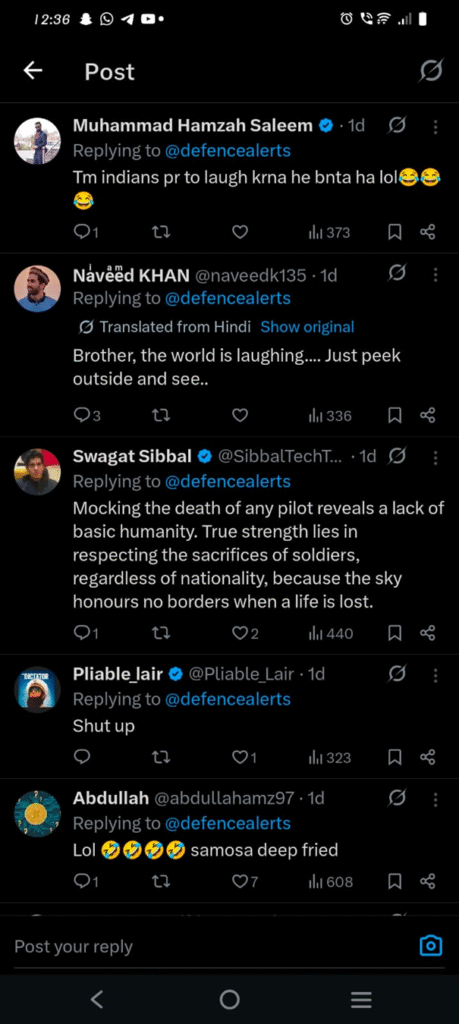
Screenshots From X: Polarized Views & Online Abuse
Chats shared across X included:
- Mocking remarks from a few Pakistani accounts
- Strong condemnation from Indian users
- Concerned voices calling for empathy regardless of borders
- Debates on media ethics in crisis situations
Unfortunately, some replies also included toxic and hateful language, further escalating the situation. Terms like “cockroach mentality” or “dead Pakistani” circulated—not helping conversations, but instead fueling online hatred.
This highlights a deeper problem: social media often amplifies the worst voices, overshadowing those advocating sensitivity and respect.
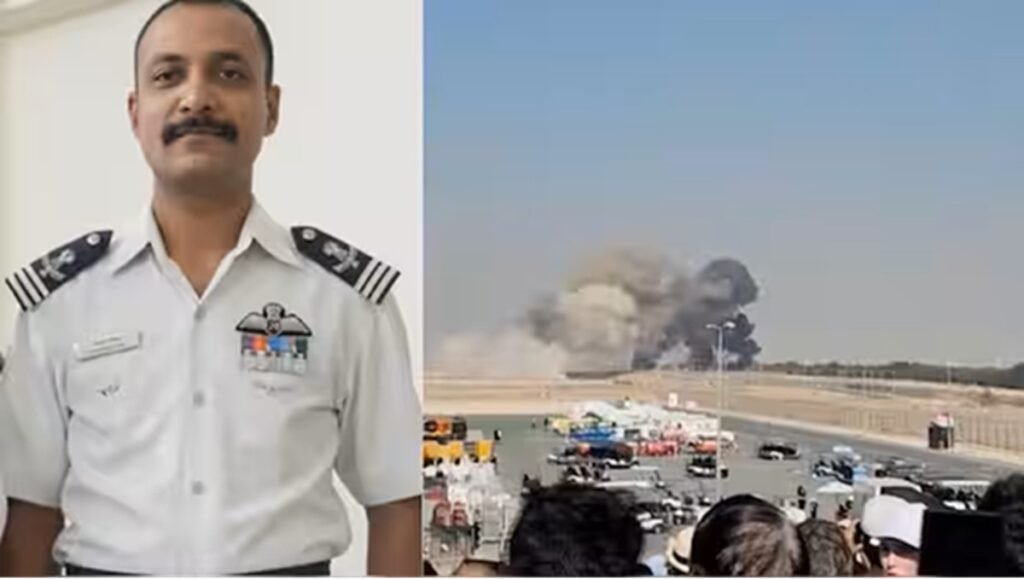
The Pilot India Lost: Who Was Wing Commander Namansh Syal?
Amid all the noise, one truth remains above politics and online outrage: India lost a brave officer—Wing Commander Namansh Syal.
Background & Early Life
Born in Kangra district, Himachal Pradesh, Namansh Syal grew up in Patialkar village in a family with a proud military tradition. His father, a retired Army officer, later served as a school principal.
Syal studied at:
- Sainik School, Sujanpur Tira
- National Defence Academy (Hunter Squadron)
- Air Force Academy, where he earned his wings
He was commissioned into the Indian Air Force in December 2009, marking the beginning of a dedicated and disciplined military journey.
Career & Service
Over 15 years, he earned the respect of colleagues for his:
- Calm decision-making
- Professionalism
- Precision flying skills
- Leadership qualities
His peers remember him as a soft-spoken, grounded officer who never lost touch with his roots.
Family
Wing Commander Syal is survived by:
- His wife – also an officer in the Indian Air Force
- His 6-year-old daughter
- His parents
His passing leaves a deep void not only in his family but in the Air Force fraternity that held him in the highest regard.
India Mourns: A Nation Salutes Its Fallen Hero
When his mortal remains reached Himachal Pradesh, thousands gathered for his final journey. Flags flew at half-mast, and state honors were accorded.
Messages poured in from:
- Government leaders
- Indian Air Force officials
- Veterans
- Citizens across the country
The IAF released an emotional statement praising him as a:
- “Thorough professional”
- “Exceptional officer”
- “Dedicated family man”
The nation united in grief, standing in solidarity with his wife, daughter, and parents.
Why Respect in Tragedy Matters Across Borders?
Defense experts and veteran journalists emphasized that tragedies demand empathy—not political scoring.
Mocking a crash:
- Devalues the life sacrificed
- Undermines global military dignity
- Reflects a breakdown of moral responsibility
Across the world, military pilots—Indian, Pakistani, American, Turkish—risk their lives daily. Their service is above borders and politics. Respecting fallen soldiers is a universal principle.
Even critics in Pakistan stated:
“A tragedy is a tragedy. A soldier’s death should never be mocked—no matter which country he served.”
This is the mature perspective the world must promote.
The Importance of Ethical Journalism
The incident re-ignited conversations about:
- Media responsibility
- Crisis reporting ethics
- Social media behavior
- Impact of insensitive coverage on bilateral relations
Professional journalists stressed that sensationalism at the cost of humanity erodes public trust and widens divides.
Global codes of journalism emphasize:
- Minimize harm
- Show compassion
- Avoid dehumanizing language
- Respect victims and families
These values must guide reporting—especially in moments of loss.
Tejas at the Dubai Airshow: A Proud Moment Turned Tragic
The Tejas Light Combat Aircraft, India’s indigenously developed fighter jet, was participating in the Dubai Airshow to showcase India’s growing aviation and defense capabilities.
The crash shocked:
- Defense analysts
- Aviation communities
- International delegations present at the event
While investigations are ongoing, Tejas remains widely respected as a modern, agile combat aircraft with strong export interest.
A Call for Humanity Above Borders
The tragedy and subsequent controversy highlight important truths:
- Human life is sacred, beyond nationality
- Mocking death is never acceptable—by citizens, media, or journalists
- Empathy is the foundation of civil societies
- Hate speech online harms more than it help
- Respect for soldiers is a universal principle
As both nations navigate sensitive geopolitical dynamics, voices of humanity, respect, and decency must rise above negativity.
Honor the Fallen, Condemn the Insensitive, Uphold Human Values
Wing Commander Namansh Syal’s sacrifice deserves dignity, honor, and remembrance—not political mockery or immature commentary.
The journalist’s insensitive reaction rightly earned criticism, but the tragedy must not be overshadowed by online hate. Instead, it should remind us of the need for compassion, especially during moments of global grief.
India stands united in honoring its brave son. May his soul rest in peace, and may humanity guide our words and actions—online and offline.