

2 min readUpdated: Aug 3, 2026 04:02 PM IST
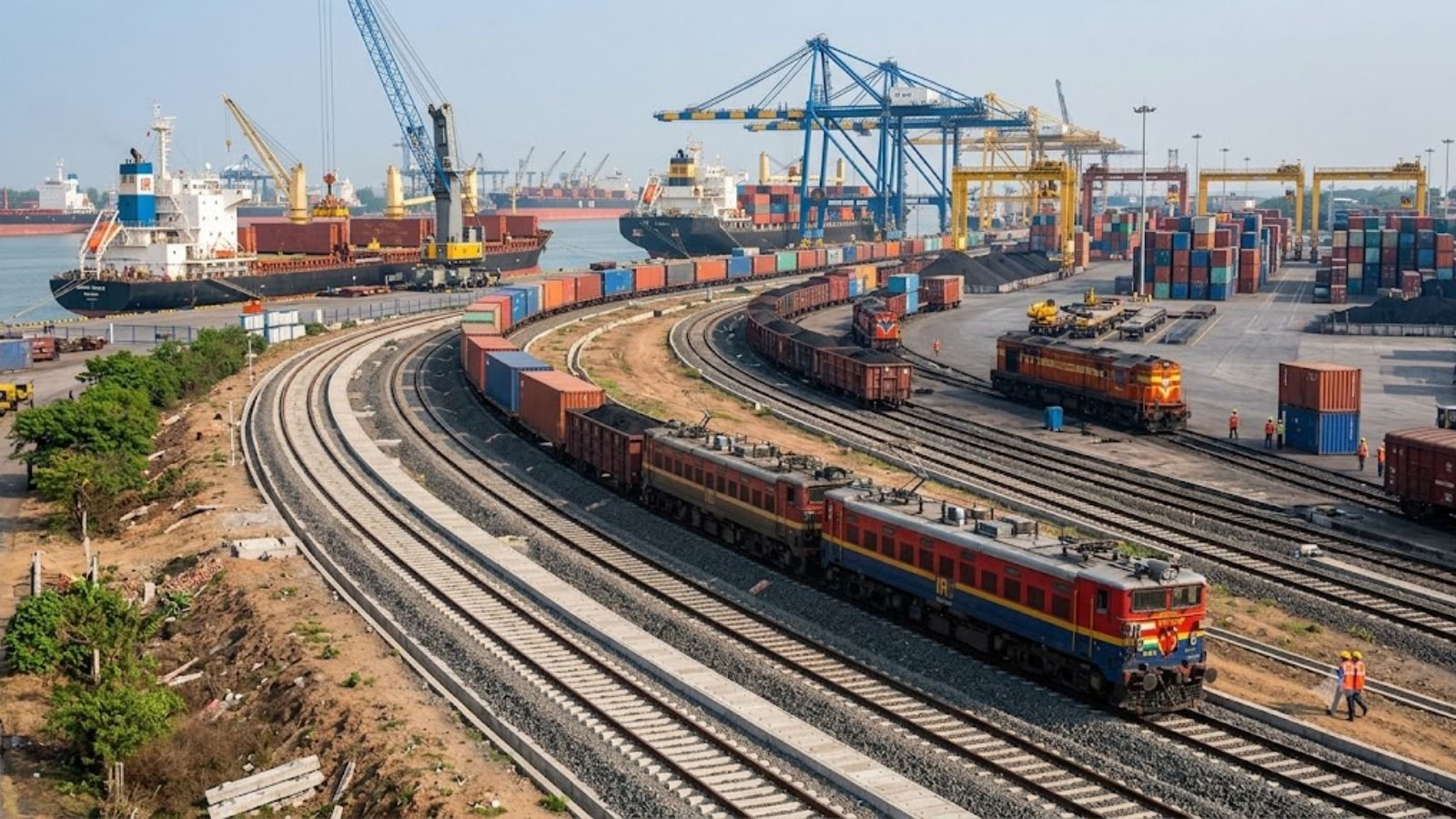
Rail projects to boost Haldia Port connectivity: Indian Railways has taken up 2,455 km of infrastructure works and surveys to improve connectivity to Haldia Port. The initiative aims to enhance freight movement, improve logistics efficiency and strengthen rail links to one of eastern India’s key ports.
In a written reply in the Rajya Sabha on Friday, Railway Minister Ashwini Vaishnaw shared data showing that works and surveys covering a total of 2,455 km have been taken up to improve connectivity to Haldia Port.

The minister was responding to questions raised by Rajya Sabha MP Biswajit Sinha on whether only the survey for the Tamluk-Panskura 3rd and 4th line project had been sanctioned for improving connectivity to Haldia Port, while the project was yet to receive execution approval.
The MP also sought details on the status of the survey, including completion of the Detailed Project Report (DPR), reasons for delay in sanction, and additional measures planned to strengthen rail evacuation capacity for Haldia Port.
Indian Railways takes up 2,455 km of projects to boost Haldia Port connectivity: Check routes
Improving Rail Connectivity to Haldia Port: 18 Projects
₹25,106 Cr
Total sanctioned cost (8 projects)
2,455 Km
Combined route length, all 18 projects
Projects by Status
18Projects
Sanctioned with cost: 8
DPR prepared: 8
Survey ongoing: 2
Sanctioned Projects, by Cost
DPR Prepared (Survey Completed)
Awaiting cost sanction
New Jalpaiguri-Kamakhya 3rd & 4th Line445 Km
Kharagpur-Jharsuguda (Bagdehi) 4th Line367 Km
Kharagpur-Bhadrak (Ranital) 4th Line173 Km
Kumedpur-Aluabari 3rd & 4th Line129 Km
Barharwa-Bhagalpur 3rd & 4th Line128 Km
Malda Town-Kumedpur 3rd & 4th Line62 Km
Gumani-Malda 3rd & 4th Line59 Km
Andal-Sainthia 3rd & 4th Line73 Km
Survey Ongoing (DPR Not Yet Ready)
Khanna-Sainthia 3rd Line (Final Location Survey sanctioned)84 Km
Panskura-Tamluk 3rd & 4th Line (Field Survey taken up)24 Km
Source: Rajya Sabha
“After preparation of DPR, sanctioning of project requires consultation with various stake-holders including State Governments and necessary approvals viz. appraisal of NITI Aayog, Ministry of Finance etc. As sanctioning of projects is a continuous and dynamic process, exact timelines cannot be fixed,” Vaishnaw said.
The Railway Minister further stated that 1,187 km of railway line projects are currently under execution in the state. These include:
West Bengal Ongoing Railway Projects, by Cost
₹36,850 Cr
Total sanctioned cost, 21 projects
1,187 Km
Combined route length
₹11,973 Cr
Highest: Sivok-Rangpo New Line (44 Km)
All 21 Projects, Ranked by Cost
Bars scaled on a log axis (wide range: ₹190 Cr to ₹11,973 Cr)
Sivok-Rangpo New Line (44 Km)
₹11,973 Cr
Kharagpur-Adityapur 3rd Line (132 Km)
₹3,450 Cr
Narayangarh-Bhadrak 3rd Line (153 Km)
₹3,425 Cr
Santragachi-Kharagpur 4th Line (111 Km)
₹2,905 Cr
Chandil-Damodar 3rd Line (121 Km)
₹1,932 Cr
Aluabari Road-New Jalpaiguri 3rd & 4th Line (57 Km)
₹1,786 Cr
Sainthia-Pakur 4th Line (81 Km)
₹1,569 Cr
Tarakeshwar-Bishnupur New Line (83 Km)
₹1,542 Cr
Balurghat-Hilli New Line (30 Km)
₹1,209 Cr
Kaliyaganj-Buniadpur New Line (33 Km)
₹1,147 Cr
Murarai-Barharwa 3rd Line (49 Km)
₹978 Cr
Katihar-Kumedpur & Katihar-Mukuria Doubling (65 Km)
₹943 Cr
Thakurganj-Siliguri Doubling (56 Km)
₹916 Cr
Barbenda-Damrughutu Doubling & 3rd/4th Line (52 Km)
₹815 Cr
Ranaghat-Krishnanagar City 3rd Line (26 Km)
₹446 Cr
Dankuni-Baltikuri 3rd & 4th Line (18 Km)
₹429 Cr
Ranaghat-Bangaon Doubling (33 Km)
₹396 Cr
Kalipahari-Bakhtarnagar 5th Line (18 Km)
₹350 Cr
Hijli to Nimpura Through Yard 3rd Line (6 Km)
₹234 Cr
Doubling of New Jalpaiguri-Siliguri (7 Km)
₹215 Cr
Bypass Line at Rampur Hat (12 Km)
₹190 Cr
Source: Rajya Sabha
The Railway Minister also said that sanctioning of any railway project depends on several parameters, including anticipated traffic projections, financial viability of the proposed route, first and last mile connectivity, and connecting missing links or providing additional routes.
Story continues below this ad
Other factors include augmentation of congested or saturated lines, demands raised by state governments, central ministries and public representatives, railway operational requirements, socio-economic considerations, and overall availability of funds.