

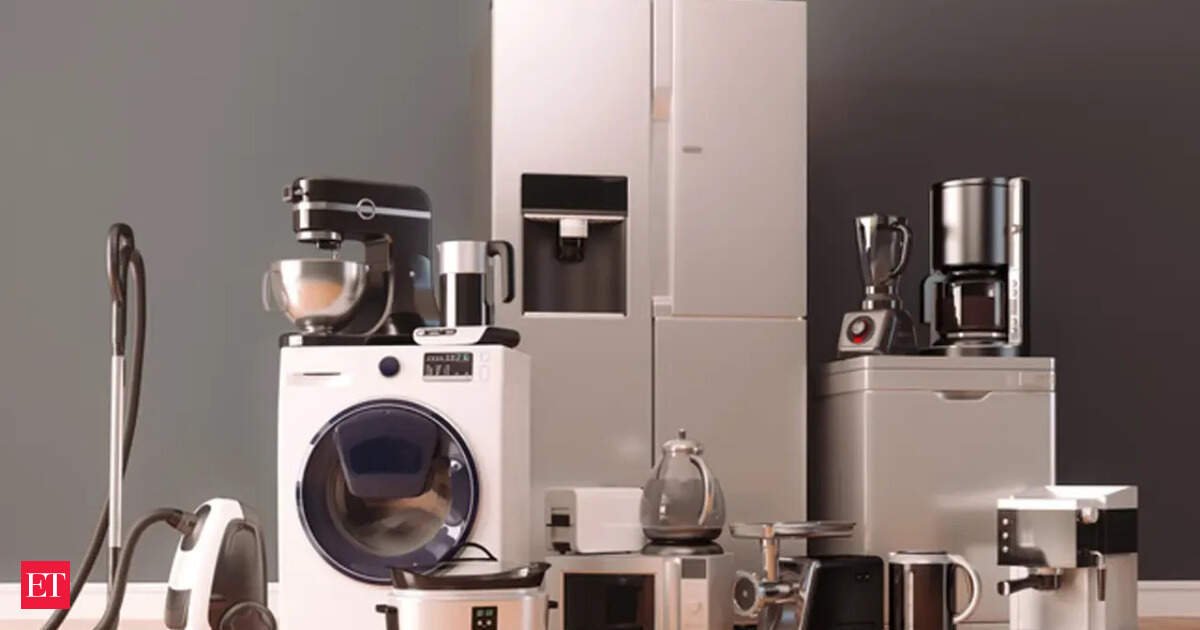
Appliance maker Haier said output in the last two weeks has been 20% below what had been planned due to delays in sub-component supplies, with inventory cover shrinking to 10 days from the usual 25.
Contract manufacturer PG Electroplast cited shortages of microprocessors and limited vessel availability as factors squeezing the entire supply chain, while air-conditioner contract manufacturer Amber Enterprises said it’s proactively building component inventories to minimise disruption. Whirlpool India flagged supply challenges, forcing it to monitor component availability daily and engage with suppliers on an hourly basis.

Vessels Availability Poor
Television maker Super Plastronics, which sells the Kodak, Thomson and Blaupunkt brands, reported a 10-14 day increase in component shipment times.

“Availability of vessels has been severely impacted, leading to longer component supply cycles. Some vessels are also stuck at Mundra,” said Vikas Gupta, managing director, operations, PG Electroplast. He said shortages of television microprocessors have pushed up its prices by 10-12%.
The supply crunch, which was earlier largely confined to memory chips used in smartphones, laptops and televisions, has spread across the broader electronics value chain. Memory chip prices have surged two to three times over the past seven to eight months. The industry depends heavily on imports from China, Taiwan and South Korea, which account for 20-60% of component requirements, depending on the product category.Industry executives attributed the disruption to vessel shortages and uncertainty over shipping routes through the Strait of Hormuz. In addition, smaller component suppliers are facing labour shortages, lengthening production cycles and cascading through the supply chain.
Homegrown smartphone maker Lava International managing director Sunil Raina said delivery time for PCBs and batteries has increased by about 20%, a problem that was previously limited to memory chips. “This has started impacting production,” he said.
Haier India president Satish NS said production of refrigerators and washing machines has been hit as local suppliers of sub-assemblies are facing a 20-30% labour shortage, with many workers yet to return after state elections. Suppliers are also grappling with sourcing challenges.
AC maker Blue Star managing director B Thiagarajan recently told analysts that helium-related supply issues could trigger a significant shortage of electronic components.
Qatar accounts for more than a third of global helium production, and prices have risen amid supply disruptions.
The shortage and sharp rise in memory chip prices – as semiconductor makers prioritise higher-value chips used in artificial intelligence data centres – have already forced electronics companies to raise prices almost every month since January.
Smartphone prices have increased by as much as 70% during the period, with the steepest hikes in entry- and mid-segment models, according to data compiled by the All India Mobile Retailers Association.
Whirlpool India managing director Narasimhan Eswar told analysts that component costs and supplies remain challenging and the company is working on the issue “very, very seriously and diligently.”