

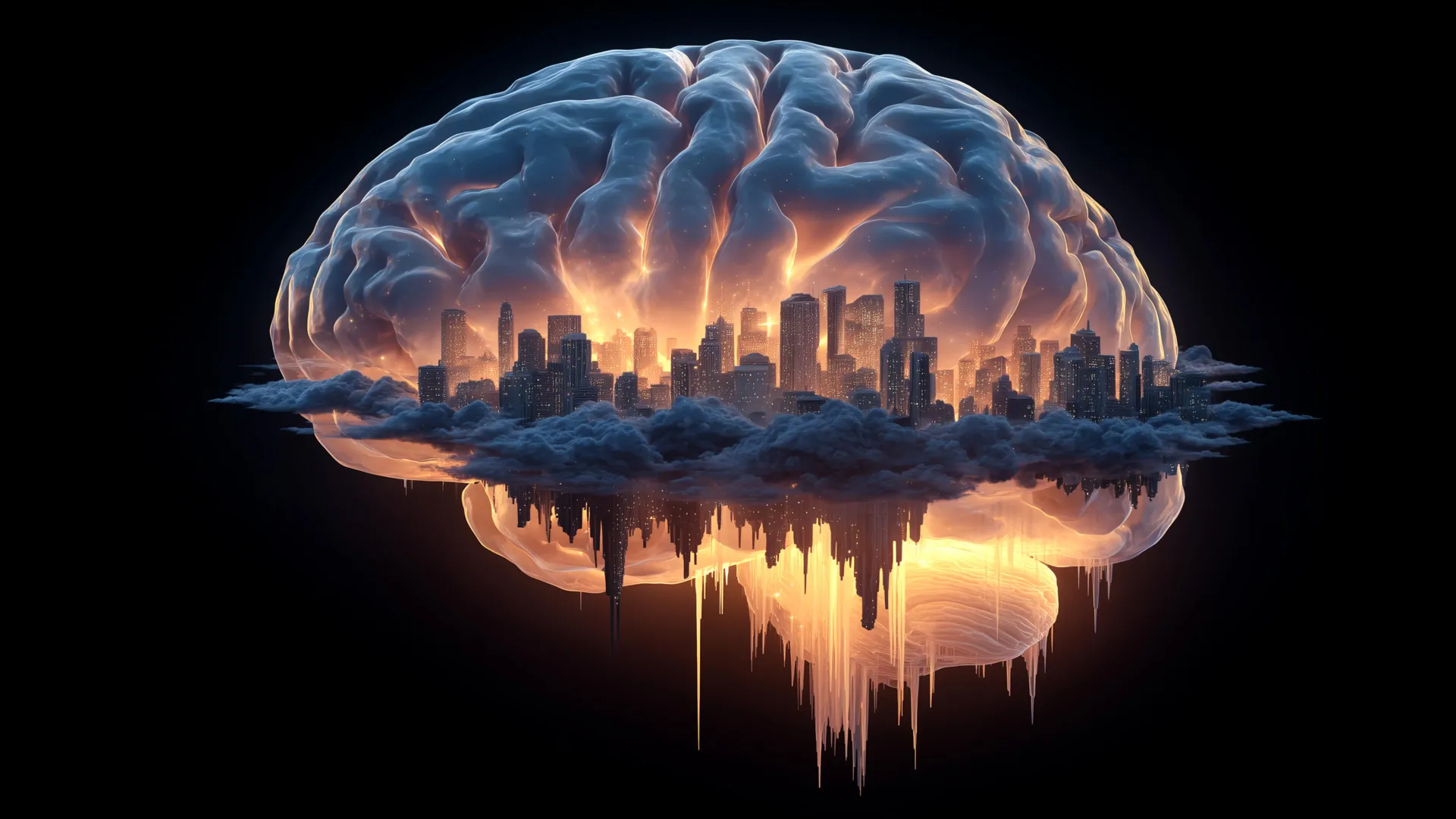
Why do some dreams feel so vivid that they seem almost real, while others unfold as confusing fragments that are difficult to remember or understand? New research suggests the answer may depend on a combination of personality, sleep quality, mental habits, and major events unfolding in the outside world.
A study led by researchers at the IMT School for Advanced Studies Lucca found that dreams are not simply random collections of images and thoughts. Instead, they appear to be shaped by both individual differences and shared experiences, including major social disruptions such as the COVID-19 pandemic.
Thousands of Dream Reports Reveal Hidden Patterns
The research, published in Communications Psychology, examined more than 3,700 descriptions of dreams and waking experiences from 287 people between the ages of 18 and 70.
For two weeks, participants recorded their dreams and daily experiences. The researchers also collected information about each person’s sleeping habits, personality, cognitive abilities, and psychological characteristics.
This broad set of information allowed the team to compare what people experienced while awake with the stories, settings, and emotions that appeared in their dreams.
How AI Helped Scientists Study Dreams
To analyze such a large number of written reports, the researchers used natural language processing (NLP), a form of artificial intelligence that examines patterns, relationships, and meaning in language.
Rather than relying only on researchers to read and interpret every dream individually, the technology allowed the team to measure the semantic structure of the reports. Semantic structure refers to how ideas, words, and concepts are connected within a piece of language.
The results showed that dream content was neither completely random nor inherently chaotic. Instead, dreams reflected a complex mixture of personal characteristics, including a tendency to mind-wander, an interest in dreams, and the quality of a person’s sleep. Events occurring in the broader world also influenced what people dreamed about.
Dreams Do Not Simply Replay the Day
When the researchers compared participants’ descriptions of waking life with their dream reports, they found that the brain did not appear to reproduce daily experiences exactly as they happened.
Instead, familiar details were transformed.
A workplace, hospital, classroom, or other everyday setting might appear in a dream, but it would often be combined with unrelated places, shifting viewpoints, or unfamiliar surroundings. Different parts of a person’s life could merge into a single vivid scene.
These findings suggest that dreaming is not a simple replay system. The sleeping mind appears to reorganize pieces of reality, combining memories with imagination, expectations, and possible future experiences.
The result can be a completely new scenario that feels immersive, emotionally intense, or surreal.
Personality May Influence Dream Vividness
The way dreams were transformed also differed from person to person.
People who were more likely to experience mind-wandering while awake tended to report dreams that changed quickly and felt more fragmented. Their dreams often moved rapidly between scenes, ideas, or perspectives.
By contrast, participants who placed greater value on dreams and believed that dreaming had personal meaning tended to describe richer and more immersive experiences. Their dream reports contained stronger perceptual detail, making the scenes feel more vivid and lifelike.
The findings do not necessarily show that believing in dreams directly causes more vivid dreaming. However, they reveal a strong relationship between how people think about dreams and how they experience or remember them.
The Pandemic Left a Mark on Dreams
The researchers also examined dream reports collected during the COVID-19 lockdown by scientists at Sapienza University of Rome. They compared those reports with data gathered in later months and years by the IMT School team.
During the lockdown, dreams contained stronger emotions and more references to restrictions, barriers, confinement, and other limitations. These themes reflected the conditions people were experiencing in daily life.
As the months passed, those patterns became less pronounced. This gradual change suggests that dreams may evolve alongside psychological adjustment, particularly as people adapt to stressful or disruptive events.
In other words, dreams may provide clues about how the mind responds to major changes over time.
“Our findings show that dreams are not just a reflection of past experiences, but a dynamic process shaped by who we are and what we live through,” explains Valentina Elce, researcher at the IMT School and lead author of the paper. “By combining large-scale data with computational methods, we were able to uncover patterns in dream content that were previously difficult to detect.”
A New Tool for Studying the Sleeping Mind
The study also demonstrates how artificial intelligence could change dream research.
The NLP models were able to identify meaning and structure in dream reports with an accuracy similar to that of independent human evaluators. This suggests that computational tools may allow scientists to analyze much larger collections of dreams in a consistent and repeatable way.
That could create new opportunities for studying consciousness, memory, emotional processing, and mental health.
Because dreams are highly personal and often difficult to describe, they have traditionally been challenging to investigate on a large scale. AI-based language analysis may help researchers uncover patterns that would otherwise remain hidden.
This work was supported by a grant from the BIAL Foundation (#091/2020) and by the TweakDreams ERC Starting Grant (#948891). The research was conducted at the IMT School for Advanced Studies Lucca, in collaboration with researchers from Sapienza University of Rome and the University of Camerino.