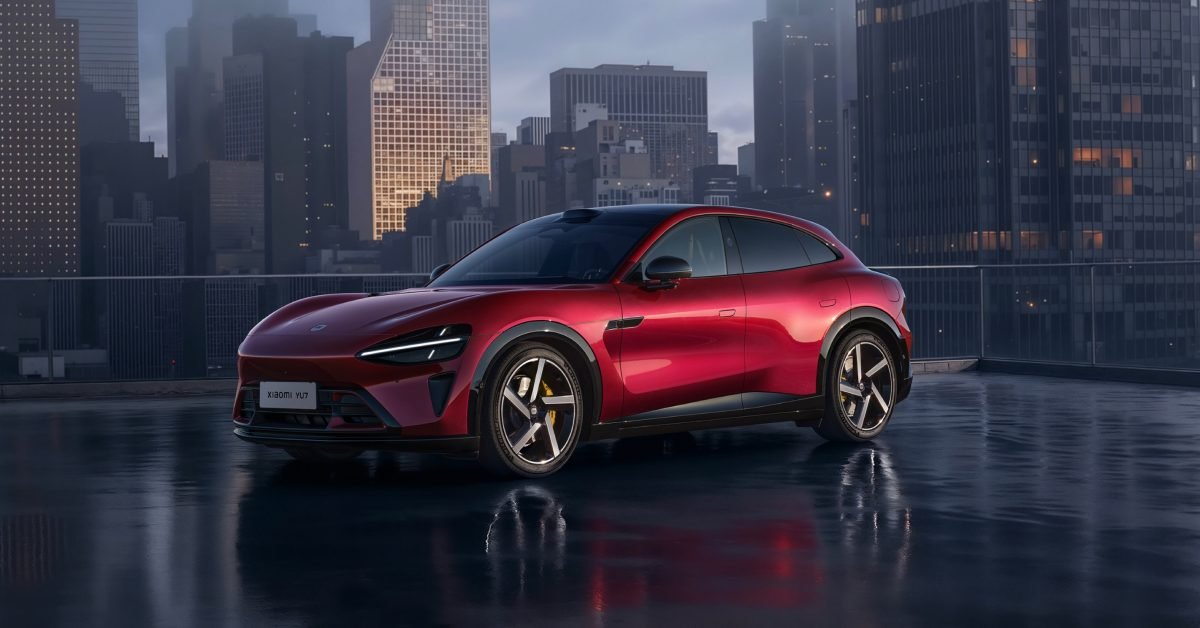
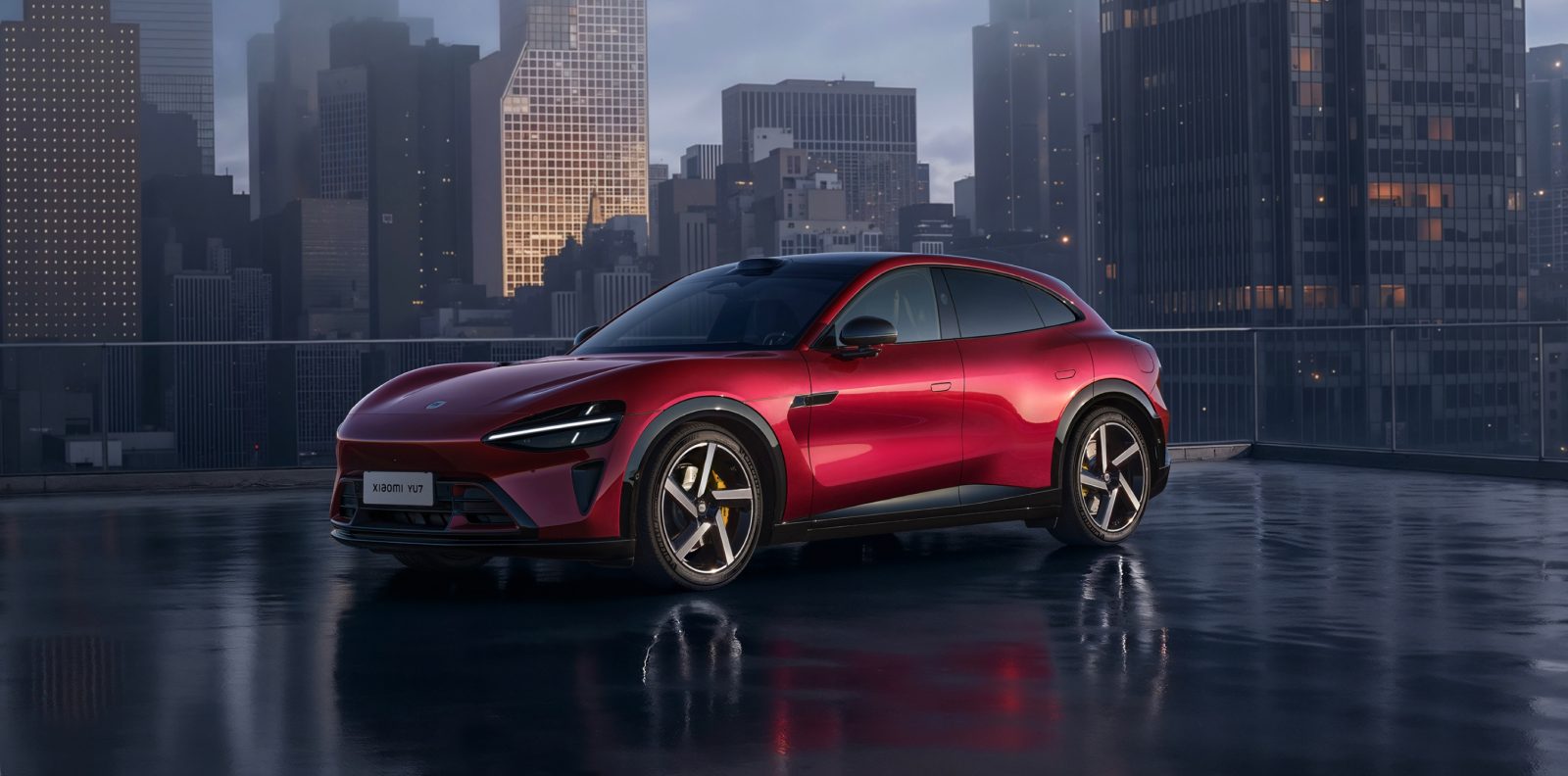
Xiaomi launched a new entry-level YU7 “Standard Edition” today priced at RMB 233,500 (~$32,400) — undercutting the Tesla Model Y by RMB 30,000 ($4,350) while delivering 643 km of range versus the Model Y’s 593 km.
CEO Lei Jun admitted onstage that the original YU7’s pricing was “not competitive enough” against Tesla, with only a RMB 10,000 (~$1,450) gap. The company also unveiled the 1,003-HP YU7 GT, which shattered the Nürburgring SUV record by 14 seconds.
Lei Jun takes direct aim at Tesla’s pricing
During tonight’s “Human x Car x Home” launch event, Lei Jun was unusually direct about the YU7’s competitive positioning. He acknowledged that the original YU7, which launched at RMB 253,500 last June, was only RMB 10,000 cheaper than the Tesla Model Y, and that this wasn’t enough to consistently outsell Tesla’s best-selling SUV.
The solution: a brand-new entry-level trim that restructures the entire lineup. The new “Standard Edition” takes over as the base model at RMB 233,500, while the original base variant gets rebranded as the “Long Range Edition.” It’s a deliberate move to widen the price gap against the Model Y from a forgettable RMB 10,000 to a compelling RMB 30,000 ($4,350).
The math is hard to argue with. The new YU7 Standard delivers 643 km of CLTC range — 50 km more than the Model Y RWD’s 593 km — at a price that undercuts Tesla’s most popular model by a significant margin. It comes equipped with a rear-wheel-drive single-motor layout producing 235 kW (315 HP), a CATL-supplied LFP battery on a 752V platform, and a curb weight of 2,200 kg — 115 kg lighter than the previous base model thanks to the single-motor configuration.
| YU7 Standard (NEW) | YU7 GT | Tesla Model Y RWD | |
|---|---|---|---|
| Starting price | RMB 233,500 (~$32,400) | RMB 389,900 (~$54,100) | RMB 263,500 (~$36,700) |
| Powertrain | Single motor RWD | Dual motor AWD | Single motor RWD |
| Power output | 235 kW (315 HP) | 1,003 PS (~990 HP) | ~220 kW (299 HP) |
| 0-100 km/h | 5.9 sec | 2.92 sec | 5.9 sec |
| Top speed | 220 km/h | 300 km/h | 201 km/h |
| Battery | 73 kWh LFP (CATL) | 101.7 kWh NMC | ~60 kWh LFP |
| Platform voltage | 752V | 897V (5.2C) | 400V |
| CLTC range | 643 km | 705 km | 593 km |
| Curb weight | 2,200 kg | N/A | ~1,925 kg |
| Suspension | Air suspension + CDC | Air suspension + dual-valve CDC + eLSD | Passive (coil springs) |
| Brakes | 4-piston fixed calipers | Carbon-ceramic (Akebono 6P/4P) | Standard discs |
| ADAS hardware | NVIDIA Thor 700 TOPS + LiDAR | NVIDIA Thor 700 TOPS + LiDAR | Camera-based (HW4) |
| ADAS subscription | Free for life | Free for life | FSD: RMB 64,000 or subscription |
Both trims come standard with Xiaomi’s Smart Chassis 2.0 (air suspension and CDC dampers), the NVIDIA DRIVE AGX Thor platform with 700 TOPS of computing power, LiDAR, and 4D millimeter-wave radar. All driver assistance features — highway navigation, urban navigation, and automated parking — are free for life with no subscription.
The timing is strategic. YU7 sales have cooled after clearing its initial order backlog. A cheaper, more competitively priced entry model is exactly what the lineup needs to reignite momentum against a resurgent Model Y that topped China’s NEV sales in March.
YU7 GT: 1,003 HP and a Nürburgring record
Alongside the new Standard trim, Xiaomi unveiled the YU7 GT — a track-bred performance SUV starting at RMB 389,900 (~$54,100).
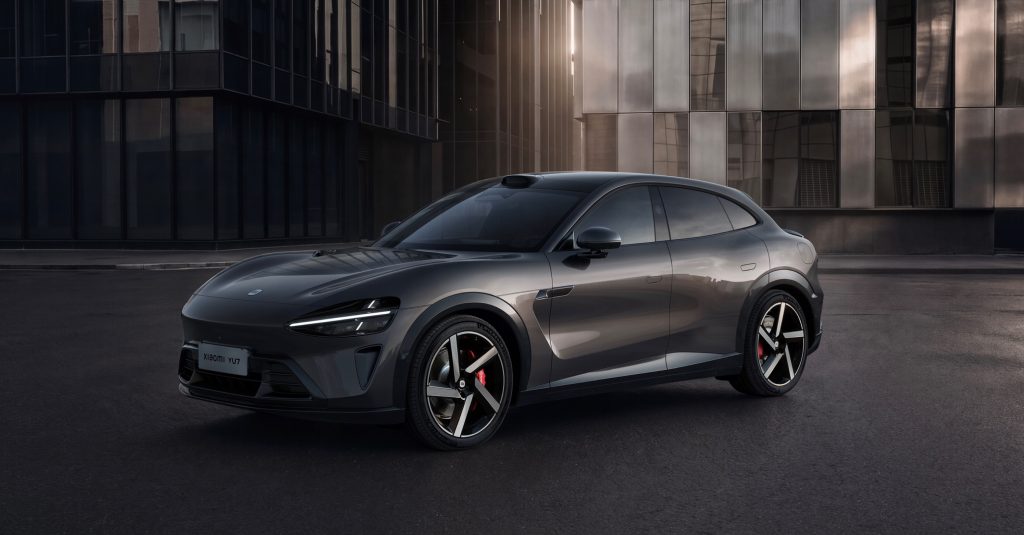
The GT is powered by Xiaomi’s HyperEngine V8s EVO motor spinning to 28,000 rpm, paired with a front Inovance motor for a combined 1,003 PS (~990 HP). It accelerates from 0-100 km/h in 2.92 seconds with a top speed of 300 km/h. The 101.7 kWh ternary lithium battery sits on an 897V ultra-high-voltage platform with 5.2C fast-charging, delivering 705 km of CLTC range.
On the Nürburgring Nordschleife, the YU7 GT with Track Package clocked a 7:22.755 lap time on April 2, shattering the previous SUV record — held by the Audi RS Q8 — by 14 seconds. Xiaomi credits two years of chassis tuning by its Munich-based R&D team.
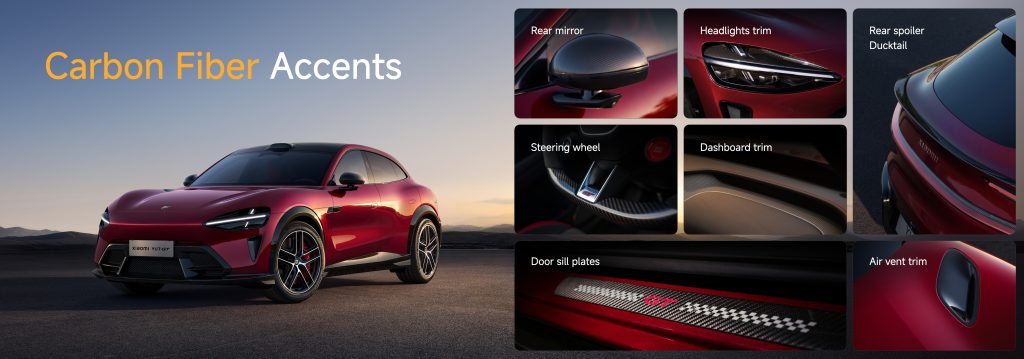
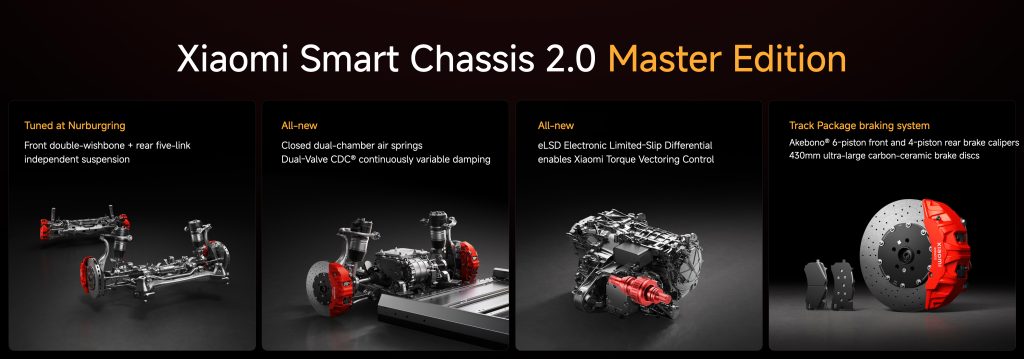
The hardware includes dual-valve CDC variable dampers, dual-chamber air suspension, a segment-first electronic limited-slip differential (eLSD), and the same carbon-ceramic braking system used on the SU7 Ultra — Akebono six-piston front and four-piston rear calipers with a 32.9-meter stopping distance from 100 km/h.
Xiaomi’s EV momentum at a crossroads
The YU7 series has delivered 232,000 units since launching last June, and across its entire lineup, Xiaomi has shipped over 600,000 EVs in less than two years. The company is targeting 550,000 deliveries in 2026, and with the next-generation SU7 sedan already on sale plus the GT and new Standard joining the YU7 lineup, that target looks achievable.
Electrek’s Take
Lei Jun’s candor about the YU7’s pricing problem is refreshing. Most CEOs would never admit onstage that their product wasn’t price-competitive against a rival — but Lei Jun did exactly that, and then launched a model that fixes it. The new YU7 Standard is $4,350 cheaper than the Model Y with 50 km more range, air suspension, and LiDAR as standard. That’s a brutal value proposition for Tesla to compete against in China.
The real question is whether this cheaper trim can result in Xiaomi consistently and sustainably outselling Tesla. After the initial frenzy of 240,000 orders and the backlog-clearing phase, monthly deliveries dropped. The Model Y reclaimed the top NEV spot in China in March. This new entry-level model is clearly designed to reignite that battle.
The 1,003-HP GT is the headline-grabber with its Nürburgring record, but the Standard Edition is the volume play that will determine whether Xiaomi can sustain its momentum. At ~$32,400 with this spec sheet, the answer should be yes — at least in China. The rest of the world can only watch.
If you own an EV or are shopping for one, locking in low charging costs with home solar is one of the smartest financial moves you can make. With electricity rates climbing nearly 10% last year, home solar protects you against future rate increases. And with lease and PPA options, you can go solar with zero upfront cost and start saving immediately. If you want to find the best deal, check out EnergySage. It’s a free service with hundreds of pre-vetted installers competing for your business, so you save 20 to 30% compared to going it alone. No sales calls until you pick an installer. Get your free quotes here.


FTC: We use income earning auto affiliate links. More.