

Close Menu

    Subscribe to Updates

    Get the latest news information from worldwide businesses.

    What's Hot

    TMC vs TMC: Mamata loyalist lodges police complaints against rebel MLAs for using party symbol | India News

    June 27, 2026

    Shotsie Buck-Hayes sentenced to 40 years for Danville arson attack

    June 27, 2026

    ‘Logan’s Run’ at 50: Remembering this disco-age sci-fi classic on its golden anniversary

    June 27, 2026
    Facebook Instagram YouTube LinkedIn X (Twitter)
    Trending
    • TMC vs TMC: Mamata loyalist lodges police complaints against rebel MLAs for using party symbol | India News
    • Shotsie Buck-Hayes sentenced to 40 years for Danville arson attack
    • ‘Logan’s Run’ at 50: Remembering this disco-age sci-fi classic on its golden anniversary
    • Maple Leafs fans left divided over potential Jason Robertson trade
    • CDSCO Makes SUGAM Portal Mandatory for Imported Vaccine, Anti-sera Approval Changes from July 1
    • Apple wants permission to buy memory from a blacklisted Chinese supplier
    • Apple Vision Pro exec is reportedly leaving for OpenAI
    • Strides Pharma sells majority stake in arm Pivot Path for Rs 100 crore
    Newspublicly
    • About Us
    • Advertise & Partner with us
    • Pitch Your Story
    • Contact Us
    Facebook Instagram LinkedIn X (Twitter)
    Subscribe
    • Home
    • World News
      • Asia
      • India
      • USA
      • UK & Europe
      • Middle East
    • Economy & Business
      • Global Economy
      • Corporate & Industry
      • Finance & Markets
      • Policy & Trade
    • Technology
      • Gadgets & Devices
      • Software & Apps
      • AI & Machine Learning
      • Robotics & Automation
    • Health & Medicine
      • Fitness & Nutrition
      • Research & Innovation
      • Disease & Treatment
      • Doctors, Clinics & Patient Care
    • Travel & Tourism
    • Automobile
      • Electric & Hybrid Vehicles
      • Auto Industry Insights
    • Sports
    • More
      • Education
      • Real Estate
      • Environment & Climate
      • Space & Astronomy
      • War & Conflicts
    Newspublicly
    Home»More»Space & Astronomy»Why do stars appear different colors in the night sky?
    Space & Astronomy

    Why do stars appear different colors in the night sky?

    AdminBy AdminJune 11, 2026No Comments5 Mins Read0 Views
    Share
    Facebook Twitter LinkedIn Copy Link WhatsApp


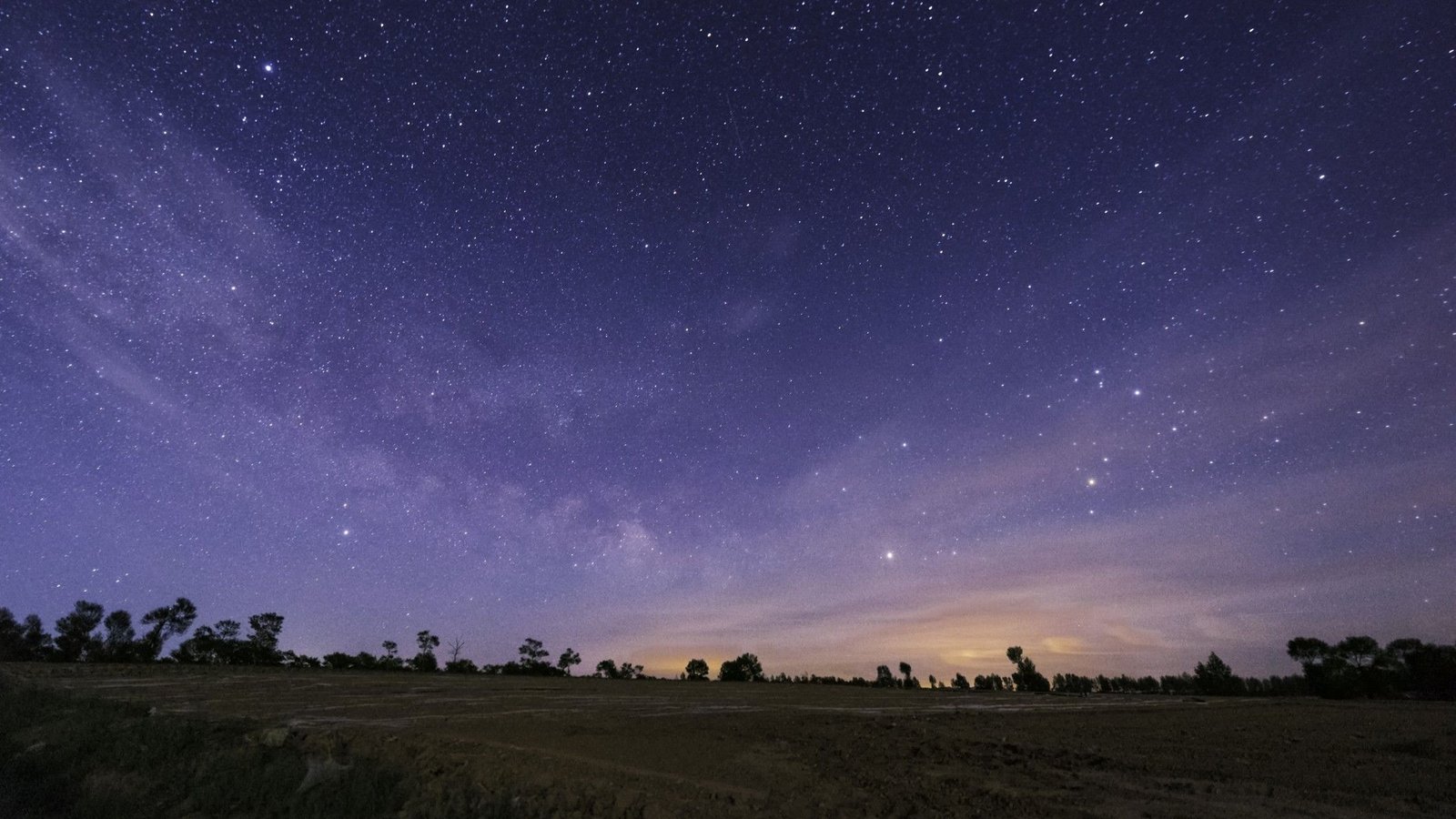
    One of the pleasures of stargazing is noticing and enjoying the various colors that stars display in dark skies.

    Star colors are always interesting to observe, since they add so much to the character of the constellations. These hues offer direct visual evidence of how stellar temperatures vary. A good many of the luminaries of the summer season — such as brilliant Vega, which stands about halfway up in the east-northeast sky as darkness falls — are bluish white. Still, we can easily find other, contrasting colors there as well. Look at the reddish Antares and the yellowish-white Altair. And at the top of the line of this summer’s retinue, brilliant orange Arcturus holds forth in solitary splendor high toward the south.

    Even as you observe these stellar colors, do you notice that they’re recognizable only for the brightest stars? This is due to the physiology of the eye, more specifically, the fact that the color sensors on the retina — the cones — are insensitive to faint light. Under dim illumination, the retinal rods take over. But their greater light sensitivity is offset by their color blindness. This is why faint stars tend to appear white to our eyes. However, if we look at them through a binocular or a telescope, their amplified brightness stimulates the cones, which detect their color.

    Colors by contrast

    One of the best ways to see star colors is by contrast. Let’s return to Arcturus for a moment. The classic procedure for locating this star is to follow the arc of the Big Dipper’s handle southeastward. Back in the 1950s, a very popular lecturer at New York’s Hayden Planetarium was Henry M. Neely (1879-1963), who had a favorite ditty for locating Arcturus and another bright star of late spring/early summer: “Follow the arc to Arcturus and speed to Spica.“

    Spica shines with a distinct bluish tint. Move your eye rapidly back and forth between Arcturus and Spica to see the great difference in their respective orange and blue hues.


    You may like

    red hued moon on the left and a bright blue star, spica on the right.

    Spica shines with a distinct blue hue near a blood red moon during a lunar eclipse. (Image credit: Nick Chill via Getty Images)

    Another very effective procedure is to observe a double star with contrasting tints.

    Probably the most colorful double star in the night sky can be found about halfway up in the eastern sky at 11:30 p.m. local daylight time: Albireo in the constellation of Cygnus the Swan, also known as the Northern Cross. Albireo supposedly marks the swan’s beak.

    A small telescope or even a pair of steadily held binoculars will readily split Albireo into two tiny points of light of beautiful contrasting colors: the brighter one a rich yellowish orange, the other a deep azure blue, both placed very close together. A stunning view will come with a telescope magnifying between 18x and 30x.

    Space

    Stars hot and cool

    Earlier, we referred to Antares as being reddish, which is how it’s always described. But actually, that isn’t correct. What we regard as “red” stars (which are catalogued as spectral class M) are really yellow-orange and approximately the same color as an old-fashioned incandescent light bulb. Both it and M stars have about the same 3,000 Kelvin color temperature.

    Our eyes evolved to take advantage of the radiation emitted by the sun, which is an average star as far as temperature and color are concerned. Very hot and cool stars, on the other hand, are strongest in the ultraviolet and infrared ranges, respectively.

    night scene showing milky way stretching across thy sky. trees are silhouetted below, there is a bright orange star on the right - Antares and two bright points of light on the left - Jupiter and Saturn.

    The bright red star Antares shines beside the Milky Way’s central regions in this image captured from Alberta, Canada. (Image credit: Alan Dyer/VW PICS/Universal Images Group via Getty Image)

    Starlight is similar to what physicists call black-body radiation — the electromagnetic waves given off by a body that emits and absorbs radiation 100% efficiently. (Anything that truly absorbed all the light falling on it would be black, hence the name). We know that the hotter a star, the more energy it emits at every wavelength — for very hot stars, the peak emissions are directed toward the shorter (bluer) wavelengths.


    What to read next

    Simply put, the location of the peak emissions determines the star’s color. We can break this all down into two rather simple laws that are immediate consequences of blackbody radiation.

    An infographic explaining different color stars based on their temperature.

    Astronomers group stars into classes according to spectral color and brightness. (Image credit: by Karl Tate, Infographics Artist)

    For an object at a particular temperature, the total energy radiated at all wavelengths is given by the Stefan-Boltzmann law, after its two discoverers, Josef Stefan (1835-1893) and Ludwig Boltzmann (1844-1906). The Stefan-Boltzmann law states that the rate at which an object radiates heat is proportional to the fourth power of the absolute temperature, expressed in degrees Kelvin. Thus, if the temperature doubles, the energy output increases 16 times. If it triples, the output increases 81 times.

    The second law is called Wien’s law, named for Wilhelm Wien (1864-1928). It states that the wavelength of a star’s peak output is inversely proportional to the temperature. If the temperature doubles, the peak wavelength is halved. Wien’s law has a very colorful consequence, which can be demonstrated by the coils on an electric stove. As their temperature increases, we first feel infrared radiation, then see it glowing dull red, followed by bright red and still brighter orange. If it could continue heating without melting, the coils would turn yellow, white, then blue-white while becoming extremely brilliant — just like stars.

    So, the color is determined by Wien’s law, while the total radiation (both visible and invisible) is determined by the Stefan-Boltzmann law.

    If you’re looking for a telescope to get a closer look at the night sky our best telescopes for deep space guide may help. We also have a guide to astrophotography for beginners, which covers everything from equipment to shooting modes and more.

    Joe Rao serves as an instructor and guest lecturer at New York’s Hayden Planetarium. He writes about astronomy for Natural History magazine, Sky and Telescope, The Old Farmer’s Almanac and other publications.


    Source link

    Author

    • Admin

      NewsPublicly.com is News & Articles Platform that creating SEO-focused articles on travel, lifestyle, and digital trends.

    Admin
    • Website

    NewsPublicly.com is News & Articles Platform that creating SEO-focused articles on travel, lifestyle, and digital trends.

    Related Posts

    ‘Logan’s Run’ at 50: Remembering this disco-age sci-fi classic on its golden anniversary

    June 27, 2026

    This Week In Space podcast: Episode 216 — Dark Matter Intelligence

    June 27, 2026

    NASA used a drone to deliver a human kidney. Is this the future of transplant transport?

    June 27, 2026
    Leave A Reply Cancel Reply

    Demo
    Top Posts

    The Blue Moon rises on May 30— Where and when to see the second full moon of the month

    May 30, 202640 Views

    New SOCOM rifle allows barrel swapping and cartridge changes

    June 1, 202633 Views

    “Inside Gemini Robotics 1.5: How Robots Learn to Reason & Act

    November 22, 202525 Views

    525 pounds of cocaine seized after Nebraska K9 alerts troopers on I-80

    May 28, 202624 Views
    Don't Miss

    TMC vs TMC: Mamata loyalist lodges police complaints against rebel MLAs for using party symbol | India News

    June 27, 20262 Mins Read0 Views

    NEW DELHI: Former West Bengal chief minister Mamata Banerjee’s loyalist Dola Sen on Saturday lodged…

    Shotsie Buck-Hayes sentenced to 40 years for Danville arson attack

    June 27, 2026

    ‘Logan’s Run’ at 50: Remembering this disco-age sci-fi classic on its golden anniversary

    June 27, 2026

    Maple Leafs fans left divided over potential Jason Robertson trade

    June 27, 2026
    Stay In Touch
    • Facebook
    • Twitter
    • Instagram
    • YouTube
    • LinkedIn
    • WhatsApp

    Subscribe to Updates

    Get the latest creative news from SmartMag about art & design.

    Demo
    NEWSPUBLICLY
    Facebook X (Twitter) Instagram LinkedIn

    Home

    • About Us
    • Leadership
    • Advertise & Partner With Us
    • Pitch Your Story
    • Media Kit & Pricing
    • Career
    • FAQs

    Guidelines

    • Editorial & Submission
    • Partnership
    • Advertising & Sponsor
    • Intellectual Property Policy
    • Community & Comment
    • Security & Data Protection
    • Send Your Opinion

    Quick Links

    • Cookie Policy
    • Payment & Billing Terms
    • Refund & Cancellation
    • Copyright Policy
    • Complaint & Support
    • Sitemap
    • Contact Us

    Subscribe Us

    Get the latest news and updates!

    Copyright © 2026 Newspublicly (DIGITALIX COMMUNICATION). All Rights Reserved.
    • Privacy Policy
    • Terms of Use
    • Disclaimer