

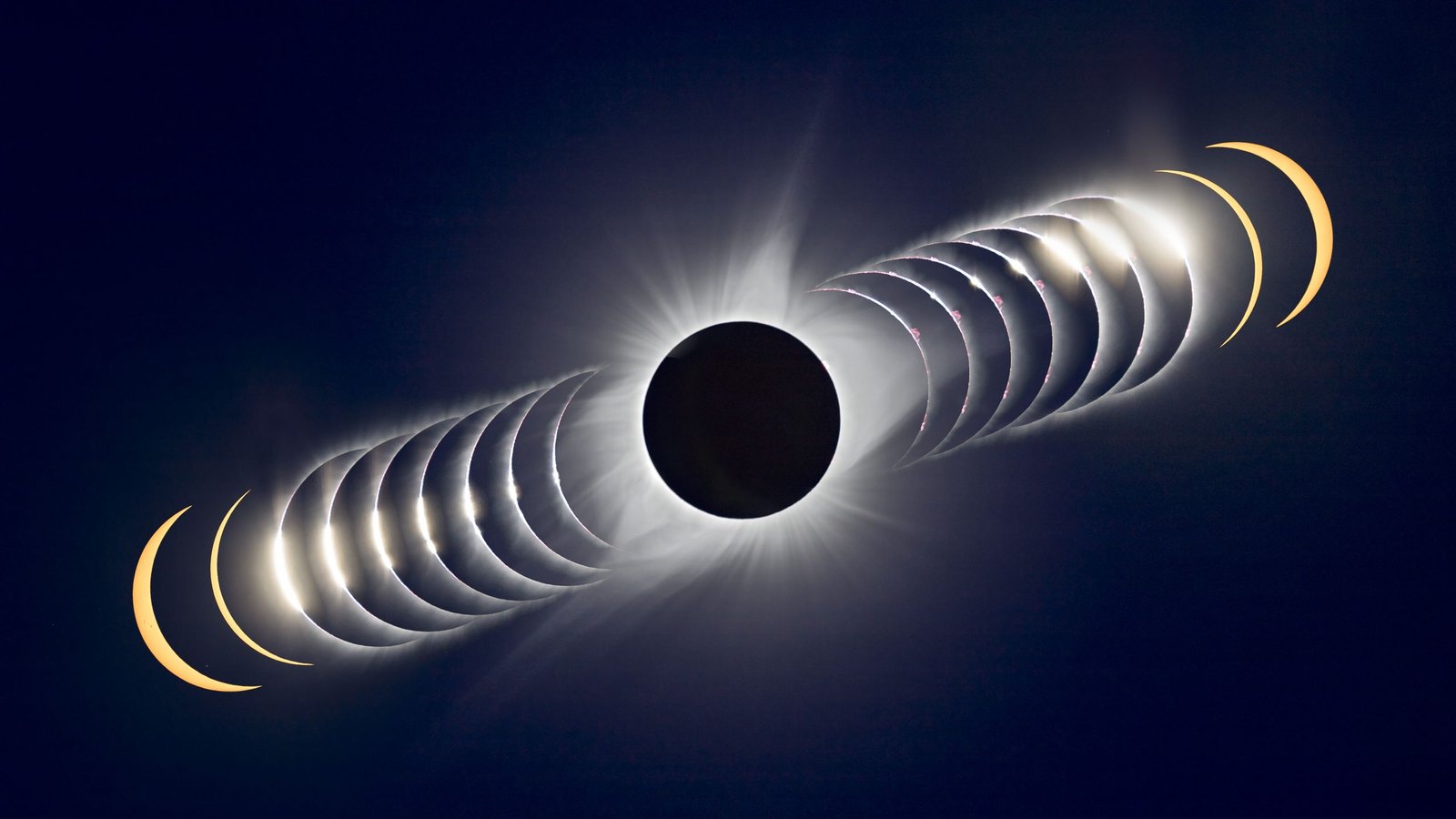
Meet the Dynamic Eclipse Broadcast Initiative — a passion-driven citizen science endeavour that shares breathtaking views of total solar eclipses while capturing valuable data on the sun’s incandescent atmosphere.
At the heart of our solar system is a burning ball of superheated gas 100 times the width of Earth, with a thermonuclear reaction raging at its core. Its radiation and gravity hold the planets in their orbit and allow for the existence of life on our Blue Marble.
Yet despite centuries of scientific scrutiny, many mysteries remain as to the inner workings of our sun and the influence it extends out into the solar system.
What is the DEB Initiative?
One effort to unravel the mysteries and share the beauty of our parent star is being undertaken by the DEB. A network of volunteer solar observers coordinated and guided by professional astronomers from Southern Illinois University Carbondale that’s partly funded by NASA and the National Science Foundation.
“We came up with a setup that’s portable, that’s relatively cheap,” Associate Scientist Bob Baer of the Southern Illinois University Carbondale and co-principle investigator of the DEB Initiative explained to Space.com in an interview. “They’re about $1,800 once you factor in everything, like the computer, the mount, the telescope, the camera.”
During the great American Eclipse of 2024, the DEB had over 80 teams equipped with identical telescopes arrayed across a path of totality that cut through the contiguous United States. Having trained for months, their duty was to keep vigil on the climactic phase of totality, as the moon’s silhouette covered the face of our parent star to reveal the sun’s golden corona reaching out into the false twilight.

Telescope footage was uploaded in near-real time and included in livestreams that brought the beauty of the eclipse directly to the public no matter where they were — an impressive effort that saw numerous members of the team receive Emmy Awards for their coverage.
Some of the volunteers are also the authors of a scientific paper set to be published in the Astrophysical Journal Letters that tracked the structure and dynamics of the sun’s inner atmosphere, or corona, from 11 DEB locations over 49 minutes of evolution.
Outside of eclipses, volunteers also use their telescopes to track asteroids, solar vibrations and powerful flares that blast from the surface of the sun. They even collect data on exoplanet transits, as distant worlds pass between our planet and their parent stars, creating periodic dips in their light.
Having so many volunteers in different places enables a much wider range of data to be collected. “It’s the network of telescopes that is the strength of the project,” explained Baer. “It’s not just one scope.”
Is the DEB watching over the 2026 eclipse?
A spectacular total solar eclipse will take place on Aug. 12, as the moon’s vast silhouette passes across the solar disk, completely blocking its light across a 182-mile-wide (293-kilometer) swathe of Greenland, Iceland and Spain during the climactic phase of totality.
The DEB will have two teams on hand in the path of totality to observe the eclipse. One will set up in the northwestern Spanish city of Leon, while a second team — led by citizen scientist Charles Greenwald and shadowed by myself — will find the high ground in the Castilian village of Valoria la Buena, 93 miles (150 kilometers) to the southeast.
My conversations with Greenwald have underscored how important passion is to maintaining an initiative like the DEB. The past eight months have seen him travel to Guadalajara, Mexico, multiple times to prepare his team for their expedition to Spain, while helping to test software updates that govern how telescopes will capture the sun over the course of the eclipse.
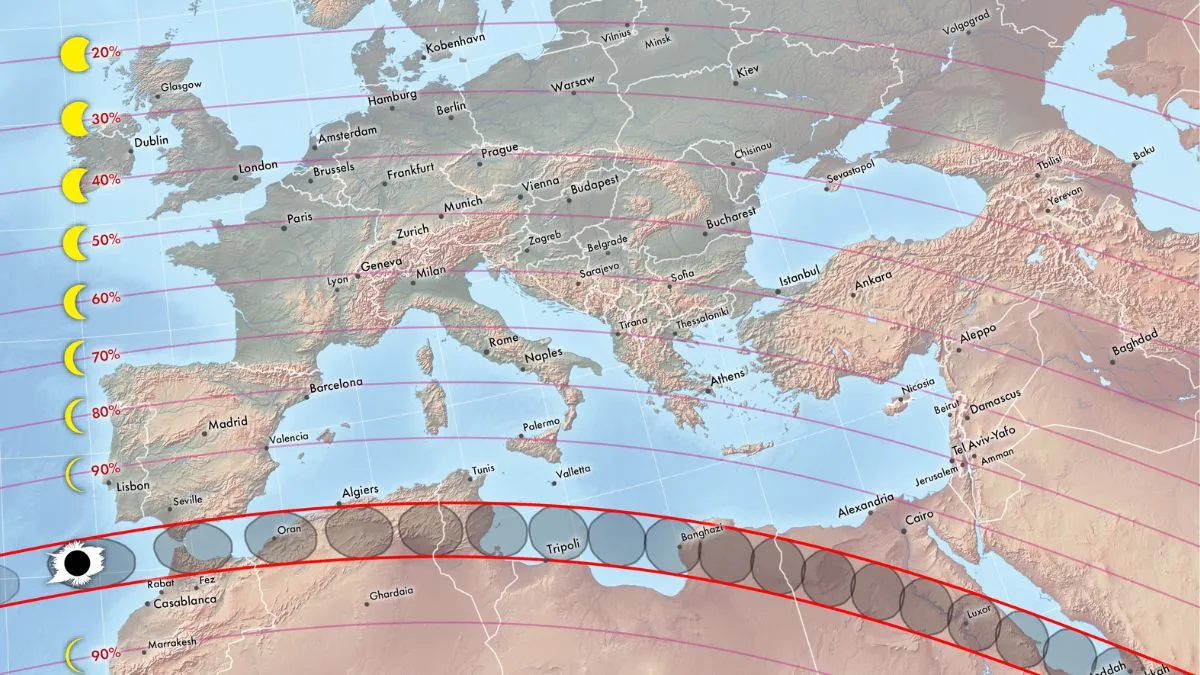
As in 2024, the data DEB volunteers collect will be uploaded to a server in real time and used in multiple live streams — including NASA coverage — to bring the public closer to the eclipse. But it’s also being used as whetstone, a testing ground to hone processes that will be used to document what some are dubbing as “the eclipse of the century“, which will sweep across a swathe of Northern Africa on Aug. 2, 2027.
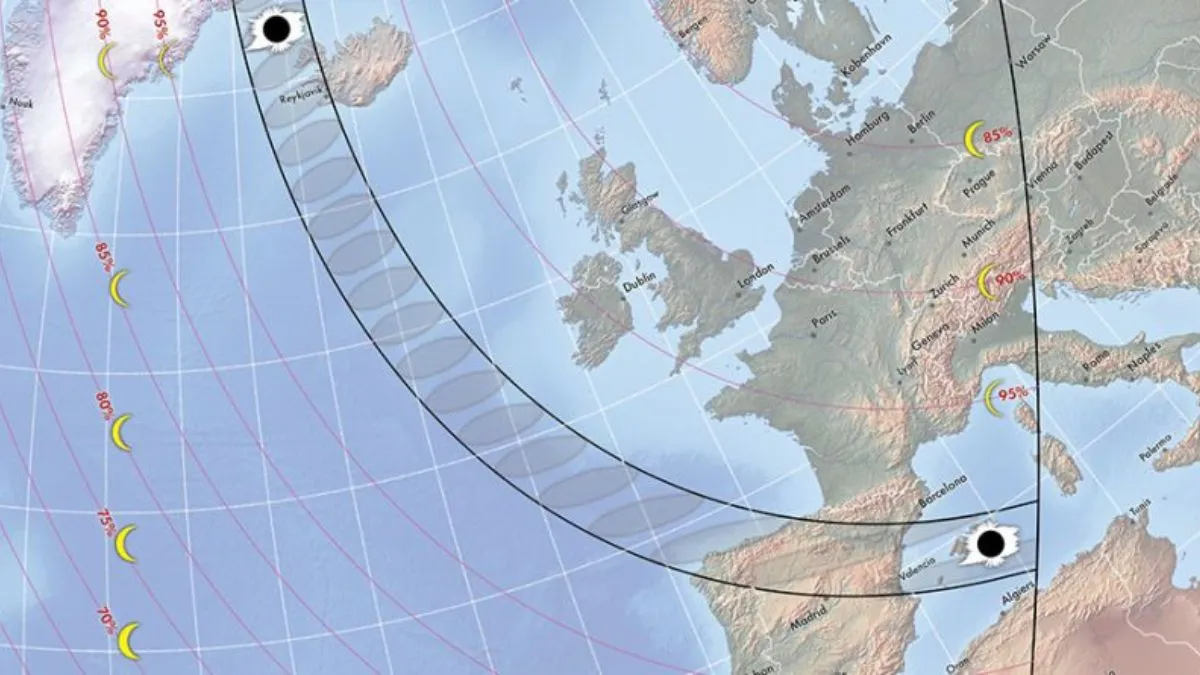
It’ll be the longest totality of any eclipse in the 21st century to date, lasting a maximum of 6 minutes and 23 seconds as opposed to the 2 minutes 18 seconds of the 2026 eclipse.
DEB leadership is working on tentative plans for an ambitious 2027 campaign, which could see 27 teams composed of American groups and local observers set up across the path of totality. Baer is hoping to achieve double redundancy throughout the shadow’s path, ensuring an uninterrupted view in the event that a group is clouded out, or loses connection.
For plans to unfold on that scale, many moving parts would need to fall into place, both in terms of logistics and funding and, more importantly, in acquiring volunteers from both the U.S. and North Africa.
It’s a labor of science, and love. The DEB is planning to start recruiting volunteers for 2027 in the fall of this year, so be sure to keep an eye on the Initiative’s website if you’re interested in joining their mission to watch over our parent star.
In the meantime, don’t forget to check out our explainer article on the Aug. 12 total solar eclipse, along with our roundup of the best solar viewing gear and tips on how to safely observe the sun!
During the eclipse, we’ll have live reporting of the event from Skywatching Editor Daisy Dobrijevic as she watches from the the deck of a HX Expeditions cruise ship in the waters off eastern Greenland.
I, meanwhile, will be sharing my experience of totality from the Spanish village of Valoria la Buena, where the eclipse will unfold low in the western evening sky.
Editor’s Note: If you would like to share your eclipse photography with Space.com’s readers, then please send your photo(s), comments, and your name and location to spacephotos@space.com.