

Also Read: US and Iran reach deal to end war
The oil relief
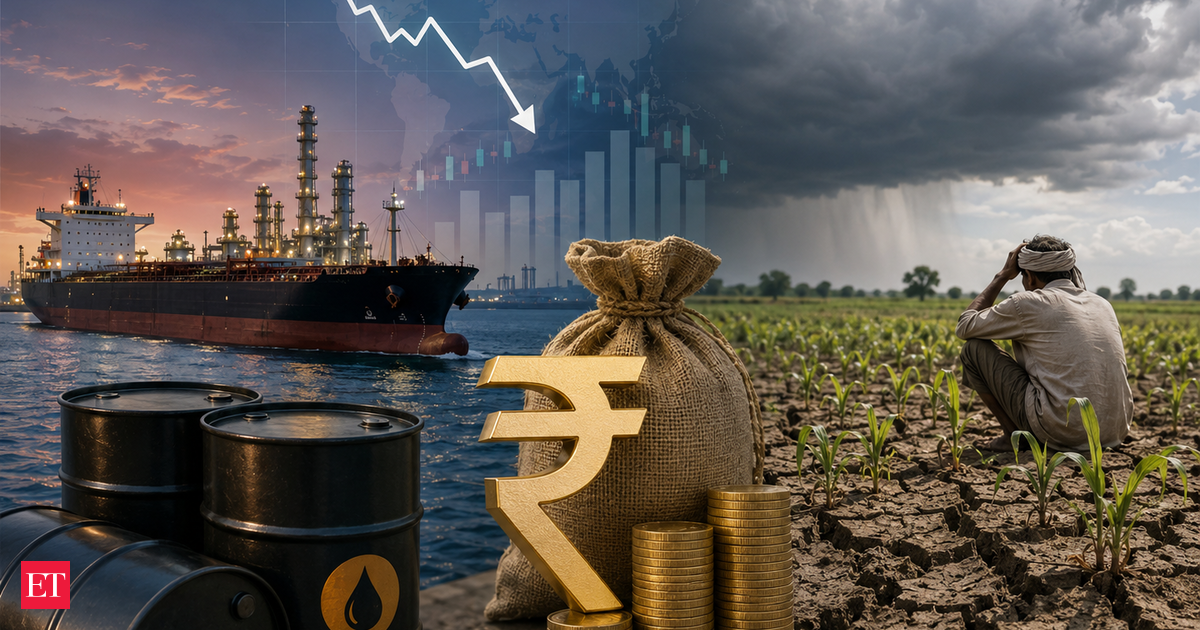
The announcement of a US–Iran peace deal has already started reshaping market expectations. Brent crude slipped sharply to around the low $80s after the news, reflecting the removal of a major geopolitical risk premium that had built up during the conflict. For India, this matters disproportionately because of its dependence on imported energy. Sensex and Nifty have risen more than 1% and the rupee has strengthened, slipping below 95.
India imports more than 88 percent of its crude oil requirement, making global oil prices one of the most sensitive variables in the macroeconomic framework. During the conflict, disrupted shipping routes through the Strait of Hormuz and higher insurance costs had pushed up import costs and widened inflation risks. With the reopening of the strait, the immediate transmission channels are straightforward. Lower crude prices reduce the oil import bill, ease dollar demand from refiners and reduce imported inflation pressures. They also improve sentiment in bond markets where lower inflation expectations tend to support yields.

There is also a structural angle. India sources roughly half its crude from West Asia, along with about 70 percent of LPG and nearly 90 percent of LNG imports passing through the region, according to industry estimates cited by GTRI Founder Ajay Srivastava. That concentration means any disruption in the Gulf quickly translates into macro stress at home. The peace deal will reverse that pressure.
Also Read: A ₹3 lakh crore rain check? India’s monsoon now comes with a Hormuz fine print
Export recovery and rupee stability
The Gulf conflict had already shown up in trade data. India’s exports to the Middle East fell nearly 58 percent in March during the peak disruption, while imports from the region also contracted sharply. This hit was especially visible in engineering goods, petroleum products, food items, textiles and chemicals, which are core export categories to the GCC economies.
The peace agreement is expected to reverse part of this disruption. Exporters expect a revival in shipments to West Asia as shipping routes normalise and freight and insurance costs ease. Federation of Indian Export Organisations President SC Ralhan has indicated that easing tensions should help restore trade flows and stabilise costs.
Sharad Kumar Saraf, Founder Chairman of Technocraft Industries India, described the development as a turning point that could unlock new business opportunities and accelerate exports over the next few years.
For the rupee, the transmission is mainly through the oil channel. Lower crude means reduced dollar outflows for energy imports, which typically supports the currency. The rupee could strengthen in the near term, with bond yields also easing as inflation expectations moderate. But as markets often remind, this is a partial relief, not a structural fix. Capital flows, Federal Reserve policy and domestic growth still dominate currency direction.
The oil comfort will be slow
Despite the immediate relief, energy markets are unlikely to normalise instantly. Global shipping logistics remain strained after months of disruption. Some tankers were stranded in the Persian Gulf, while insurance and freight rates had surged during the conflict.
Experts quoted by Associated Press noted that even after a ceasefire, it takes time for oil flows to return to normal. Tankers need to reposition, insurance contracts need recalibration, and some production shutdowns in the region cannot be reversed quickly. In some cases, restarting oil fields can take months, especially where storage constraints forced producers to halt output.
Also Read: India’s retail inflation quickens to 3.93% in May amid high food & fuel prices
This means India may not see full benefits immediately. The price channel responds faster than physical supply chains. That gap between market pricing and actual oil delivery remains an important risk in the coming weeks.
Monsoon risk, the next macro pressure point
As external energy risks ease, domestic climate risk is rising in importance. Finance Minister Nirmala Sitharaman has already flagged that the government is preparing for a “not-so-good monsoon scenario” while maintaining adequate buffer stocks.
The India Meteorological Department (IMD) has reported that monsoon rainfall from June 1 to June 14 stood at 40.2 mm against a normal of 56.1 mm, a shortfall of about 28 percent. Overall rainfall deficiency could rise further, with some estimates suggesting it may widen to around 40 percent if current trends persist.
Adding to the concern, moderate to strong El Niño conditions are expected to develop during the June–September period. Historically, 12 out of 16 moderate or stronger El Niño episodes have coincided with below-normal rainfall in India. The risk is therefore statistically tilted toward weaker agricultural output this season.
As per a report by CareEdge Ratings, India is entering this phase with stronger buffers than in past episodes, including higher reservoir levels and record foodgrain stocks. However, it also notes that vulnerability remains uneven across states, with regions such as Odisha, Chhattisgarh, Madhya Pradesh and Uttar Pradesh more exposed due to irrigation gaps and crop patterns.
Inflation, rural demand and the real economy stress
The transmission of deficient rainfall into the economy is typically most visible in food prices. Unlike oil shocks, monsoon shocks hit a narrower but politically sensitive basket of vegetables, pulses and cereals. El Niño-driven heatwaves can intensify price pressures in perishables like tomatoes, onions and potatoes. CareEdge notes that inflation impact is not uniform across episodes because buffer stocks and policy interventions often soften the blow. Still, volatility in food prices tends to pass through quickly to headline inflation.
The bigger macro risk is rural demand. Agriculture still employs around 43 percent of India’s workforce even though its share in output has declined. That means rainfall shocks can disproportionately affect consumption in rural areas, which is a key driver of mass-market demand for FMCG, two-wheelers, tractors and low-ticket retail goods.
Sitharaman also pointed to additional cost pressures beyond inflation, noting rising fertiliser costs and higher shipping and insurance expenses that are making imports more expensive. These layered costs can amplify the impact of weak rainfall if agricultural productivity slows.
India is more resilient now but vulnerabilities persist
One of the more important structural shifts highlighted by CareEdge is that India’s economy is less rainfall-dependent than in the past. Higher irrigation coverage, diversification into livestock and fisheries and a larger services sector have reduced the direct link between monsoon and overall GDP growth.
At the same time, agriculture remains central to livelihoods. That duality explains why monsoon shocks still matter even if their GDP impact is weaker than before.
CareEdge report indicates that while below-normal rainfall and El Niño conditions pose risks to agriculture, rural demand and food inflation, India is better prepared than in earlier episodes due to strong buffers and structural changes. However, it also warns that regional stress will be uneven and requires close monitoring.
From global relief to domestic test
The US–Iran peace deal has given India breathing space on the external front by easing oil prices and stabilising trade routes through the Gulf. That reduces pressure on inflation, the rupee and the current account in the short term. But macroeconomics rarely offers a single-direction story. Just as external risks ease, domestic risks are building up through a weakening monsoon and the possibility of El Niño-driven rainfall deficits. Unlike oil shocks, which are largely imported, monsoon shocks are internal and directly tied to food inflation and rural consumption.
India’s next challenge, therefore, is not about geopolitical risk or energy markets. It is about how the economy handles a potentially uneven monsoon season while maintaining price stability and sustaining demand in rural India.