

Electric vehicle sales rebounded in the second quarter of this year, with U.S. automakers collectively posting their strongest results since the federal EV tax credit ended last September, according to new data from Cox Automotive released Friday. While sales remained down compared to a year ago, Q2 marked the best quarter for EVs in the post-tax-credit era, suggesting the market is beginning to recover from last year’s policy shocks.
Carmakers sold 247,226 EVs in the U.S. between April and June, marking a 14.2% quarter-over-quarter increase, according to Cox Automotive estimates. Sales were down 20.5% compared to the same period last year when the EV tax credit was still in place. But the quarterly growth paints a clearer picture of how the market is settling into its new reality after the incentive expired.
“The market now appears to be stabilizing after the anticipated correction,” Cox Automotive said in its report. “New product launches, state-level incentive programs, and continued consumer interest are helping support demand.”
Several automakers posted quarter-over-quarter sequential gains, even though the year-over-year picture looks bleak. Tesla continued to have a commanding lead, selling 124,800 units in the second quarter, a 6.4% growth over the Q1 2026 but 9.6% down from Q4 2025 when the automaker still had heavy discounts in place.
| Top 10 brands (Cox data) | Q4 2025 | Q1 2026 | Q2 2026 | YTD 2026 | Q1→Q2 % Chg | Q4→Q2 % Chg |
| Tesla | 138,000 | 117,300 | 124,800 | 242,100 | +6.4% | -9.6% |
| Chevrolet | 9,814 | 13,359 | 14,908 | 28,267 | +11.6% | +51.9% |
| Hyundai | 8,478 | 12,662 | 14,274 | 26,936 | +12.7% | +68.4% |
| Cadillac | 11,001 | 9,551 | 12,216 | 21,767 | +27.9% | +11.0% |
| Toyota | 3,345 | 10,042 | 11,826 | 21,855 | +17.8% | +253.5% |
| Rivian | 9,745 | 10,365 | 11,405 | 21,770 | +10.0% | +17.0% |
| Ford | 14,513 | 6,860 | 9,746 | 16,606 | +42.1% | -32.9% |
| Kia | 5,308 | 5,279 | 7,348 | 12,627 | +39.2% | +38.4% |
| Subaru | 743 | 3,041 | 7,023 | 10,064 | +130.9% | +845.2% |
| BMW | 7,557 | 4,963 | 6,547 | 10,790 | +31.9% | -13.4% |
The Model Y remained America’s best-selling EV with Q2 sales increasing 8.0% over Q1 at 84,863 units, followed by the Model 3 with 34,944 units and a 10% growth over the previous quarter. The Hyundai Ioniq 5 and the Toyota bZ were the third and fourth best-selling electric models with 10,940 and 7,524 sales, respectively. The Ford Mustang Mach-E rounded out the top five with 7,032 units sold.
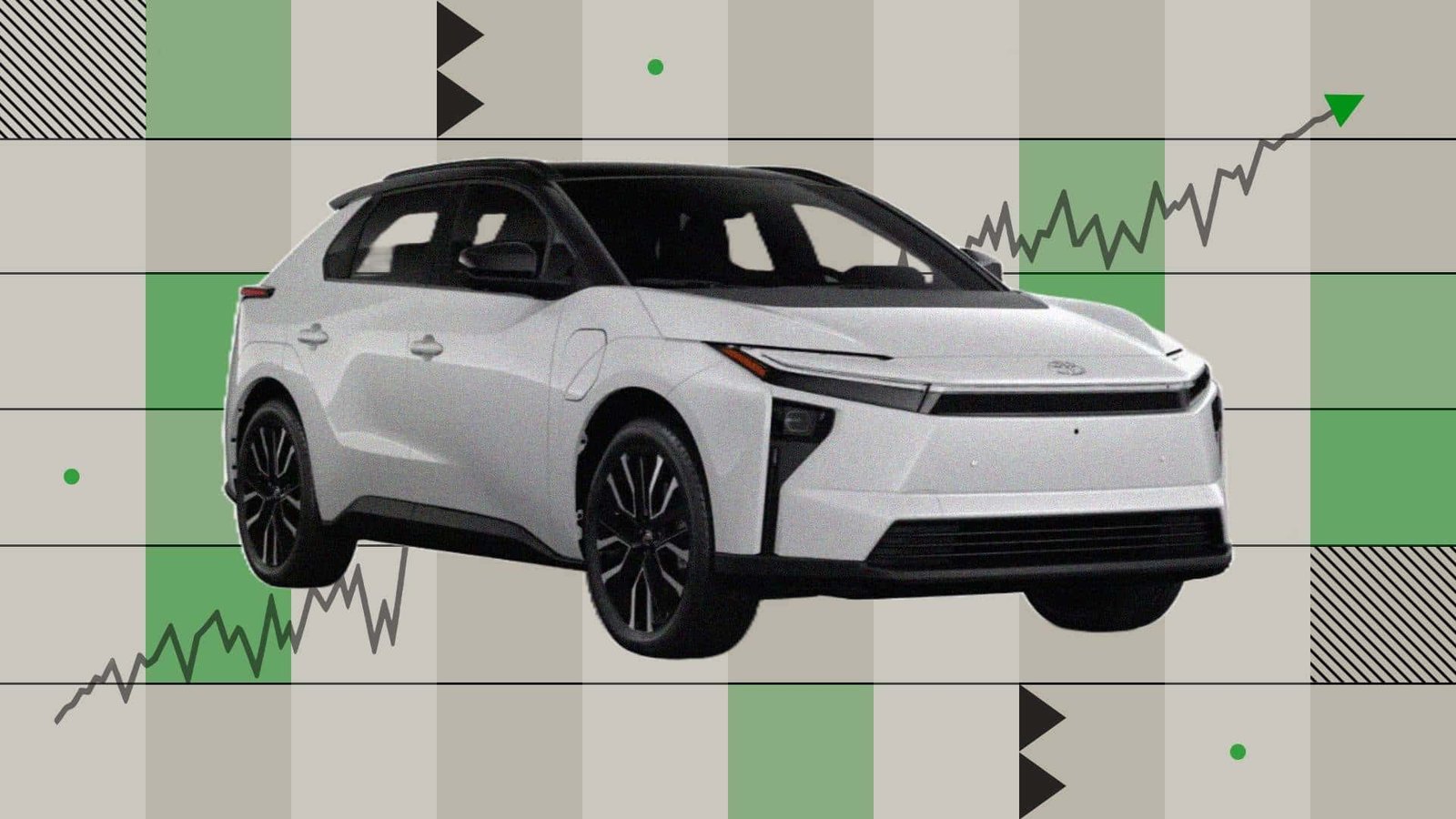
Toyota stood out as one of the quarter’s biggest success stories, with EV sales surging 225% year over year to 11,826 units. The growth was driven by a refreshed lineup that now includes the bZ, C-HR and bZ Woodland. Through the first half of the year, Toyota’s EV sales are up 136% to 21,855 units. The company has now sold more EVs than Cadillac in 2026 and trails only Tesla, Chevrolet and Hyundai in the U.S. market.
Yet the broader industry still overwhelmingly favors combustion cars. While many major economies continue to support EV adoption through incentives aimed at reducing transportation emissions, the U.S. moved in the opposite direction last year. The U.S. eliminated the EV tax credit and rolled back fuel economy standards that had encouraged automakers to expand EV sales to meet fleet-wide efficiency targets.
| Top 10 models (Cox data) | Q2 2026 | YTD 2026 | Q1→Q2 % Chg |
| Tesla Model Y | 84,863 | 163,454 | +8.0% |
| Tesla Model 3 | 34,944 | 66,616 | +10.3% |
| Hyundai Ioniq 5 | 10,940 | 20,730 | +11.7% |
| Toyota bZ | 7,524 | 17,553 | -25.0% |
| Ford Mustang Mach-E | 7,032 | 11,632 | +52.9% |
| Chevrolet Equinox | 6,660 | 16,249 | -30.5% |
| Rivian R1S | 6,183 | 11,677 | +12.5% |
| Honda Prologue | 5,088 | 8,407 | +53.3% |
| Kia EV9 | 4,295 | 7,035 | +56.8% |
| Cadillac Optiq | 4,236 | 7,083 | +48.8% |
The impact was immediate. In the final quarter before the tax credit expired, automakers posted a record 437,487 EV sales as buyers rushed to lock in the incentive. Sales then plunged 46% to 234,171 units in the following quarter before slipping further to just 216,399 units in the first quarter of this year. In response, automakers delayed or canceled dozens of planned EV models and booked billions of dollars in charges as they scaled back some of their electrification plans.
The latest sales figures, however, suggest that the downturn may finally be bottoming out. Automakers are shifting their focus toward more affordable EVs, while the nation’s public charging network continues to expand at a healthy pace despite softer EV sales demand. Taken together, those trends suggest the U.S. EV market is proving more resilient than the last few quarters indicated, and that its next phase of growth could still lie ahead.
Contact the author: suvrat.kothari@insideevs.com