

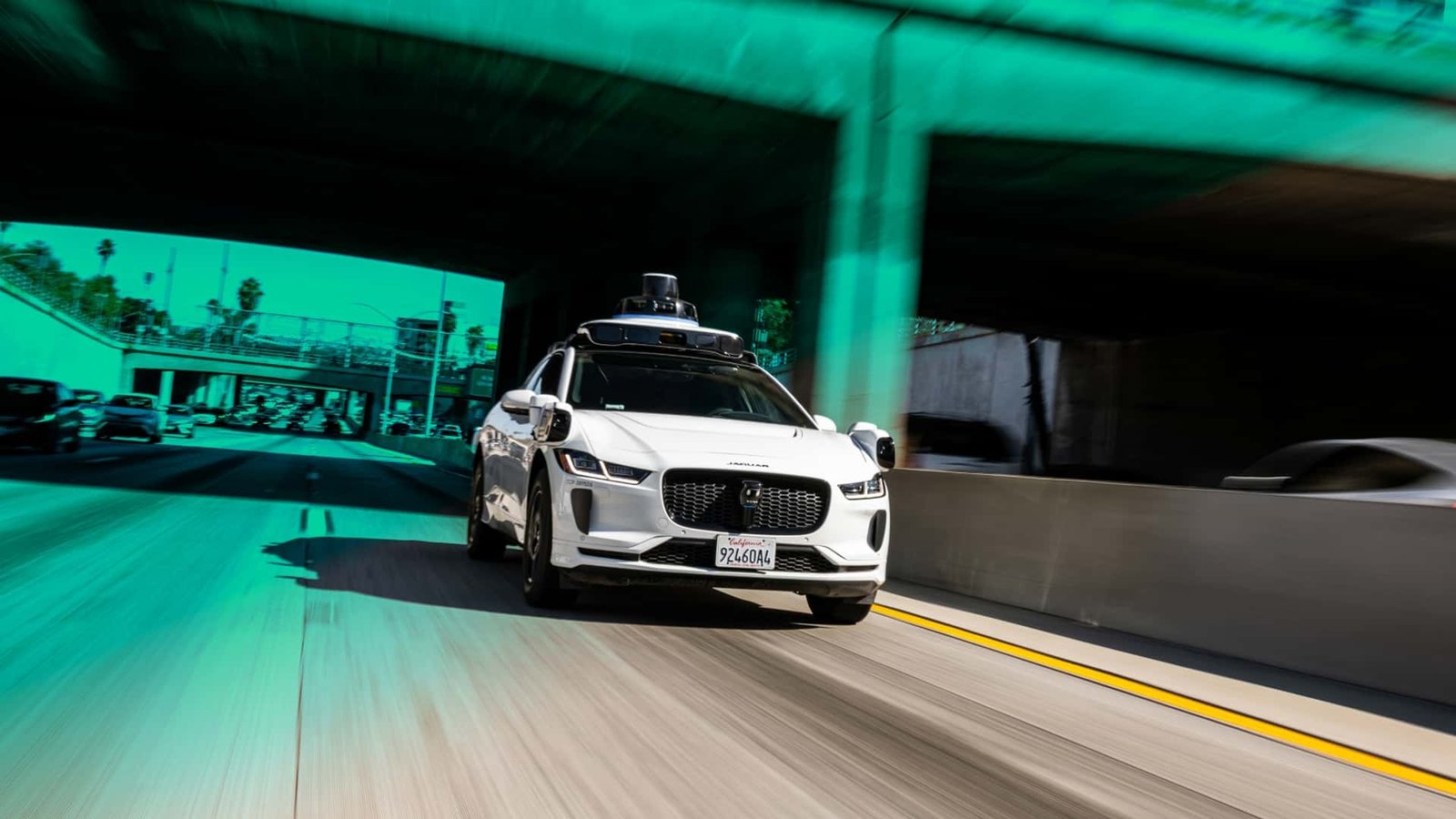
- The NHTSA is warning robotaxi providers that they need to start doing better.
- Specifically, the agency is urging developers behind the driverless cars to address how cars handle emergency scenes.
- The agency’s Administrator called on companies to prioritize interactions with first responders.
Autonomous cars were pitched as a way to make roads safer by removing the most volatile element: the human behind the wheel. But after years of unpredictable behavior from the robots in the presence of emergency responders, the feds are sounding the alarm.
This week, the U.S. National Highway Traffic Safety Administration published a letter it sent to robotaxi operators with the clear message that it’s time to shape up.

Photo by: Kevin Chen (YouTube)
If you’ve been on social media at all over the last several years, you’ve probably seen at least one video of the chaos. Some have crashed into fire trucks, others have driven into construction zones, and police have even pulled them over for various traffic infractions. The list goes on.
NHTSA is singling out one specific way in which it says driverless cars are misbehaving now. The agency is telling operators that emergency scenes “are not rare or extreme edge cases” and is calling the current state of the industry “unacceptable.”
Here’s what NHTSA Administrator Jonathan Morrison had to say in the letter:
Over the past several months, NHTSA has identified a clear pattern of driverless AVs interfering with law enforcement and other first responders. The agency has documented multiple instances in which AVs drove directly into active emergency scenes, blocked the paths of ambulances and firefighters, or failed to recognize and respond to basic safety conditions like flashing lights, flares, smoke, fire, and traffic cones.
This is unacceptable. To state it bluntly: an AV that cannot safely interact with first responders is a danger to the general public.
Morrison goes on to set expectations for what it wants from the industry by demanding that AV providers prioritize interactions with first responders.
He also noted that the agency will set up meetings with the developers of these automated systems by the end of the year to know how they will solve the ongoing problems. Should the companies behind the robotaxis fail to address the issue, NHTSA says that it has no problem continuing to “exercise [its] enforcement authority” for developers that do not address what the agency views as significant safety concerns.
The letter isn’t all doom and gloom. It also shares the sentiment that robotaxis have the ability to radically change the way Americans get around. Not only might the mature version of the autonomous vision help to reduce roadway fatalities, but it could also drastically improve mobility for all walks of life.
But in order to unleash the innovation, Morrison warns that it needs to be done safely. That begins by protecting those already handling dangerous situations.
“Public trust on our roads is earned, not given,” he said.