

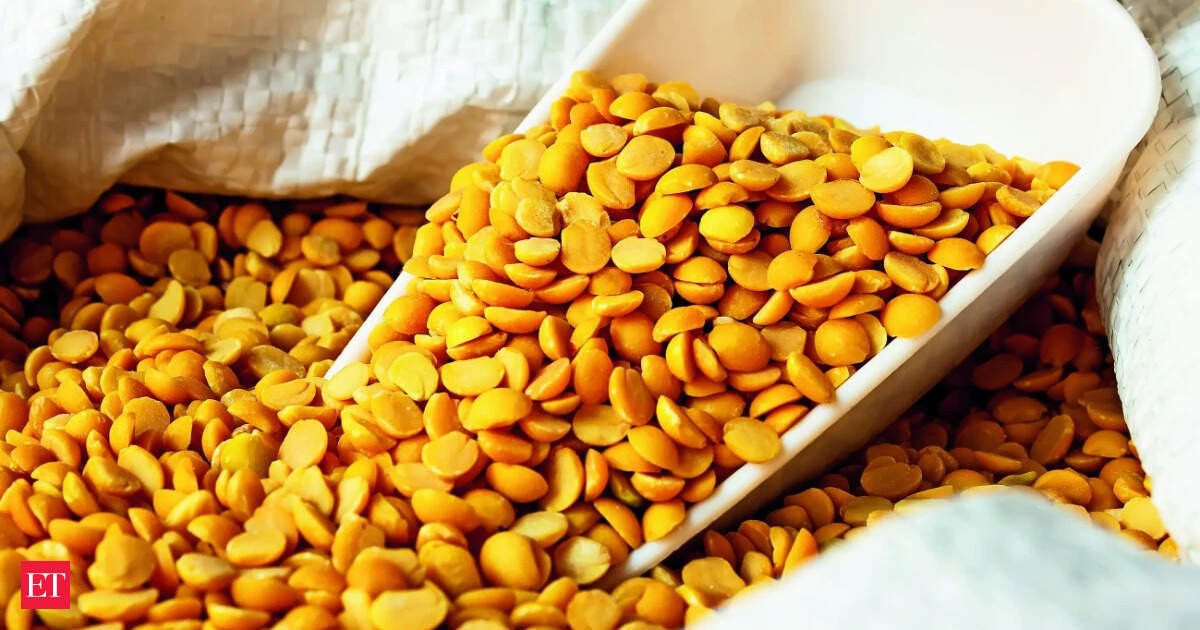
Through a trade-to-trade initiative, Brazil has been attempting to cultivate tur for India, with a small harvest expected this year. However, initiating imports require necessary plant phytosanitary clearance and other government approvals. Over the past two years, Brazil has also started cultivating urad for India, which had thus far relied solely on Myanmar as an external sourcing destination.
Read more: Bharat atta, rice set for market return ahead of festive season
Meanwhile, the trade sector is attempting to expand tur cultivation to Australia. However, with India being the world’s sole consumer of tur, new producing countries insist on guaranteed buyback assurances before growing the crop. “As India is the only country in the world which consumes tur dal on such a large scale, any country, which will grow tur for us, will like to get policy certainly as they cannot sell it to any other country,” said Satish Upadhyay, honorary secretary at trade body Indian Pulses and Grains Association (IPGA).
After back-to-back droughts in 2015 and 2016 when tur dal prices touched ₹200/kg, India has been seeking to reduce its import reliance on a few countries by encouraging newer regions to grow pulses.

Traditionally, India imports tur mainly from Myanmar and Mozambique, Malawi, Tanzania, Sudan, Kenya, Uganda, while Myanmar was the only country for sourcing urad. IPGA and its Brazilian counterparts have been pushing to add the South American nation to India’s pulses import basket.
Read more: Fertiliser industry seeks hike in subsidy rate for Kharif season due to rising raw material costImports began with 3,000 tonnes of urad in 2023, which has since expanded to about 400,000 tonnes in 2026. As erratic weather and changing crop patterns intensified India’s import dependence for urad, it became heavily dependent on Myanmar.
The industry now wants the government to add Brazil as a source for quality tur dal. Notably, many African countries grow tur for India, but IPGA has been working with Brazil due to a few advantages.
“The quality of Brazilian tur is better than any other origin due to the large farms and advanced farming techniques used by Brazilian farmers,” said Bimal Kothari, chairman, IPGA. “We will get better quality tur at comparatively lower than the domestic prices.”