

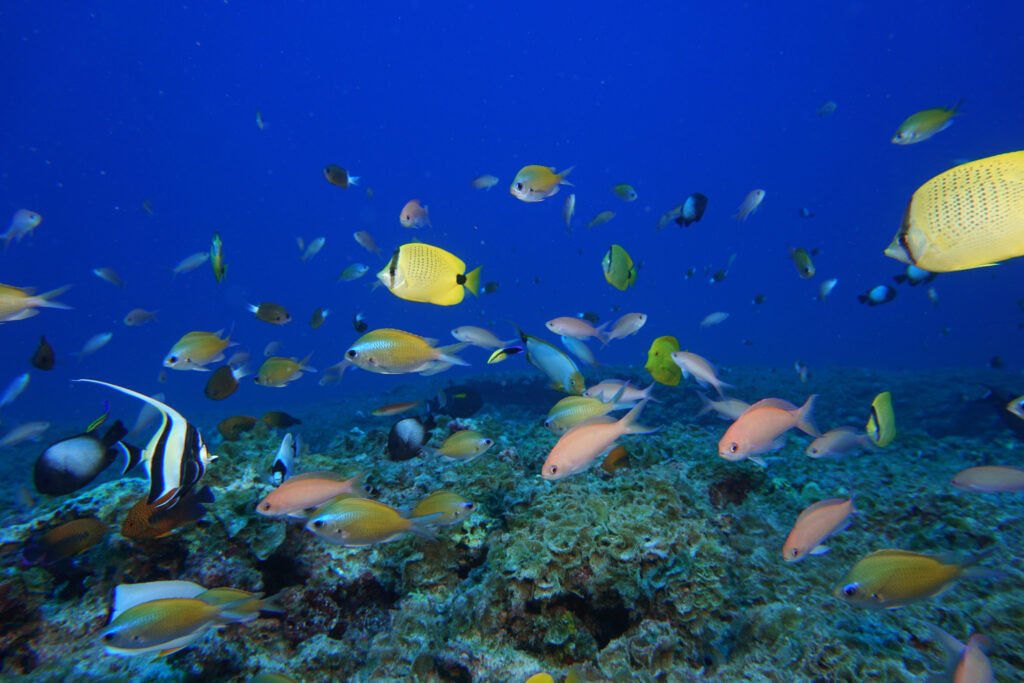
President Donald Trump is seeking to reverse significant ocean protections by allowing commercial fishing in three Pacific marine national monuments President George W. Bush established in the early 2000s. The Bush administration specifically created these protected areas to safeguard some of the region’s most pristine coral reefs, seabird colonies and other marine life from extractive activities, including commercial fishing, within their bounds.
In June, Trump signed a proclamation ordering the removal of commercial fishing prohibitions within the Islands Unit of the Mariana Trench Marine National Monument in the Northern Mariana Islands, the Papahānaumokuākea Marine National Monument in Hawaii and the Rose Atoll Marine National Monument in American Samoa.
“I find that certain monument-based prohibitions on commercial fishing are not necessary at this time for the proper care and management of the monuments or the objects of historic or scientific interest,” Trump said in his proclamation.
Trump’s announcement has drawn widespread condemnation from conservation groups, scientists and Indigenous peoples who say allowing commercial fishing within the monuments would jeopardize some of the Pacific’s most ecologically significant places.
The Papahānaumokuākea Marine National Monument, for example, is one of the world’s largest marine protected areas, spanning more than 580,000 square miles of ocean—an area that exceeds the size of all national parks combined. More than 14 million seabirds nest on the monument’s islands, which make up one of the largest tropical seabird rookeries in the world. The monument also hosts extensive coral reefs, underwater mountains and other critical habitat for humpback whales that breed and calve here, as well as resident shark populations, endangered Hawaiian monk seals and threatened nesting sea turtles.
The area is also considered sacred by Native Hawaiians. “We have a cultural connection to this place,” said Solomon Pili Kahoʻohalahala, a seventh-generation Native Hawaiian elder and ocean activist who was part of the founding process of the monument.
According to a Native Hawaiian chant, the name Papahānaumokuākea, itself, refers to a sacred place where all life began as a coral polyp, from which the rest of the Hawaiian islands and their people arose.
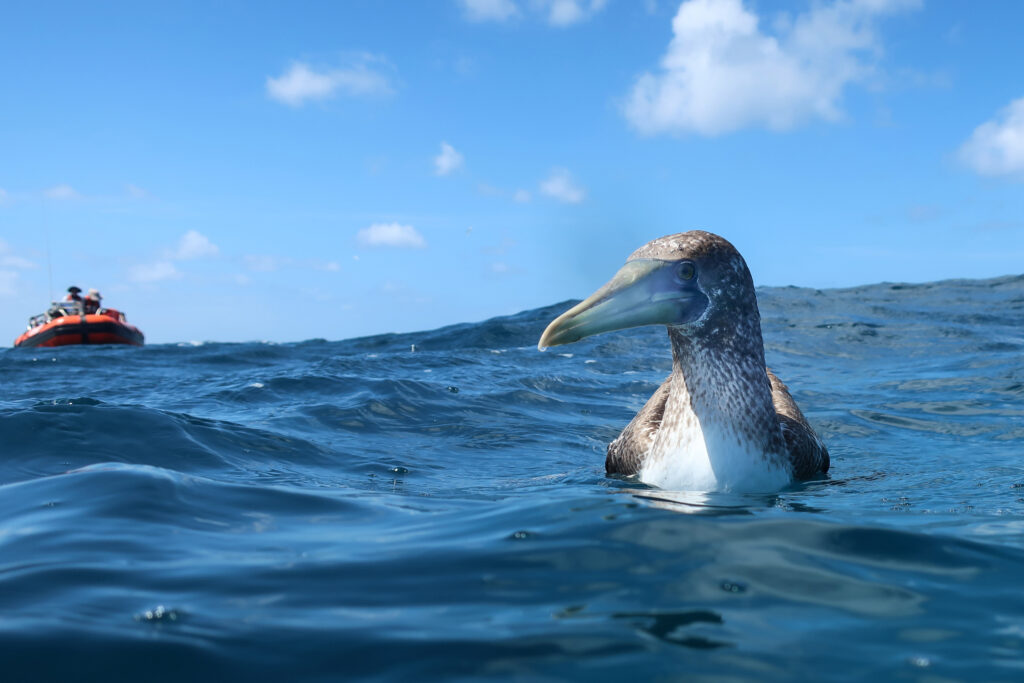
If the Trump administration succeeds in removing the monument’s current fishing restrictions, Papahānaumokuākea is likely to face the most amount of commercial fishing pressure among the marine national monuments in the Pacific, said Angelo Villagomez, a senior fellow at the Center for American Progress, where he focuses on Indigenous-led marine conservation.
“Fishermen are going to go there,” he said. The other monuments’ extreme remote locations in the Northern Mariana Islands and American Samoa, Villagomez said, would likely deter most U.S. vessels from venturing into them to fish.
The Hawaiian longline fishery, which uses thousands of baited hooks to catch swordfish and tuna, has already expressed interest in fishing in Papahānaumokuākea. Currently, the majority of Hawaii’s longline fishing takes place on the high seas where local vessels must compete against distant-water fleets, said Eric Kingma, executive director of the Hawaii Longline Association, which represents Hawaiian longline fishers.
The Trump administration has framed the latest proclamation, titled “Restoring American Commercial Fishing in the Pacific,” as part of its broader strategy to grow domestic fisheries.
“President Trump is once again delivering for American fishermen by opening prized Pacific fishing grounds with this Executive Proclamation,” said Commerce Secretary Howard Lutnick in a statement. “By restoring commercial fishing in the remote Pacific, we are creating new economic opportunity for coastal communities and restoring U.S. seafood competitiveness.”
This story is funded by readers like you.
Our nonprofit newsroom provides award-winning climate coverage free of charge and advertising. We rely on donations from readers like you to keep going. Please donate now to support our work.
But Villagomez said the longline fleets do not need to fish in the currently protected waters to meet their fishing quotas. “They are making more money than they have in the history of this fishery and they want to catch more,” he said. It is possible for fisheries to continue being productive without infringing upon protected marine areas, he added.
“The United States can have a great network of protected areas and the world’s best fisheries at the same time.”
Before fishing can take place, NOAA Fisheries—a federal agency within the Department of Commerce that’s tasked with managing and protecting marine ecosystems—still has to review the details of the president’s proclamation and determine the necessary steps for implementation, according to a statement provided to Inside Climate News by the NOAA Fisheries Public Affairs team.
“If NOAA’s process—which includes environmental review and public comment—finds that commercial fishing can be allowed safely and responsibly, then we would support allowing Hawaii’s fishing families to access the waters of the Papahānaumokuākea Marine National Monument,” Kingma, of the Hawaii Longline Association, said in an email.
Meanwhile, groups like Earthjustice, a non-profit public interest environmental law organization, have vowed to challenge Trump’s orders in court.
“We’re planning to take the administration to court and sue them,” said David Henkin, an attorney at Earthjustice. “The proclamation itself is unconstitutional, illegal, and any efforts to implement the proclamation and give the green light to commercial fishing would be likewise illegal.”
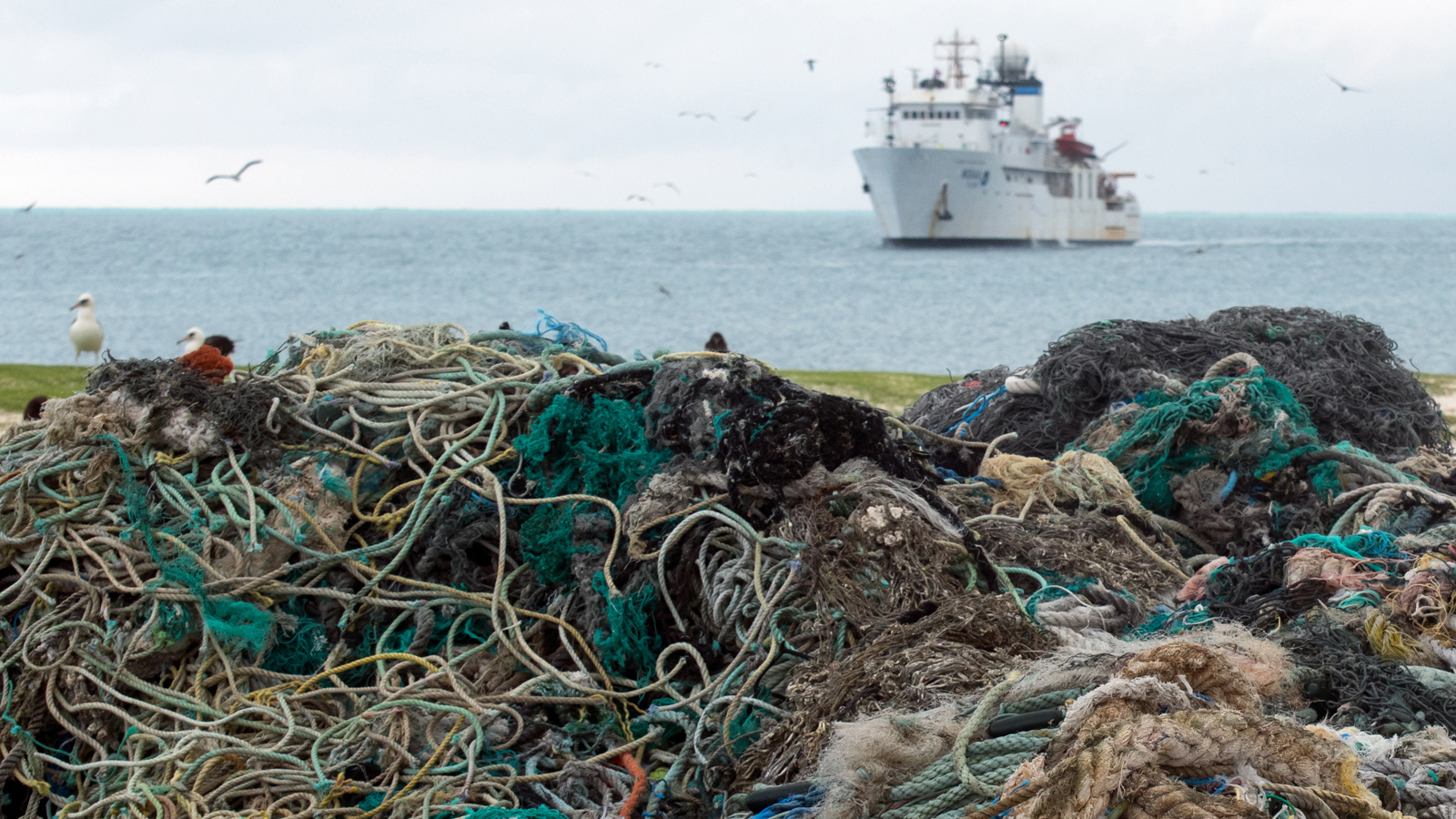
Papahānaumokuākea already faces numerous threats, including invasive alien species, warmer ocean temperatures which are causing coral reefs to bleach and tens of tons of marine debris, including derelict fishing gear, that enters these waters and chokes or entangles reefs and other marine life, according to NOAA Fisheries.
Fishing would further disrupt and jeopardize this complex ecosystem, which depends on a healthy food web, said Alan Friedlander, a fisheries scientist and affiliate researcher at the Hawaii Institute of Marine Biology, based at the University of Hawaii.
“Commercial fishing within Papahānaumokuākea would affect far more than the fish that are directly harvested,” Friedlander said . Many reef fish, corals and other invertebrates here are not found anywhere else. “The monument protects one of the world’s most ecologically distinctive marine ecosystems and one of the few remaining large predator-dominated coral reef ecosystems on Earth,” Friedlander said in an email.
“Protecting this evolutionary legacy is important because once endemic populations are lost, they cannot be replaced from elsewhere.”
About This Story
Perhaps you noticed: This story, like all the news we publish, is free to read. That’s because Inside Climate News is a 501c3 nonprofit organization. We do not charge a subscription fee, lock our news behind a paywall, or clutter our website with ads. We make our news on climate and the environment freely available to you and anyone who wants it.
That’s not all. We also share our news for free with scores of other media organizations around the country. Many of them can’t afford to do environmental journalism of their own. We’ve built bureaus from coast to coast to report local stories, collaborate with local newsrooms and co-publish articles so that this vital work is shared as widely as possible.
Two of us launched ICN in 2007. Six years later we earned a Pulitzer Prize for National Reporting, and now we run the oldest and largest dedicated climate newsroom in the nation. We tell the story in all its complexity. We hold polluters accountable. We expose environmental injustice. We debunk misinformation. We scrutinize solutions and inspire action.
Donations from readers like you fund every aspect of what we do. If you don’t already, will you support our ongoing work, our reporting on the biggest crisis facing our planet, and help us reach even more readers in more places?
Please take a moment to make a tax-deductible donation. Every one of them makes a difference.
Thank you,

Oceans Correspondent
Teresa Tomassoni is an environmental journalist covering the intersections between oceans, climate change, coastal communities and wildlife for Inside Climate News. Her previous work has appeared in The Washington Post, NPR, NBC Latino and the Smithsonian American Indian Magazine. Teresa holds a master’s degree in Journalism from the Craig Newmark Graduate School of Journalism. She is also a recipient of the Stone & Holt Weeks Social Justice Reporting Fellowship. She has taught journalism for Long Island University and the School of the New York Times. She is an avid scuba diver and spends much of her free time underwater.