

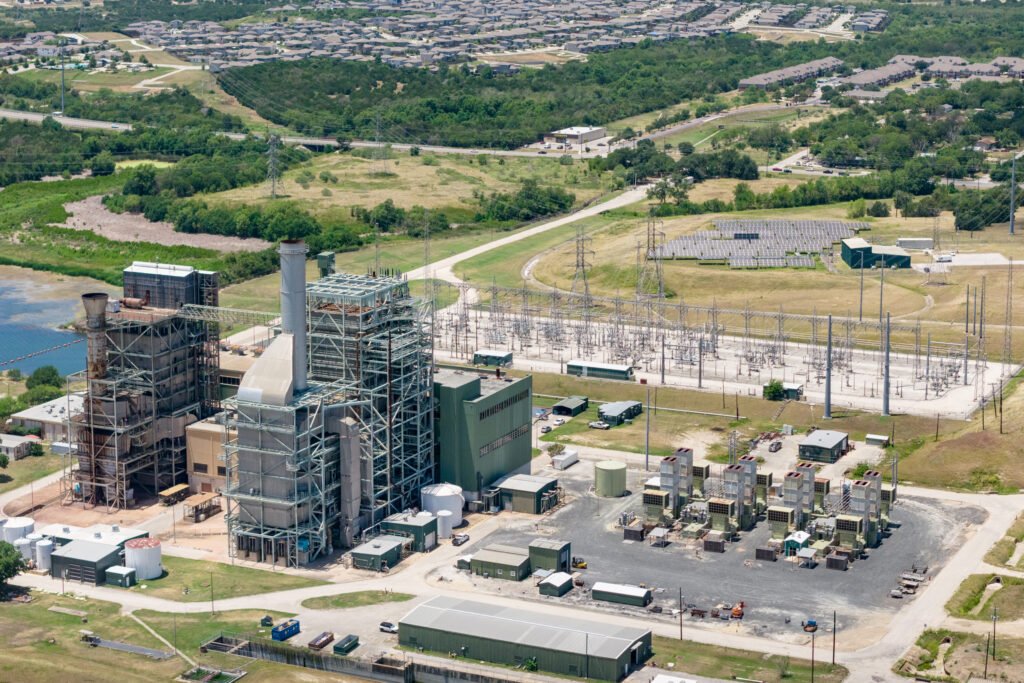
As new electricity generation skews toward solar and battery storage in Texas, Republican state senators are questioning whether it’s time to impose minimum standards for building gas plants and move away from free trade in the state’s electricity marketplace.
The Electric Reliability Council of Texas (ERCOT), the state’s grid operator, reported last week that 70 percent of generation in the 460-gigawatt interconnection queue is from solar and battery storage. Natural gas facilities make up less than 17 percent of that line. And while it’s an uptick from three years ago, when there were less than 10 gigawatts of gas power plants seeking to connect, legislators and grid leaders say going forward the current level of planned gas facilities won’t be enough.
State Sen. Phil King, a Republican from Weatherford, asked the leaders of ERCOT and the Public Utility Commission of Texas (PUC) at a public hearing last week whether there should be a rule that puts a quota on what share of new generation connecting to the grid comes from fossil fuels.
“Should we say that from a point of interconnection that 50 percent—or some percentage of new generation—has to be dispatchable generation as opposed to just letting the market forces guide that,” King asked, referring to gas plants as “dispatachable” because they can be ramped up or down on demand, unlike intermittent wind and solar power sources.
“That would be a pretty significant policy change to have a requirement like that,” ERCOT CEO Pablo Vegas replied at a Senate Committee on Business and Commerce public hearing.
But both Vegas and PUC Chairman Thomas Gleeson said there needs to be a way to provide long-term incentives for gas to get built in Texas.
Unlike other grid systems, power plants interconnected with ERCOT get paid for energy they actually deliver, not solely for having energy capacity available. The grid’s market design dispatches the lowest cost resources, or the power plants with the least fuel costs, Vegas said. As solar and wind have zero fuel costs, they supply as much of the state’s energy demand as they can provide.
What’s left is then served by the next highest cost, Vegas said, starting at the gas plants connected onto the grid and then the 15 coal plants across the state. The proliferation of solar, storage and wind onto the grid has reduced the number of hours gas plants need to run.
“Even if we didn’t build a new megawatt of renewables in this state for the next 10 years, we have the largest fleet of renewables in the U.S.,” Vegas said. “It’s going to continue to operate.”
In order to change the market to more widely incentivize the growth of gas and coal plants, Vegas said, ERCOT and the PUC would have to give those fuel-burning facilities a way to consistently make money to justify the billions of dollars required to cover the cost of investment and keep the plants running for the next few decades.
While the number of proposed gas plants has increased in recent years, especially as data centers and other energy-intensive industries build their own fuel-burning generation capacity, Vegas said Texas will need a balanced mix of resources to serve the state’s growing electricity demands.
Vegas said that well over 90 percent of the energy resources that have come onto the grid are renewables and batteries. If that continues while load grows rapidly, the state could see more scarcity events.
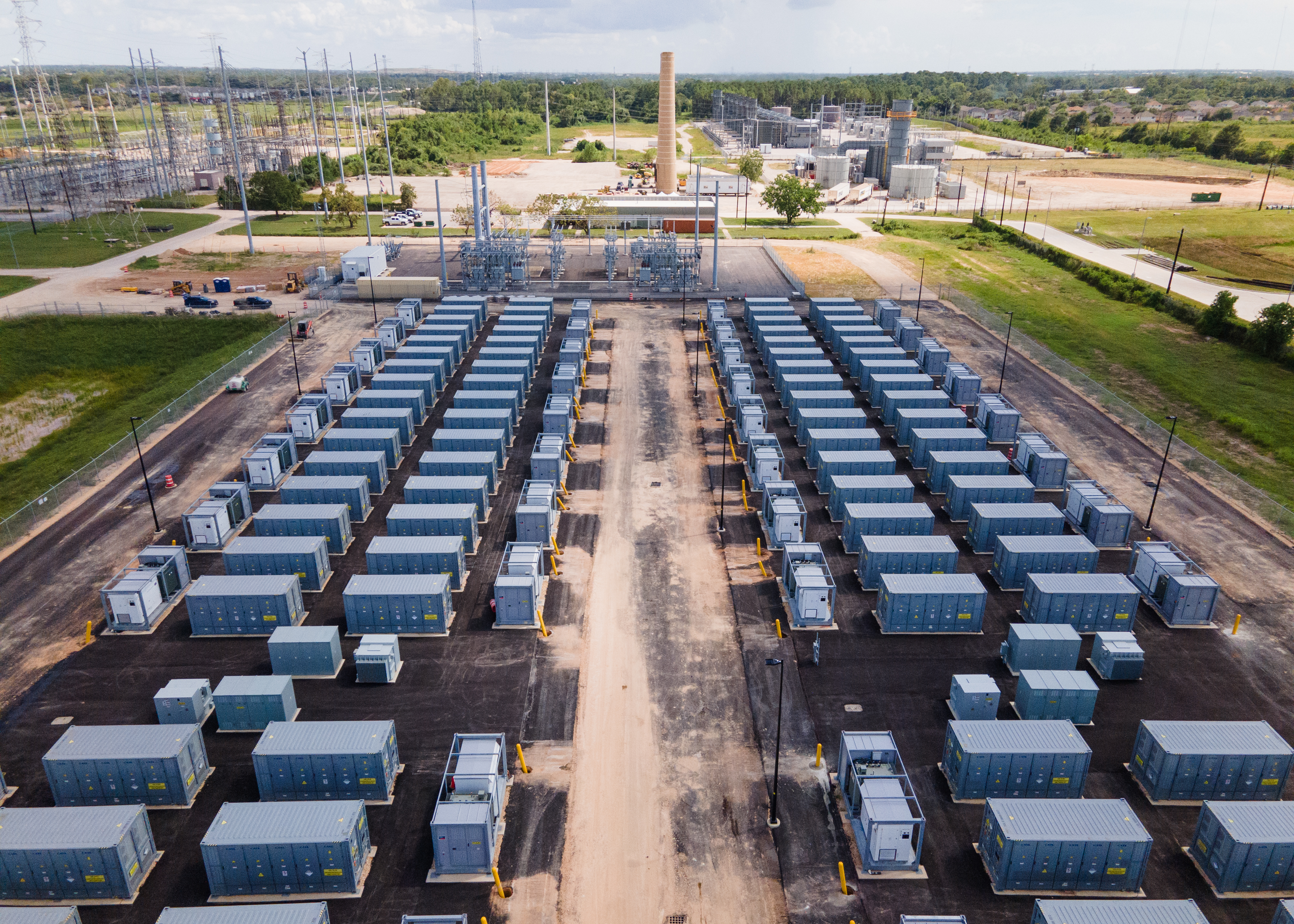
On July 22, when demand exceeded 91 gigawatts, there was more than 20 gigawatts of capacity still available.
But the ease with which ERCOT handled that and another record-breaking demand day after temperatures soared statewide last month would be gone in two to three years, Vegas said, if only renewables continue to dominate additions to the grid. While renewables have remade the grid, ERCOT still heavily relies on fossil fuels.
As the state’s electricity demands continue to grow, so do the demands on the state’s gas and coal plants—especially once the sun has gone down. Around 9 p.m. on the record-breaking demand day last month, the total load was almost 85 gigawatts, Vegas said. But because solar was no longer available, the fuel-burning facilities generated 75 megawatts, or close to 90 percent of demand.
Bill Barnes, the senior director of regulatory affairs at NRG Energy, a natural gas power producer, said ERCOT’s market structure as is, influenced by outside factors such as the previous administration’s renewable energy tax credits, struggles to incentivize natural gas power plant operators to build.
While consumers benefited from low prices during the recent heatwave, Barnes said, the low prices told power producers that there’s excess supply on the grid.
“For an investor in a dispatchable thermal plant, that’s a retirement signal,” Barnes said of the energy prices during record demand peaks.
Barnes said the challenge is that while ERCOT’s wholesale market indicates it’s oversupplied, the situation could be very different in three years, as more large loads connect on to the grid
There could even be a winter scenario, Barnes said. There’s already an established dance, he said, for managing Texas’ electricity demands during the summer: Solar ramps up, it ramps down, batteries come on, batteries ramp down, then natural gas and coal come up, Barnes said.
“The question is: What do we do in terms of long-term resource adequacy?” Barnes said.
This over supply of renewables is where King sees a pause on renewable development being useful as the capacity of gas plants catches up.
“Oil and gas is such a big part of our economy,” said King, a business and energy attorney. “When you build more gas plants, that’s not just benefiting the electric market and the consumers. It’s benefiting probably 30 or 35 percent of our economy at any time.”
This story is funded by readers like you.
Our nonprofit newsroom provides award-winning climate coverage free of charge and advertising. We rely on donations from readers like you to keep going. Please donate now to support our work.
Katie Coleman, representing the Texas Association of Manufacturers, the Texas Chemistry Council and the Texas Oil and Gas Association, said since the state deregulated the electric industry 25 years ago, free market principles have prevailed and provided better reliability with better cost outcomes for consumers.
“Even those who are staunchly pro-market and support low government intervention, there is a compulsion to mess with the market,” Coleman said. “There’s a discomfort with not being able to control it.”
King was not the only committee member who expressed concern about the future of the oil and gas industry as solar and battery storage continue to grow onto the grid.
During the hearing, Sen. Lois Kolkhorst, a Republican from Brenham, pointed to a column chart distributed by ERCOT, showing what types of power plants are seeking to connect to the grid. She said it was incumbent to look at the left, flatter side of the graph and then the right.
“You see where all the growth is?” Kolkhorst said, holding up the graph. “We would never have had all these renewables had it not been for the tax credits.”
The senator told PUC Chairman Gleeson she wants to use all the tools in the toolbox to take advantage of Texas’ ability to frack the gas God blessed the state with.
“Sometimes distortion deserves distortion,” Kolkhorst said.
Kolkhorst and other legislators from the Senate Business and Commerce Committee have proposed legislation in the past seeking to restrict the expansion of renewables and seen opposition from the oil and gas industry, which often uses renewables to power its operations at a lower cost.
“Y’all love that cheap power,” Kolkhorst said to Coleman, the representative of the industrial trade groups. “That cheap power was delivered to you courtesy of the United States taxpayer.”
The trio of business associations opposed the federal tax credits, Coleman said, as it often does for any market interventions—even if theoretically it saves the sectors some money.
About This Story
Perhaps you noticed: This story, like all the news we publish, is free to read. That’s because Inside Climate News is a 501c3 nonprofit organization. We do not charge a subscription fee, lock our news behind a paywall, or clutter our website with ads. We make our news on climate and the environment freely available to you and anyone who wants it.
That’s not all. We also share our news for free with scores of other media organizations around the country. Many of them can’t afford to do environmental journalism of their own. We’ve built bureaus from coast to coast to report local stories, collaborate with local newsrooms and co-publish articles so that this vital work is shared as widely as possible.
Two of us launched ICN in 2007. Six years later we earned a Pulitzer Prize for National Reporting, and now we run the oldest and largest dedicated climate newsroom in the nation. We tell the story in all its complexity. We hold polluters accountable. We expose environmental injustice. We debunk misinformation. We scrutinize solutions and inspire action.
Donations from readers like you fund every aspect of what we do. If you don’t already, will you support our ongoing work, our reporting on the biggest crisis facing our planet, and help us reach even more readers in more places?
Please take a moment to make a tax-deductible donation. Every one of them makes a difference.
Thank you,

Reporter, Texas Renewables
Arcelia Martin is an award-winning journalist at Inside Climate News. She covers renewable energy in Texas from her base in Dallas. Before joining ICN in 2025, Arcelia was a staff writer at The Dallas Morning News and at The Tennessean. Originally from San Diego, California, she’s a graduate of Gonzaga University and Columbia University Graduate School of Journalism.