

Close Menu

    Subscribe to Updates

    Get the latest news information from worldwide businesses.

    What's Hot

    Beyond Instagram: Introducing the next generation of social apps

    June 6, 2026

    India to account for half of global oil demand growth over next decade: Rosneft CEO

    June 6, 2026

    SpaceX, Anthropic and other mega-IPOs could leave your index fund completely out of luck

    June 6, 2026
    Facebook Instagram YouTube LinkedIn X (Twitter)
    Trending
    • Beyond Instagram: Introducing the next generation of social apps
    • India to account for half of global oil demand growth over next decade: Rosneft CEO
    • SpaceX, Anthropic and other mega-IPOs could leave your index fund completely out of luck
    • Lebanon says three soldiers killed in Israeli attack on car
    • US strikes Iranian sites after Iran launches drones, in latest Gulf flare-up
    • ‘People sitting abroad … ‘: BJP chief’s veiled attack at CJP protest over ‘dragging youth into negative politics’ | India News
    • Denali National Park Service ranger dies after falling into crevasse on mountain
    • Who is Lobo, the cigar-smoking alien bounty hunter in ‘Supergirl’?
    Newspublicly
    • About Us
    • Advertise & Partner with us
    • Pitch Your Story
    • Contact Us
    Facebook Instagram LinkedIn X (Twitter)
    Subscribe
    • Home
    • World News
      • Asia
      • India
      • USA
      • UK & Europe
      • Middle East
    • Economy & Business
      • Global Economy
      • Corporate & Industry
      • Finance & Markets
      • Policy & Trade
    • Technology
      • Gadgets & Devices
      • Software & Apps
      • AI & Machine Learning
      • Robotics & Automation
    • Health & Medicine
      • Fitness & Nutrition
      • Research & Innovation
      • Disease & Treatment
      • Doctors, Clinics & Patient Care
    • Travel & Tourism
    • Automobile
      • Electric & Hybrid Vehicles
      • Auto Industry Insights
    • Sports
    • More
      • Education
      • Real Estate
      • Environment & Climate
      • Space & Astronomy
      • War & Conflicts
    Newspublicly
    Home»Health & Medicine»Research & Innovation»Tiny X-ray telescope could unlock the Moon’s hidden chemistry
    Research & Innovation

    Tiny X-ray telescope could unlock the Moon’s hidden chemistry

    AdminBy AdminJune 6, 2026No Comments4 Mins Read0 Views
    Share
    Facebook Twitter LinkedIn Copy Link WhatsApp


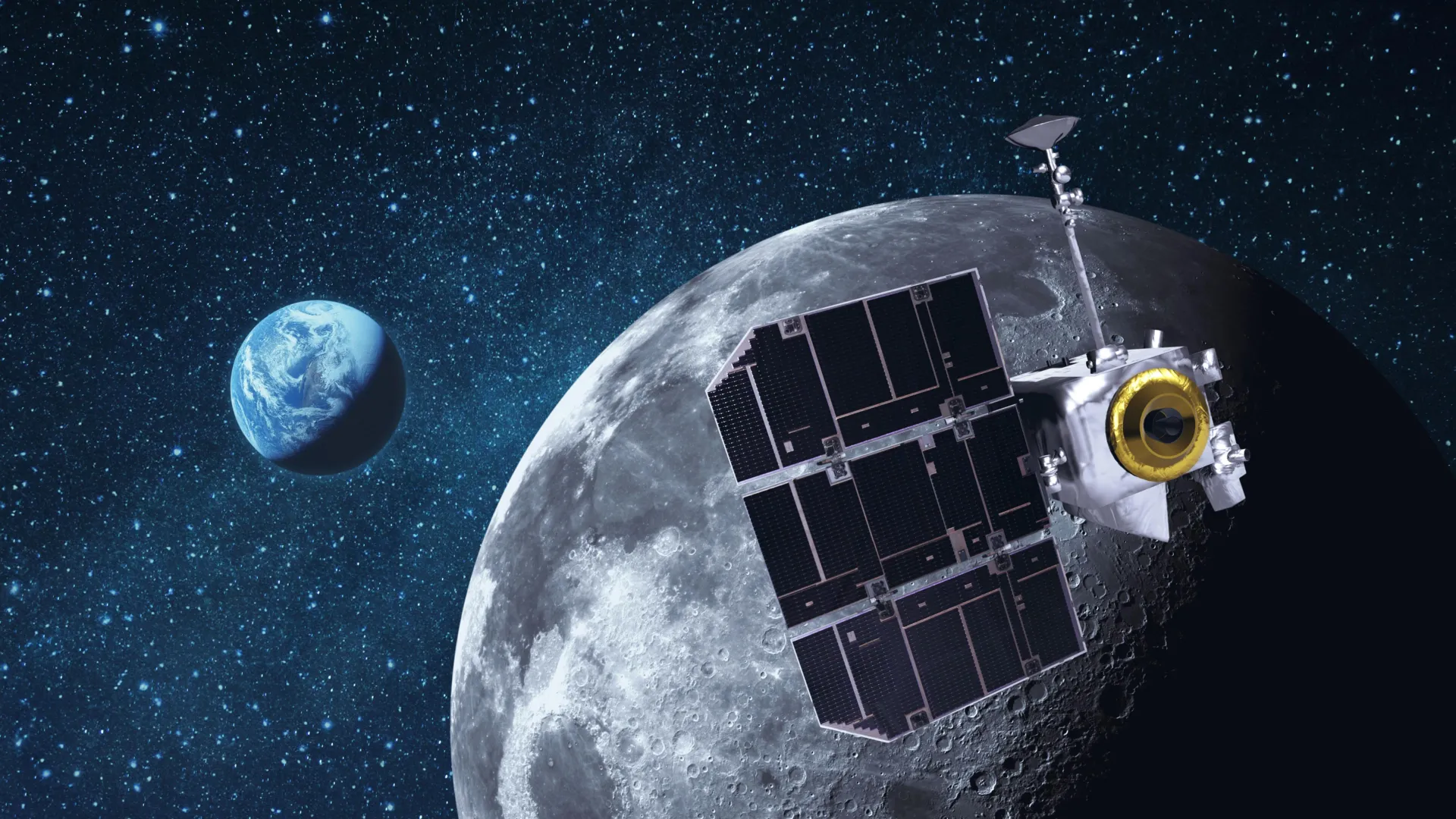
    Researchers at Tokyo Metropolitan University have used simulations to show that a small, newly developed X-ray telescope could help create a chemical map of the entire lunar surface. Such a map would be a major step toward understanding how the Moon formed, changed, and evolved over time.

    Their detailed modeling, which included both the telescope detector and a realistic Moon orbiting satellite mission, suggests that one telescope could map five important elements in about two years. A larger five by five array of detectors could produce sharper maps and complete the work more quickly.

    Mapping the Moon’s Chemistry

    The Moon’s geological history is still not fully understood. One major reason is that scientists do not yet have a complete geochemical map of the lunar surface. Because researchers cannot simply collect samples from every part of the Moon, they must rely on remote sensing methods.

    One of these methods is X-ray fluorescence imaging. In this approach, detectors are pointed at the Moon to capture X-rays emitted by specific elements after they are struck by solar radiation. Those signals can help reveal which elements are present across different regions of the surface.

    Why Complete Lunar Maps Are Difficult

    Earlier observations from the Apollo and Chandrayaan missions produced useful partial maps, but a full global map is still missing. Creating one is technically difficult for several reasons. Missions have limited time to gather enough sunlight driven X-ray signals, and detectors can degrade during long periods in space.

    The problem is especially difficult near the Moon’s poles. In these regions, solar X-rays are weaker, which makes it harder to collect the signals needed to identify surface elements.

    A Compact X-Ray Telescope for Lunar Orbit

    To address these obstacles, a team led by Airi Toida and Prof. Yuichiro Ezoe of Tokyo Metropolitan University has proposed using a compact X-ray telescope on a satellite orbiting the Moon. The telescope would allow wide area observations of the lunar surface during strong solar flares, when the Sun provides more intense X-ray illumination.

    Traditional X-ray telescopes are often too large and heavy for this type of mission. By contrast, the team’s compact telescope was originally designed for studying Earth’s magnetosphere and weighs less than ten kilograms. Its small size could make it practical for long term lunar satellite observations.

    The detector has also been tested in radiation conditions far harsher than those expected in lunar orbit. That durability could support robust, wide area, high resolution imaging over an extended mission.

    Simulations Show a Path to a Full Moon Map

    The researchers then added the telescope’s specifications into a numerical simulation to test whether a satellite mission could successfully map the Moon. Assuming 300 solar flares per year and a single telescope aboard a Moon orbiting satellite, the simulation showed that the whole lunar surface could be mapped for five elements (oxygen, iron, magnesium, aluminum, silicon) in two years, using a grid size of 70 x 70 kilometers.

    Because the telescope is so compact, the team also examined a satellite carrying a five by five array of telescopes. According to the simulations, this 25 telescope system could reduce the mission time to one year. With two years of operation, it could also map sodium, while improving the grid size to 30 x 30 kilometers.

    A New Window Into Lunar Geology

    If either mission concept becomes reality, it would produce the first complete map of elemental abundance across the entire Moon. That achievement would give scientists a powerful new tool for studying lunar geology and reconstructing the Moon’s long and complex history.

    This work was supported by JSPS KAKENHI Grant Number 21H04972.


    Source link

    Author

    • Admin

      NewsPublicly.com is News & Articles Platform that creating SEO-focused articles on travel, lifestyle, and digital trends.

    Admin
    • Website

    NewsPublicly.com is News & Articles Platform that creating SEO-focused articles on travel, lifestyle, and digital trends.

    Related Posts

    Ozempic and similar weight-loss drugs linked to 30% lower breast cancer risk

    June 6, 2026

    The biggest collagen study yet reveals what actually works

    June 6, 2026

    Scientists are seriously asking if bees and ChatGPT are conscious

    June 6, 2026
    Leave A Reply Cancel Reply

    Demo
    Top Posts

    The Blue Moon rises on May 30— Where and when to see the second full moon of the month

    May 30, 202640 Views

    New SOCOM rifle allows barrel swapping and cartridge changes

    June 1, 202632 Views

    “Inside Gemini Robotics 1.5: How Robots Learn to Reason & Act

    November 22, 202525 Views

    525 pounds of cocaine seized after Nebraska K9 alerts troopers on I-80

    May 28, 202624 Views
    Don't Miss

    Beyond Instagram: Introducing the next generation of social apps

    June 6, 20267 Mins Read0 Views

    For years, our social media experiences have been dominated by Big Tech players like Meta…

    India to account for half of global oil demand growth over next decade: Rosneft CEO

    June 6, 2026

    SpaceX, Anthropic and other mega-IPOs could leave your index fund completely out of luck

    June 6, 2026

    Lebanon says three soldiers killed in Israeli attack on car

    June 6, 2026
    Stay In Touch
    • Facebook
    • Twitter
    • Instagram
    • YouTube
    • LinkedIn
    • WhatsApp

    Subscribe to Updates

    Get the latest creative news from SmartMag about art & design.

    Demo
    NEWSPUBLICLY
    Facebook X (Twitter) Instagram LinkedIn

    Home

    • About Us
    • Leadership
    • Advertise & Partner With Us
    • Pitch Your Story
    • Media Kit & Pricing
    • Career
    • FAQs

    Guidelines

    • Editorial & Submission
    • Partnership
    • Advertising & Sponsor
    • Intellectual Property Policy
    • Community & Comment
    • Security & Data Protection
    • Send Your Opinion

    Quick Links

    • Cookie Policy
    • Payment & Billing Terms
    • Refund & Cancellation
    • Copyright Policy
    • Complaint & Support
    • Sitemap
    • Contact Us

    Subscribe Us

    Get the latest news and updates!

    Copyright © 2026 Newspublicly (DIGITALIX COMMUNICATION). All Rights Reserved.
    • Privacy Policy
    • Terms of Use
    • Disclaimer