

Close Menu

    Subscribe to Updates

    Get the latest news information from worldwide businesses.

    What's Hot

    After Anantnag attack, Amit Shah tells slain policeman’s family: ‘His courage will remain etched in memory’ | India News

    July 24, 2026

    Country music’s biggest star Morgan Wallen releases ‘Been By Now’ as his latest hit song

    July 24, 2026

    47 National Testing Agency officials sacked amid student protests

    July 24, 2026
    Facebook Instagram YouTube LinkedIn X (Twitter)
    Trending
    • After Anantnag attack, Amit Shah tells slain policeman’s family: ‘His courage will remain etched in memory’ | India News
    • Country music’s biggest star Morgan Wallen releases ‘Been By Now’ as his latest hit song
    • 47 National Testing Agency officials sacked amid student protests
    • What lurks beneath the volcanoes of Jupiter’s moon Io? NASA’s Juno probe just took a peek
    • Juliette’s descent beneath the silo leads to a major finding
    • Solar generated more electricity than coal and wind in May – EIA data
    • 17 Best Pools in Las Vegas to Beat the Desert Heat
    • A new antiviral could stop measles before an outbreak takes off
    Newspublicly
    • About Us
    • Advertise & Partner with us
    • Pitch Your Story
    • Contact Us
    Facebook Instagram LinkedIn X (Twitter)
    Subscribe
    • Home
    • World News
      • Asia
      • India
      • USA
      • UK & Europe
      • Middle East
    • Economy & Business
      • Global Economy
      • Corporate & Industry
      • Finance & Markets
      • Policy & Trade
    • Technology
      • Gadgets & Devices
      • Software & Apps
      • AI & Machine Learning
      • Robotics & Automation
    • Health & Medicine
      • Fitness & Nutrition
      • Research & Innovation
      • Disease & Treatment
      • Doctors, Clinics & Patient Care
    • Travel & Tourism
    • Automobile
      • Electric & Hybrid Vehicles
      • Auto Industry Insights
    • Sports
    • More
      • Education
      • Real Estate
      • Environment & Climate
      • Space & Astronomy
      • War & Conflicts
    Newspublicly
    Home»More»Space & Astronomy»The most common type of planet in the galaxy may not look anything like Earth on the inside
    Space & Astronomy

    The most common type of planet in the galaxy may not look anything like Earth on the inside

    AdminBy AdminMay 24, 2026No Comments4 Mins Read0 Views
    Share
    Facebook Twitter LinkedIn Copy Link WhatsApp


    We have learned a lot about the planets in our own backyard, and for a long time we assumed the rest of the galaxy looked roughly the same. A rocky planet meant a clear-cut structure: a dense metallic core, a silicate mantle, and a thin atmosphere on top. That picture works fine for Earth.

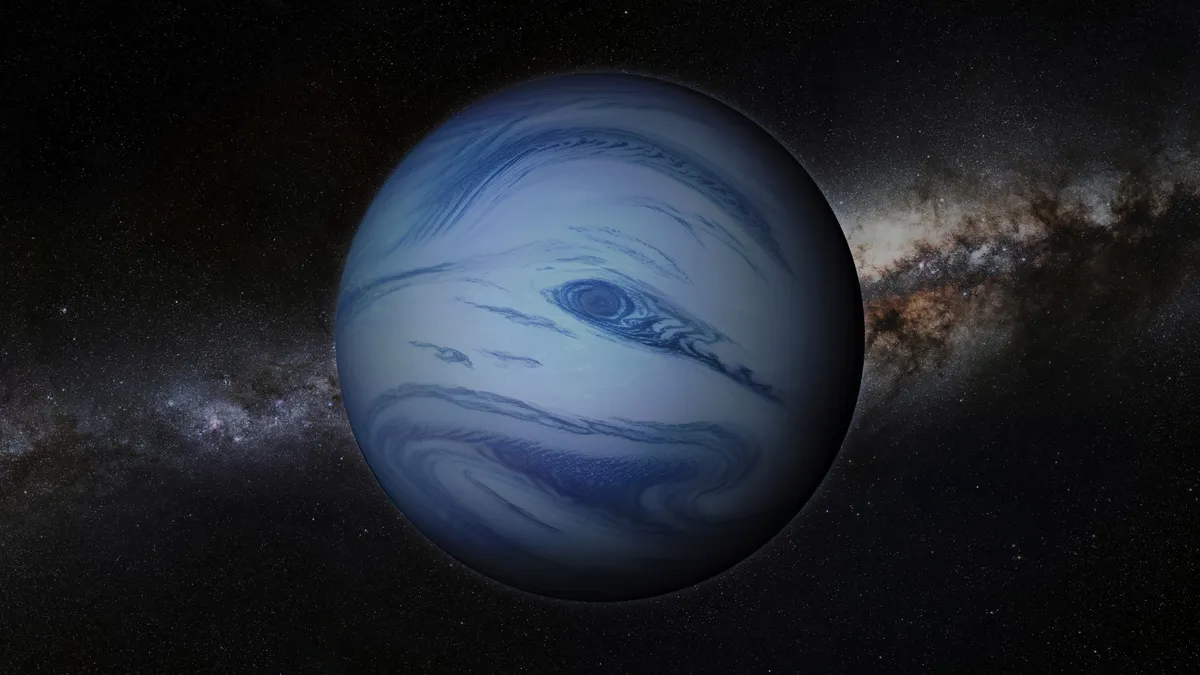
    But according to a new paper submitted to the Astrophysical Journal, it might not work for most of the rocky planets in the universe. By far the most common type of planet we have found around other stars is about a class of worlds called sub-Neptunes: planets larger than Earth but smaller than Neptune. Their close cousins, the super-Earths, are slightly smaller and likely lost most of their hydrogen long ago. The textbook story has these planets forming in essentially the same way Earth did, just with different amounts of leftover gas piled on top. Iron sinks to the middle, silicate rock floats above it, hydrogen sits on top of that.

    But here is the wrinkle. At the pressures and temperatures inside a sub-Neptune, hydrogen, silicate, and iron don’t actually behave like they do near the surface of Earth. Above about 4,000 degrees Kelvin, hydrogen and molten silicate become fully miscible. They stop being oil and water. They become one fluid. The authors behind a new study submitted to the Astrophysical Journal and currently available on arXiv worked out what that means for the structure of these planets, and the answer is surprising.


    You may like

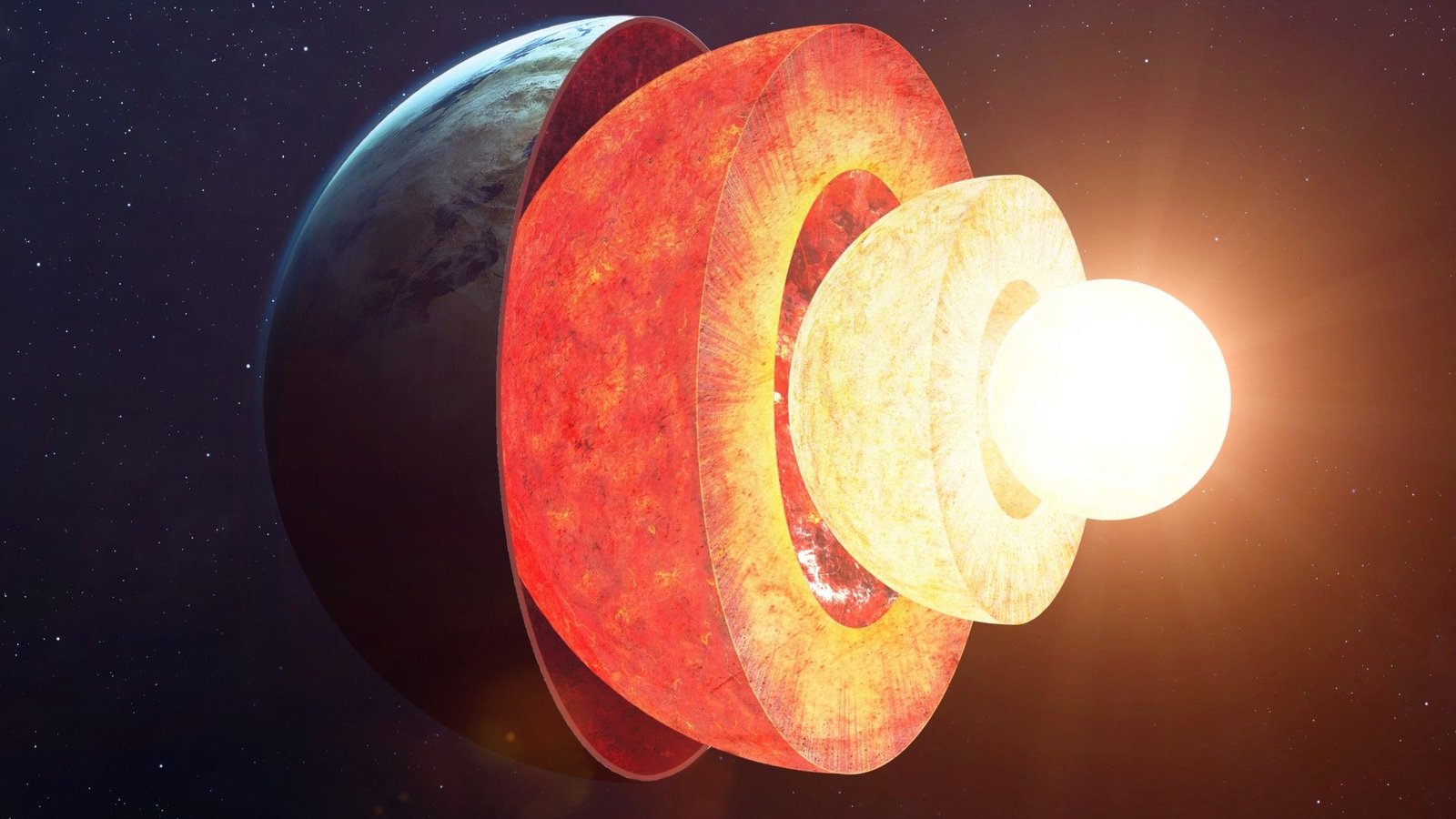
    If a planet accretes less than about one percent of its mass in hydrogen, it follows the familiar script and forms a discrete metallic core just like Earth. But if it picks up more hydrogen than that, the whole inside of the planet becomes a single, mixed, churning fluid of iron, silicate, and hydrogen. No core. No mantle. Just a homogeneous blend all the way down to within a few thousand kilometers of the center.

    That is a significant departure from how we usually draw these worlds in cross-section. The internal structure determines how a planet cools, how it holds onto its atmosphere, and how its radius evolves over time. The authors find that this miscibility framework can reproduce a number of features we already see in the exoplanet population that the old layered-cake models struggled to explain.

    One of those features is the radius gap, the curious deficit of planets right between super-Earth and sub-Neptune sizes that the James Webb Space Telescope and Kepler Space Telescope have mapped out.

    Another is the way planet radii depend on orbital period. Both fall out naturally if you assume that young sub-Neptunes store a substantial fraction of their hydrogen inside this miscible interior, then slowly release it into the outer envelope as the planet cools and the miscibility region shrinks. The hydrogen literally bubbles out of the rock over hundreds of millions of years.
    Space

    a mottled blue planet on a starry background

    Artist’s impression of a sub-Neptune exoplanet. (Image credit: Pablo Carlos Budassi/Stocktrek Images/Getty Images)

    There is a testable consequence here, and that is what makes this paper more than a thought experiment. If hydrogen is gradually exsolving from the interior into the atmosphere, then young sub-Neptunes should contract more slowly than standard models predict.

    They should look slightly puffier than they should be for their age. We are now starting to find sub-Neptunes around very young stars (cosmic toddlers, only tens of millions of years old) where this signature could actually be measured. JWST and the next generation of transit surveys are going to put numbers on it.

    The caveats are real. The model rests on theoretical extrapolations of how hydrogen, silicate, and iron behave at conditions we can’t yet reproduce in a laboratory, although high-pressure experiments are starting to catch up. The internal heat budgets of these planets are still uncertain, and small errors in those parameters propagate into the predictions. And the inverse modeling approach the authors use (start with the observed planet population, work backward to the physics that produced it) is necessarily statistical rather than deterministic.

    Still, the basic claim is bold and clean. The most common type of planet in the galaxy may not look anything like Earth on the inside. The familiar concept of a planetary core, that small dense metallic heart we take for granted, may be the exception rather than the rule out there. Earth might be the weird one.


    Source link

    Author

    • Admin

      NewsPublicly.com is News & Articles Platform that creating SEO-focused articles on travel, lifestyle, and digital trends.

    Admin
    • Website

    NewsPublicly.com is News & Articles Platform that creating SEO-focused articles on travel, lifestyle, and digital trends.

    Related Posts

    What lurks beneath the volcanoes of Jupiter’s moon Io? NASA’s Juno probe just took a peek

    July 24, 2026

    Epic photo captures lightning striking a Chinese rocket during liftoff

    July 24, 2026

    Planet hunter gets the silent treatment photo of the day for July 24, 2026

    July 24, 2026
    Leave A Reply Cancel Reply

    Demo
    Top Posts

    The Blue Moon rises on May 30— Where and when to see the second full moon of the month

    May 30, 202640 Views

    New SOCOM rifle allows barrel swapping and cartridge changes

    June 1, 202633 Views

    “Inside Gemini Robotics 1.5: How Robots Learn to Reason & Act

    November 22, 202527 Views

    525 pounds of cocaine seized after Nebraska K9 alerts troopers on I-80

    May 28, 202624 Views
    Don't Miss

    After Anantnag attack, Amit Shah tells slain policeman’s family: ‘His courage will remain etched in memory’ | India News

    July 24, 20262 Mins Read0 Views

    2 min readSrinagarJul 24, 2026 09:23 PM IST Union Home Minister Amit Shah Friday dialled…

    Country music’s biggest star Morgan Wallen releases ‘Been By Now’ as his latest hit song

    July 24, 2026

    47 National Testing Agency officials sacked amid student protests

    July 24, 2026

    What lurks beneath the volcanoes of Jupiter’s moon Io? NASA’s Juno probe just took a peek

    July 24, 2026
    Stay In Touch
    • Facebook
    • Twitter
    • Instagram
    • YouTube
    • LinkedIn
    • WhatsApp

    Subscribe to Updates

    Get the latest creative news from SmartMag about art & design.

    Demo
    NEWSPUBLICLY
    Facebook X (Twitter) Instagram LinkedIn

    Home

    • About Us
    • Leadership
    • Advertise & Partner With Us
    • Pitch Your Story
    • Media Kit & Pricing
    • Career
    • FAQs

    Guidelines

    • Editorial & Submission
    • Partnership
    • Advertising & Sponsor
    • Intellectual Property Policy
    • Community & Comment
    • Security & Data Protection
    • Send Your Opinion

    Quick Links

    • Cookie Policy
    • Payment & Billing Terms
    • Refund & Cancellation
    • Copyright Policy
    • Complaint & Support
    • Sitemap
    • Contact Us

    Subscribe Us

    Get the latest news and updates!

    Copyright © 2026 Newspublicly (DIGITALIX COMMUNICATION). All Rights Reserved.
    • Privacy Policy
    • Terms of Use
    • Disclaimer