

The moon’s south pole has long been the target of NASA’s Artemis lunar landing missions, but one Artemis astronaut is questioning if that’s still the best plan.
NASA’s Victor Glover, who piloted the Artemis II mission around the moon this past April, proposed a different approach while speaking at the NASA Exploration Science Forum at the agency’s Ames Research Center in California on July 21, according to a report published on Space News. “I think we need to be realistic and work our way to the south pole, and maybe not try to go there first,” Glover said.
Instead, Glover suggested aiming closer to the moon’s equator, where missions can land in areas not at risk of falling out of daylight, and in regions reachable by orbits that allow for quick transfers back to Earth in case of an emergency, according to Space News. That argument aligns with other recent Artemis program changes that NASA has introduced to gradually expand successive mission goals, but whether space agency officials will take his advice depends on what the top priority for Artemis moon landings is deemed to be.

NASA has long targeted the lunar south pole due to its abundance of water ice. Permanently shadowed areas inside craters in this region are believed to harbor large ice deposits, which scientists believe can be used as a resource in the production of several space-travel essentials, like potable water, radiation shielding and rocket fuel. That goes a long way toward achieving the Artemis program’s ultimate goal of creating a sustainable, long-term base on the surface of the moon, and using the lessons learned in building that outpost to enable the eventual occupation of Mars.
There is, however, a secondary motivation behind NASA’s ramped-up urgency to see its Artemis missions succeed in a timely manner. China has also set its sights on the lunar surface, stoking fears in some U.S. officials about the implications of Chinese astronauts staking some sort of claim at the moon’s south pole before American astronauts are able to get there.
During a Senate Commerce Committee hearing last year, several space industry experts, including former NASA Administrator Jim Bridenstine, urged lawmakers not to let that happen. Mike Gold, president of civil and international space at Redwire, told senators that China beating the U.S. back to the moon would mean “a global realignment that will impact our economy, our tax base, our ability to innovate and our national security.”
If not just getting back to the moon first, but being the first with boots on the ground at the south pole, is the priority, Glover’s suggested approach may not get NASA there in time. China is making fast progress with its lunar program; it has already demonstrated robotic landings and sample returns on both the moon’s near and far side and begun developing hardware for a crewed landing by 2030.
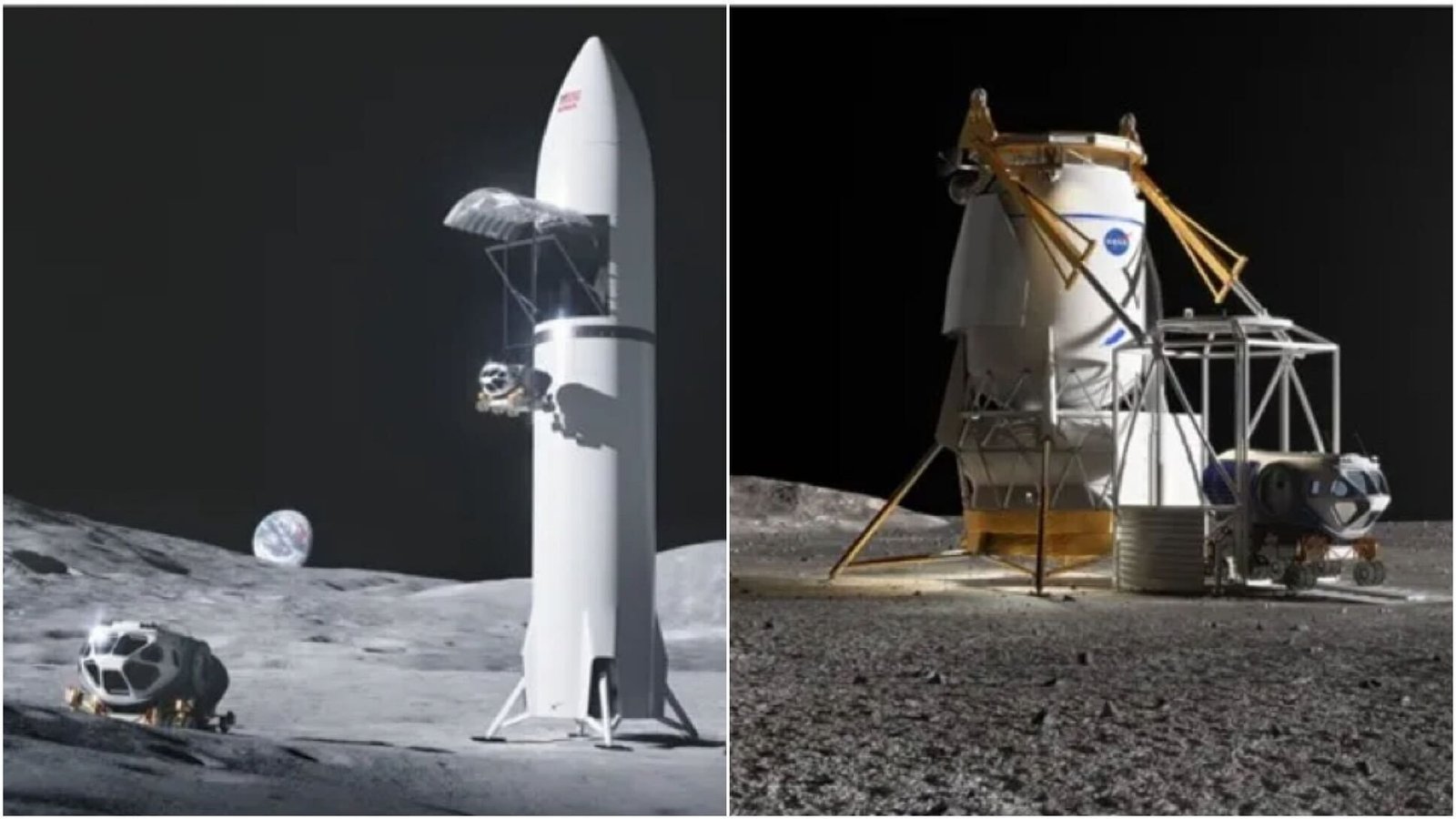
NASA’s next Artemis mission, Artemis III, is scheduled for next year. It will launch four astronauts aboard the Orion space capsule for rendezvous and docking tests with the program’s two commercial lunar lander vehicles, SpaceX’s Starship and Blue Origin’s Blue Moon. If all goes according to plan on that mission, NASA is targeting late 2028 for the program’s first moon landing on Artemis IV. To pull that off, one of the two landers has to be up to the task, and both have faced significant delays that have raised questions about their readiness on NASA’s timeline.
To facilitate south pole landings, NASA previously laid out a lunar near-rectilinear halo orbit (NRHO) — a high-altitude, elliptical polar orbit — where Orion would dock with the lunar Gateway space station, and then crews would transfer to and undock aboard one of the Artemis landers to descend to the surface. Gateway is no longer part of the picture, however; the agency has sidelined that outpost to push ahead with a surface base.
But NRHO on its own also introduces some complications that SpaceX and Blue Origin have raised while developing their lunar landers, as well as safety concerns for astronauts facing a potential emergency situation on the moon’s surface. Because of its highly elliptical shape and long orbital period, opportunities to launch from the moon’s south pole to rendezvous with Orion in NRHO open up just once a week.
To highlight the potential risks imposed by relying on an NRHO, Glover brought up a hypothetical situation — an astronaut health issue that requires a medical evacuation just after landing at a lunar south pole moon base.
“You’re stuck for a week,” Glover said. “That’s a big deal to me, and I don’t like that plan … The equator gives me opportunity to save that person.”
If the point of Artemis’ returning astronauts to the moon as soon as possible is landing there at all, then there’s no need for the first of those missions to aim for the south pole, Glover argued. “If you want to go fast, go familiar … If we want to land soon, familiar, daylight, equator.”
“I think we need to be realistic and work our way to the south pole, and maybe not try to go there first,” he added.
SpaceX is also eyeing an equatorial orbit when Starship flies on the Artemis IV mission, and NASA may already be quietly shifting the mission’s landing site to a higher latitude. During a June 9 event that revealed the Artemis III, SpaceX Customer Operations and Integration Vice President Jessica Jensen outlined an Artemis IV mission plan with Starship that didn’t involve NRHO.
“We have an updated plan with NASA that includes docking Starship with Orion in Earth orbit instead of NRHO, and then we use Starship to actually do the translunar injection with Orion attached,” Jensen said, stressing the same benefits that Glover expressed during the July 21 forum.
“The crew can also abort off the lunar surface nearly any time, versus waiting up to days from NRHO,” she said. “In addition to improving crew safety, these new Artemis IV orbits also significantly lower the amount of propellant Starship needs to aggregate in space, since we now just have a more direct route to the moon, and this lower schedule risk overall.”