

Close Menu

    Subscribe to Updates

    Get the latest news information from worldwide businesses.

    What's Hot

    Citizens Bank cuts ties with CoreCivic and GEO Group over ICE deals

    July 24, 2026

    Even leftover food will taste like a wedding meal

    July 24, 2026

    Aurora’s New Autonomous Truck Hardware Is Designed To Last One Million Miles

    July 24, 2026
    Facebook Instagram YouTube LinkedIn X (Twitter)
    Trending
    • Citizens Bank cuts ties with CoreCivic and GEO Group over ICE deals
    • Even leftover food will taste like a wedding meal
    • Aurora’s New Autonomous Truck Hardware Is Designed To Last One Million Miles
    • FDA panel narrowly backs unapproved peptide drugs favoured by RFK Jr and wellness influencers
    • When Should You Be Concerned?
    • Google’s Gemini nears billion-user milestone
    • India’s Manipal Health to spend $414.4 million to expand capacity
    • From Bhadohi to Brooklyn: India’s small towns are set to go global
    Newspublicly
    • About Us
    • Advertise & Partner with us
    • Pitch Your Story
    • Contact Us
    Facebook Instagram LinkedIn X (Twitter)
    Subscribe
    • Home
    • World News
      • Asia
      • India
      • USA
      • UK & Europe
      • Middle East
    • Economy & Business
      • Global Economy
      • Corporate & Industry
      • Finance & Markets
      • Policy & Trade
    • Technology
      • Gadgets & Devices
      • Software & Apps
      • AI & Machine Learning
      • Robotics & Automation
    • Health & Medicine
      • Fitness & Nutrition
      • Research & Innovation
      • Disease & Treatment
      • Doctors, Clinics & Patient Care
    • Travel & Tourism
    • Automobile
      • Electric & Hybrid Vehicles
      • Auto Industry Insights
    • Sports
    • More
      • Education
      • Real Estate
      • Environment & Climate
      • Space & Astronomy
      • War & Conflicts
    Newspublicly
    Home»More»Space & Astronomy»Scientists found stardust trapped in Antarctic ice. What could it tell us about our solar system?
    Space & Astronomy

    Scientists found stardust trapped in Antarctic ice. What could it tell us about our solar system?

    AdminBy AdminMay 18, 2026No Comments4 Mins Read0 Views
    Share
    Facebook Twitter LinkedIn Copy Link WhatsApp


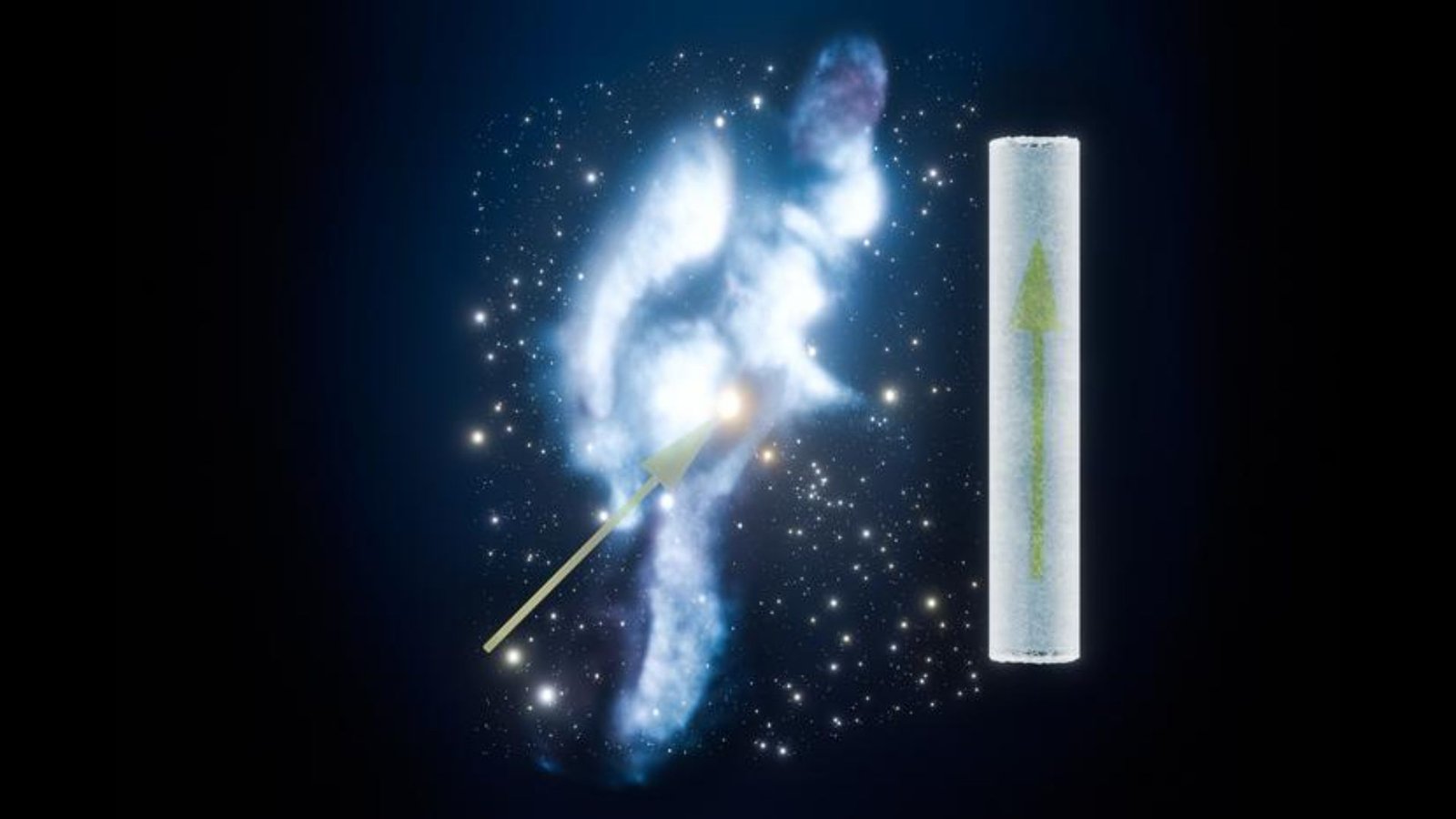
    Radioactive stardust remnants from stellar explosions have been found trapped in ice in Antarctica.These cosmic remains serve as clues that help uncover the history of our solar system, researchers have found in a new study.

    Across the universe, we find colossal interstellar clouds of gas, dust, and plasma that lie between stars. Our own solar system is currently passing through such a cloud, known as the Local Interstellar Cloud, nicknamed the “Local Fluff.” These clouds can accumulate matter as they float through the cosmos, and that matter can sometimes end up on Earth as our planet passes through the Local Fluff. In a new study of some of this matter, researchers have found a byproduct of ancient supernovas, a radioactive iron isotope known as iron-60 (60Fe), that got stuck in the cloud and ended up embedded in Antarctic ice.

    “We found supernova-produced 60Fe in Antarctic ice,” lead author Dominik Koll, from the Institute of Ion Beam Physics and Materials Research at HZDR, told Space.com. “If there is 60Fe condensed into dust particles (stardust) then this dust can penetrate the shielding of the solar system and end up on Earth.”


    You may like

    So, how did researchers know that this iron isotope found in Antarctic ice was hitchhiking on an interstellar cloud from an ancient stellar explosion?

    In 2019, Koll was part of a research team that detected 60Fe atoms in Antarctic snow. “We didn’t know where it came from,” he said. “So we continued working on it tracing the influx back … and we got the answer that it is related to the local interstellar cloud.”

    The team analyzed over 661 pounds (300 kilograms) of samples of ice from Antarctica dating back 40,000 to 80,000 years. This is the timeframe during which the team suspects the supernova took place, blasting the material into space only to be embedded in the cloud. After melting and chemically treating the ice and then using a technique known as accelerator mass spectrometry, which essentially speeds up ions, allowing researchers to separate isotopes from one another, they were able to look at and count individual atoms of this isotope in their samples.

    “We looked for single atoms of the radioactive isotope 60Fe,” Koll said. “This isotope is a fingerprint of exploding stars. Our hypothesis was that 60Fe might be within the local interstellar cloud if it originates from stellar explosions (that was postulated by modellers).”

    Space

    The team compared the amount of the iron isotope that they found in recent snow to the amount in this newly-sampled ancient ice. And they found less 60Fe in the much older samples, suggesting that less iron-60 reached Earth between 40,000 and 80,000 years ago than in more recent times.

    “This result suggests that less interstellar dust was reaching Earth during that period,” Koll said. “This is a remarkable change on a comparatively short astrophysical timescale and does not fit the long timescales of the iron-60 deposits that landed here millions of years ago. Instead, we needed to look for a smaller, more local source for the isotope.”

    And this mystery source? These researchers think that it’s most likely a stellar explosion that took place in the region of the Local Interstellar Cloud


    What to read next

    “This means that the clouds surrounding the solar system are linked to a stellar explosion,” Koll said in a statement. “And for the first time, this gives us the opportunity to investigate the origin of these clouds.”

    Our solar system has been traveling through the Local Interstellar Cloud for between 40,000 and 124,000 years, researchers have suggested, though it will only be another few thousand years until we are through.

    This team aims to conduct more investigation to further confirm and expand their results by studying ice samples from even farther back in time, to a time before the solar system began traveling through this cloud.

    This work was described in a study published May 13 in the journal Physical Review Letters.


    Source link

    Author

    • Admin

      NewsPublicly.com is News & Articles Platform that creating SEO-focused articles on travel, lifestyle, and digital trends.

    Admin
    • Website

    NewsPublicly.com is News & Articles Platform that creating SEO-focused articles on travel, lifestyle, and digital trends.

    Related Posts

    Hubble discovers unique nova explosion is firing cosmic ‘bullets’ through the Milky Way at 20 million mph

    July 24, 2026

    ‘Star Trek: Strange New Worlds’ Season 4: Release date, cast & how to watch Paramount+’s sensational sci-fi series

    July 23, 2026

    Vulcan Centaur swapped out again: NASA goes with SpaceX Falcon Heavy rocket for launch of space weather mission

    July 23, 2026
    Leave A Reply Cancel Reply

    Demo
    Top Posts

    The Blue Moon rises on May 30— Where and when to see the second full moon of the month

    May 30, 202640 Views

    New SOCOM rifle allows barrel swapping and cartridge changes

    June 1, 202633 Views

    “Inside Gemini Robotics 1.5: How Robots Learn to Reason & Act

    November 22, 202527 Views

    525 pounds of cocaine seized after Nebraska K9 alerts troopers on I-80

    May 28, 202624 Views
    Don't Miss

    Citizens Bank cuts ties with CoreCivic and GEO Group over ICE deals

    July 24, 20264 Mins Read0 Views

    Gregg Jarrett: Banking discrimination based on politics is illegal Fox News legal analyst Gregg Jarrett…

    Even leftover food will taste like a wedding meal

    July 24, 2026

    Aurora’s New Autonomous Truck Hardware Is Designed To Last One Million Miles

    July 24, 2026

    FDA panel narrowly backs unapproved peptide drugs favoured by RFK Jr and wellness influencers

    July 24, 2026
    Stay In Touch
    • Facebook
    • Twitter
    • Instagram
    • YouTube
    • LinkedIn
    • WhatsApp

    Subscribe to Updates

    Get the latest creative news from SmartMag about art & design.

    Demo
    NEWSPUBLICLY
    Facebook X (Twitter) Instagram LinkedIn

    Home

    • About Us
    • Leadership
    • Advertise & Partner With Us
    • Pitch Your Story
    • Media Kit & Pricing
    • Career
    • FAQs

    Guidelines

    • Editorial & Submission
    • Partnership
    • Advertising & Sponsor
    • Intellectual Property Policy
    • Community & Comment
    • Security & Data Protection
    • Send Your Opinion

    Quick Links

    • Cookie Policy
    • Payment & Billing Terms
    • Refund & Cancellation
    • Copyright Policy
    • Complaint & Support
    • Sitemap
    • Contact Us

    Subscribe Us

    Get the latest news and updates!

    Copyright © 2026 Newspublicly (DIGITALIX COMMUNICATION). All Rights Reserved.
    • Privacy Policy
    • Terms of Use
    • Disclaimer