

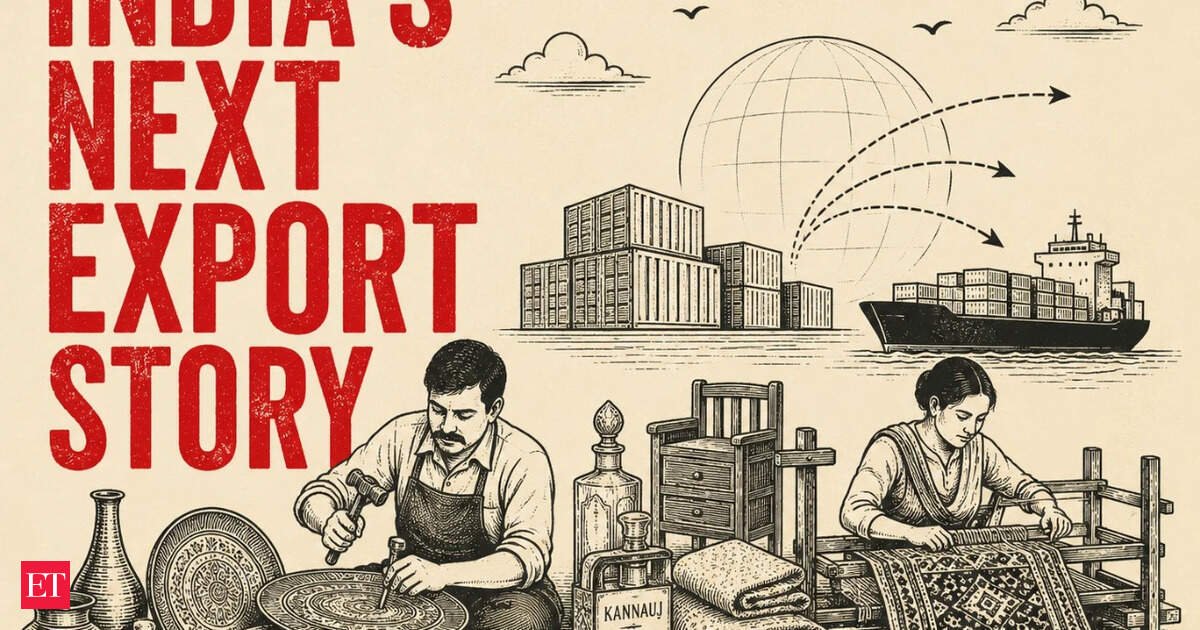
Over the past few years, the government has steadily built policies aimed at connecting such enterprises to global markets. The latest decision to allow foreign investment-backed ecommerce companies to run inventory-based export operations marks another step in that direction. These measures are beginning to create a pathway through which thousands of small-town businesses could evolve from local suppliers into global sellers.
Also Read: Govt opens inventory-based e-commerce to foreign direct investment
A new export channel opens for India
The government’s latest relaxation of foreign direct investment rules for ecommerce exports is significant because it addresses one of the biggest challenges faced by small manufacturers, that is market access. Until now, foreign-funded ecommerce companies could not operate inventory-based ecommerce businesses in India. The new carve-out allows them to do so exclusively for exports of domestically manufactured goods.
In practical terms, this means companies such as Amazon and Flipkart can create export-focused inventory operations that aggregate products from Indian manufacturers and sell them directly to overseas consumers.

Also Read: PM Modi pushes to cut imports to shield India from shocks
For a small entrepreneur in a tier-three or even tier-four town, this potentially removes several barriers. Finding foreign buyers, building overseas distribution networks and managing international logistics are often beyond the capabilities of small firms. Large ecommerce platforms already possess those capabilities. By allowing them to hold inventory for export purposes, the government is effectively creating a bridge between local manufacturers and global consumers.Policymakers have been searching for ways to expand exports amid a more uncertain global trading environment. Discussions around the export inventory model gained momentum after higher US tariffs affected segments of India’s export sector. India has also signed a number of FTAs and is negotiating with more countries. The objective is not merely to increase export volumes but also to diversify the base of exporters.
Indian exports: Building on earlier reforms
The latest move is not a standalone policy change. It fits into a broader effort that has been unfolding over several years. One important piece of this strategy has been the government’s push to increase ecommerce exports. The Foreign Trade Policy was modified to encourage online exports. More recently, customs authorities removed the Rs 10 lakh cap on courier export consignments, introduced systems to deal with returned shipments and created a formal Return to Origin mechanism. These changes may appear technical, but they address practical problems that often discourage smaller exporters from selling abroad.
The government has also repeatedly emphasized the need to expand India’s exporter base beyond large companies and major industrial centres. Programmes such as Districts as Export Hubs were designed around the idea that every district possesses products with export potential, whether in handicrafts, textiles, food processing, engineering goods or traditional industries. The broader goal has been to make exporting less dependent on geography. Instead of concentrating export activity in a handful of industrial clusters, policymakers want more districts to participate in global trade.
The district export push
A major shift in recent years has been the recognition that India’s export potential is spread far beyond its traditional manufacturing centres. Reports have indicated that the government is working on plans to support hundreds of districts through better testing facilities, certification systems, logistics infrastructure and export promotion mechanisms.
While India has thousands of manufacturing clusters and artisan communities, only a relatively small number of districts account for the bulk of exports. The district-focused approach attempts to close this gap by identifying products that already possess local strengths and helping producers overcome bottlenecks.
For many small enterprises, the challenge is not making products. It is complying with international standards, securing certifications, arranging packaging, understanding foreign regulations and connecting with buyers. District-level export infrastructure is intended to address these obstacles. If successful, such efforts could transform exporting from an activity undertaken by a limited group of firms into a much broader economic phenomenon.
India’s exports: Lessons from Uttar Pradesh’s ODOP model
Perhaps the clearest demonstration of what this strategy can achieve comes from Uttar Pradesh’s One District One Product (ODOP) initiative. The programme built on traditional specialisations that already existed across districts. Moradabad’s metalware, Kannauj’s perfumes, Varanasi’s textiles, Saharanpur’s woodcraft and Aligarh’s lock industry were not new industries. What changed was the ecosystem around them.
Producers received support in branding, packaging, marketing, design development and participation in trade fairs. Digital platforms expanded market reach. Government agencies helped improve visibility among buyers. As a result, products that were once sold primarily in domestic markets increasingly found buyers overseas. The experience showed that many small-town industries do not necessarily require entirely new capabilities. Often, they need help reaching customers and meeting market requirements.
The ODOP model has consequently become an important reference point for policymakers seeking to replicate similar success in other parts of the country.
Why ecommerce could change the equation
Ecommerce has emerged as a particularly attractive route because it can dramatically reduce the scale required to become an exporter. Traditionally, exporting involved containers, distributors and bulk orders. Ecommerce enables direct sales to consumers across multiple countries. A small manufacturer can test demand, sell niche products and gradually expand without establishing a large international presence.
This is especially relevant for sectors where India has a natural advantage. Fashion, handicrafts, jewellery, home décor, wellness products and artisanal goods often appeal to consumers looking for distinctive products rather than mass-produced items.
Industry estimates suggest that a large share of SMEs already using ecommerce platforms operate in exactly these categories. The government’s decision therefore targets segments where export readiness already exists. It also reflects growing recognition that future export growth may come not only from large manufacturing facilities but also from digitally connected networks of smaller producers.
Indian products: From local clusters to global brands
The larger ambition behind these policies extends beyond increasing export numbers. India has long been home to thousands of specialised manufacturing clusters. Many of them possess skills that have developed over generations. Yet their visibility outside local or regional markets has remained limited.
Global ecommerce platforms, district export initiatives and targeted policy support could help change that. Over time, successful clusters may evolve from anonymous suppliers into recognisable brands associated with specific products and regions.
This transformation has already occurred in countries where small and medium enterprises became important export drivers. Italy’s industrial districts and parts of China’s manufacturing ecosystem provide examples of how local clusters can gain international recognition while remaining rooted in smaller towns. India appears to be attempting a similar transition, adapted to its own economic structure.
Why this matters for the Indian economy
The significance of these developments goes well beyond individual exporters. India’s economic growth increasingly depends on creating more productive jobs outside agriculture and generating stronger manufacturing activity. Expanding exports from small-town enterprises addresses both objectives. Export-oriented businesses typically become more competitive because they must meet global standards. They invest in better processes, adopt new technologies and improve product quality. These changes often raise productivity and incomes.
A broader export base can also make the economy more resilient. When exports are concentrated among a relatively small number of firms or sectors, external shocks can have a larger impact. A larger and more diverse exporter ecosystem spreads risk and creates multiple growth engines.
There is also a regional development dimension. When export growth reaches smaller towns, economic gains become more geographically distributed. Instead of opportunities being concentrated in a few major cities, they begin to spread across districts where manufacturing and artisanal traditions already exist. For India, which aims to expand its role in global trade while creating jobs at scale, that may be one of the most important outcomes of all.
The latest ecommerce export reform is therefore best viewed not as an isolated policy tweak but as part of a larger effort to redraw India’s export map. If the strategy succeeds, some of the country’s most important global businesses of the next decade may emerge not from metropolitan corporate hubs but from workshops and factories located far from them.