

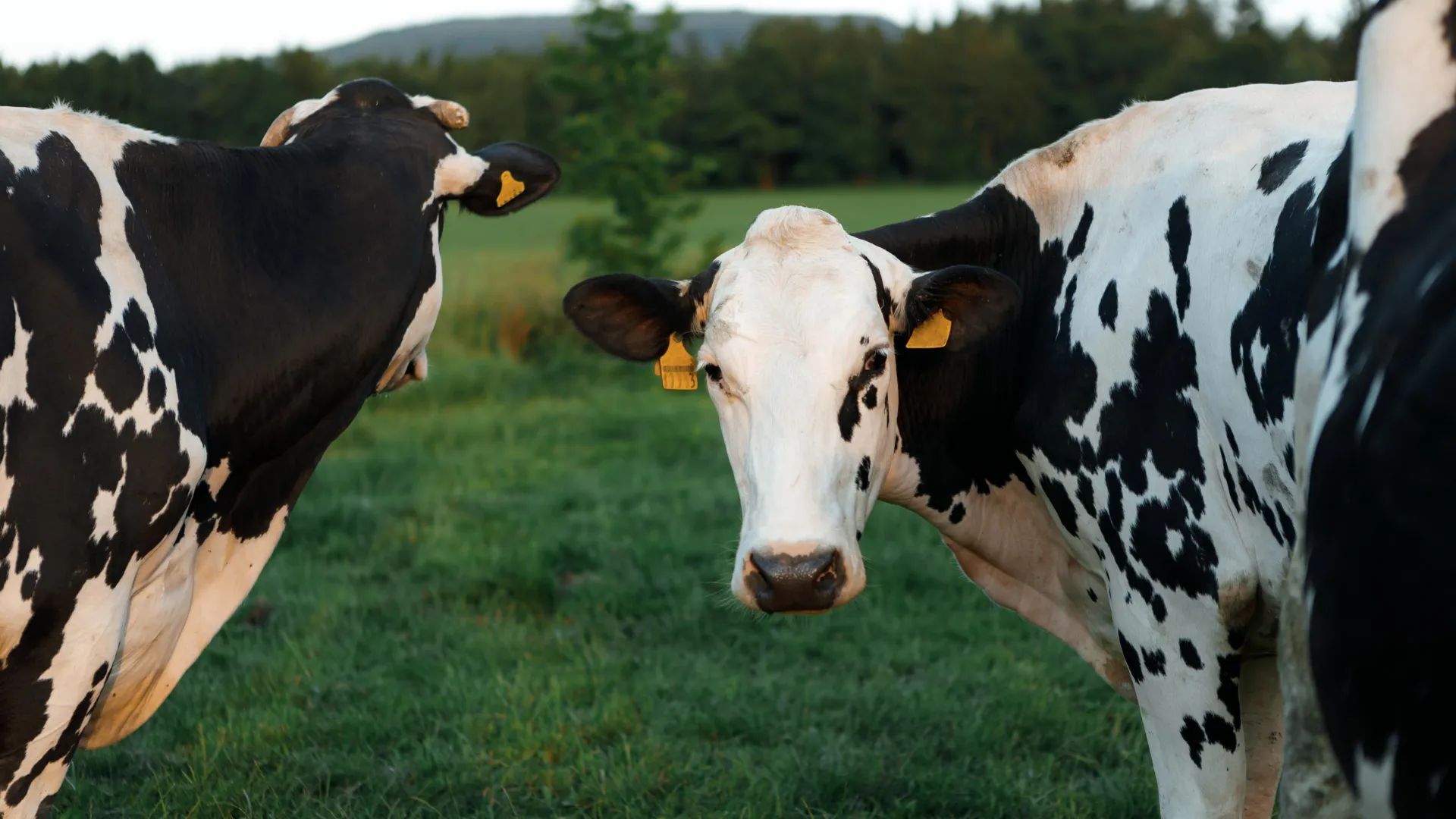
When H5N1 bird flu began infecting U.S. dairy cattle in early 2024, veterinarians struggled to identify the cause. The virus was difficult to recognize because it behaved very differently in cows than it does in other mammals. Rather than primarily infecting the lungs, H5N1 caused severe infections in the udders while leaving the respiratory system largely unaffected.
Now, researchers at the University of Pittsburgh School of Public Health have uncovered the biological reason behind this unusual pattern. Their findings, published in Science Advances, provide the first detailed explanation for why bird flu took such an unexpected form in cattle. The work could also help scientists better anticipate how H5N1 might behave if it spreads to new animal species in the future.
Bird Flu’s Unusual Appearance in Dairy Herds
The outbreak first emerged in dairy cattle in the Texas Panhandle, where animals developed severe cases of necrotizing mastitis, a painful inflammatory disease that damages tissue in the mammary glands.
“Mastitis is a classic disease in milk-production animals, and veterinarians were dutifully looking to all the usual suspects for the source, like bacterial pathogens,” said senior author Suresh Kuchipudi, Ph.D., chair of Infectious Diseases and Microbiology at Pitt Public Health. “When the real culprit turned out to be bird flu, everyone in the field was caught completely by surprise. We hadn’t even remotely considered that cattle could be a host for H5N1.”
Before the virus was identified, it spread from herd to herd, infecting cattle and contaminating their surroundings.
“If a cow is infected, it sheds a lot of virus into the milk,” said Kuchipudi. “This raised concerns about occupational risk for farm workers. Also, there is a habit of feeding raw milk to domestic pets, like cats, and there have been instances of cats dying, which we studied previously.”
Kuchipudi emphasized that pasteurization effectively destroys the virus, highlighting the importance of avoiding raw milk.
Searching for the Biological Explanation
Throughout his career, Kuchipudi has studied influenza viruses, focusing on how receptor biology influences which species and tissues can be infected. Influenza viruses attach to specific receptors on cells in a lock-and-key fashion. These receptors belong to a group of sugar-based molecules known as glycans.
Earlier studies from other research groups suggested that flu-related glycan receptors were present in the noses, tracheas, and lungs of cattle. Yet cows infected with H5N1 were not developing the respiratory disease researchers expected.
That discrepancy suggested that a more detailed explanation was needed.
“Glycan biology is very complex,” said Kuchipudi. “We realized that, to understand what was really going on, we would need to use more innovative technologies and map out the fine-detailed architecture that enables the virus to bind to cells.”
To do that, Kuchipudi partnered with Harvard Medical School researcher Lauren E. Pepi, Ph.D., whose expertise is in glycomics, the comprehensive study of glycan structures.
Why H5N1 Targets Cow Udders
The research team combined multiple techniques, including binding experiments, staining approaches, and ultra-high-resolution imaging, to examine how H5N1 interacts with different tissues.
Their analysis showed that not all glycan receptors function the same way when it comes to bird flu infection. The virus was able to bind only to a specific subtype known as N-linked sialic acid receptors.
These receptors were found throughout the udder tissue of cattle but were nearly absent in airway tissue. According to Kuchipudi, this made the mammary glands a “perfect breeding ground for the virus.”
The discovery helps explain why H5N1 caused severe mastitis rather than respiratory illness in dairy cattle.
Predicting Bird Flu’s Next Move
The researchers believe their findings could do more than explain the cattle outbreak. The same approach may help scientists identify which animals and tissues are vulnerable to H5N1 before future outbreaks occur.
“We can preemptively screen different species and different tissues within them for susceptibility,” said Kuchipudi. “For example, would they exhibit respiratory symptoms? Would they show only mastitis, as in cows? Or would they show neurological disease, as our team has shown in cats? The lessons learned could potentially help prevent us from being caught by surprise again.”
Other authors on the study were Surabhi Srinivas, M.S., Shubhada K. Chothe, Ph.D., Santhamani Ramasamy, Ph.D., Sougat Misra, Ph.D., Noel Chandan Nallipogu, M.D., MPH, and Lindsey LaBella, all of Pitt; Yin-Ting Yeh, Ph.D., of Pennsylvania State University; May Wang, B.S., of Harvard University; and Heidi L. Pecoraro, Ph.D., and Brett T. Webb Ph.D., of North Dakota State University.
This research was supported by Pitt Public Health, and the U.S. Department of Agriculture’s National Institute of Food and Agriculture (FP00039373/AWD00010780).