

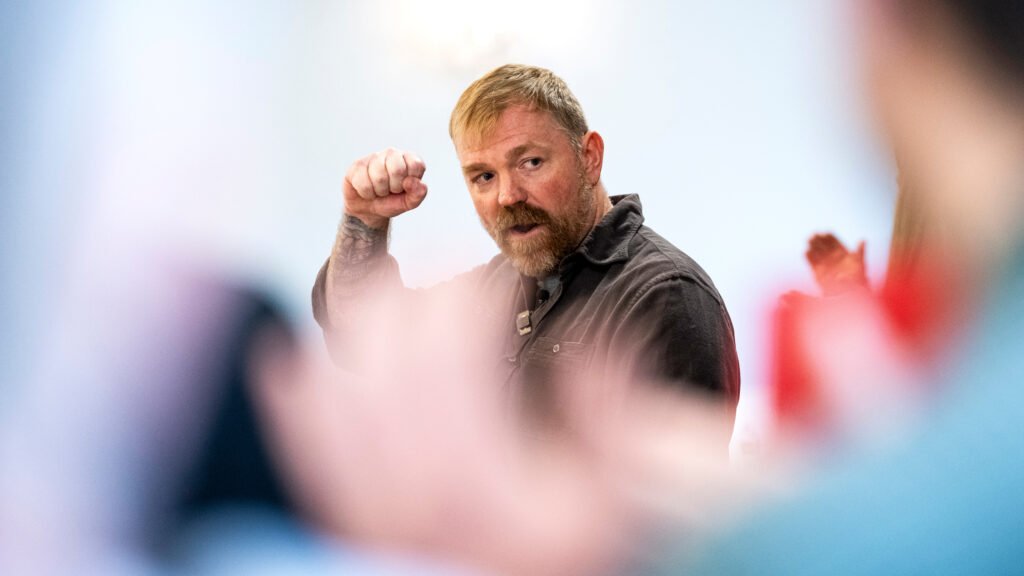
Graham Platner, the presumptive Democratic nominee for U.S. Senate from Maine, is known for a few things: his “more Bernie than Bernie” message of wresting back control from the rich and powerful; his biography as a Marine Corps veteran and oyster farmer with limited political experience; and his history of controversial and offensive online commentary and tattoos.
Climate champion? Not so much.
But in recent weeks, Platner, who has talked about finding peace from some of his post-combat demons and political disillusionment while working on the clear blue waters of the Gulf of Maine, has started to roll out a message of protecting both the planet and pocketbooks, including through an energy plan released last week.
“We need to get off fossil fuels, not just for its impact on the environment and climate,” Platner told Inside Climate News in a summary of that plan. “We need to get off fossil fuels because that would make America self-sustaining.”
With the departure of Maine’s Governor Janet Mills, a candidate with a strong record of supporting renewable energy, Platner is the presumptive Democratic nominee, although a third candidate with a strong environmental record, David Costello, remains in the primary race.
Through the energy plan and his messaging, Platner draws on elements of the Green New Deal championed by the likes of Sen. Bernie Sanders. Look closely and you see him attempting to navigate the tensions inherent in a progressive environmental agenda today—between affordability now and in the future, between building and conserving, between moving fast and consulting people—in interesting and sometimes novel ways.
The early response among climate advocates in Maine has been positive; it remains to be seen how these ideas land among the wider electorate.
A Boat’s-Eye View
Platner has seen the effects of climate change in his hometown of Sullivan and throughout coastal Maine, although, he told ICN, so far not directly at his oyster farm.
Referring to the especially destructive winter storms of 2023-2024, Platner said, “Within the space of three days, we broke the high-water mark”—twice.
Lobster piers that had stood for decades were destroyed or underwater, Platner recalled.
“And it’s hard when that happens to look at it and be like, ‘Well, things are fine.’”
When asked why voters who care about climate action should vote for him at a recent town hall in Sabattus, Platner offered what amounted to an order of operations once in office: “Before we had outright fascism in the streets of this country, I would have said that climate change was the single greatest challenge that we faced. Sadly, in the short term, we’ve got to deal with the fascists.”
One volunteer climate advocate—Tom Mikulka, a co-facilitator for the Portland chapter of Third Act, a national group of retirees advocating for climate action—likes what he’s heard so far.
“He talks like a young ‘Third Actor,’” Mikulka said of Platner, while contrasting his positions to those of incumbent Republican Sen. Susan Collins, Platner’s likely opponent in the general election, whom he called, “one of the biggest enemies of the climate movement, certainly in Maine.”
And Emma Conrad, chair of the political committee of the Maine Sierra Club, which prominently endorsed Platner prior to Mills suspending her campaign, wrote that, “Platner’s focus on corporate greed, especially that of our country’s largest polluters, aligns closely with Sierra Club priorities.”
Relief at the Pump and the Meter
Platner’s energy plan calls for immediate relief from high energy prices.
Those prices are a major concern in Maine, as in many parts of the country. Electricity prices for residential customers are among the nation’s highest after rising steeply over the past decade. Heavy reliance on fuel oil and kerosene to heat homes is also a major cost driver, an issue that has only become more severe since the U.S. and Israel attacked Iran, leading to chokeholds on global petroleum supply by Iran in the Strait of Hormuz.
Platner’s plan calls for incentivizing states to freeze electricity rates temporarily, as Gov. Mikie Sherrill has attempted to do in New Jersey.
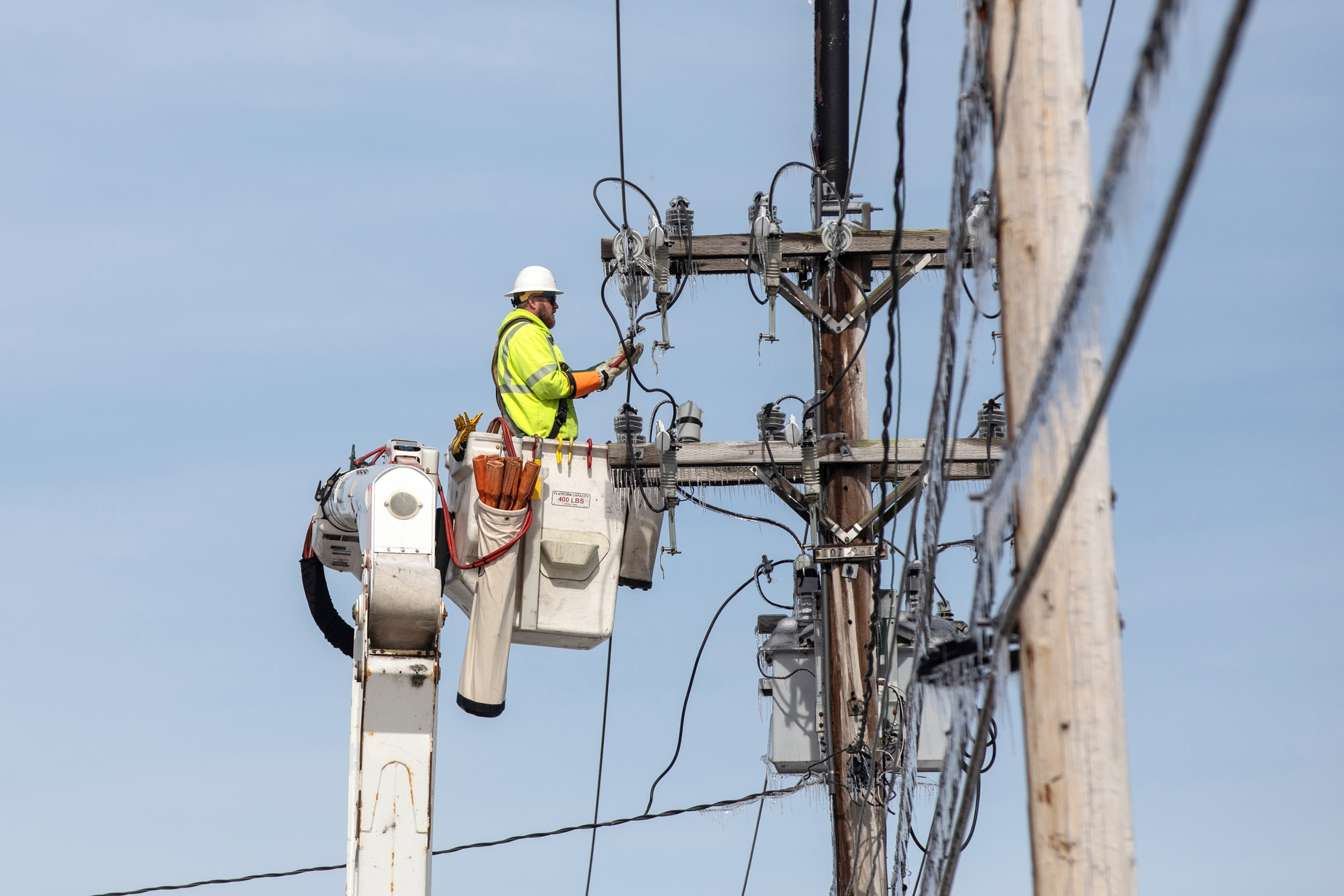
It also calls for eliminating federal taxes on gasoline and diesel fuel, and instead funding the major road and infrastructure projects those taxes currently pay for with higher taxes on the wealthiest Americans.
“[R]egressive gas and diesel taxes hit working class Mainers the hardest,” the plan reads. “Relying on fossil fuels to fund basic infrastructure does not make sense if we want to reduce fossil fuels used in transportation.”
And it calls for rebates on electricity bills, to be paid for out of a tax on “windfall profits” U.S. oil companies have made since the start of the war with Iran, an idea first proposed by U.S. Rep. Ro Khanna of California and Sen. Sheldon Whitehouse of Rhode Island, both Democrats.
Platner was noncommittal at the Town Hall about whether he supported an outright moratorium on construction of new data centers—as was recently proposed in Maine, a measure that Gov. Mills vetoed, upsetting her left flank—although other reports have him supporting such a measure on a private call with environmental activists.
He instead emphasized that a data center should be required to co-locate energy generation, or “bring its own power.” That requirement could help shield ratepayers from new costs associated with data centers. But without restrictions on fossil fuel power sources—especially in states that otherwise have strong renewable energy requirements—such facilities could make air pollution dramatically worse.
In an interview with ICN, Platner said that “we need to take a breath and implement actual functional policy around [data centers].” Asked whether there should be restrictions on the type of power supply a data center can co-locate, Platner said that was “not something I’ve thought about yet.” The campaign told ICN a more extensive policy on data centers is in the works.
Build, Baby, Build
Platner’s energy plan is more fully fleshed out. Francis Eanes, who is executive director of the Maine Labor Climate Council and who advised on the plan, said immediate relief for consumers is “essential if we want to build enough time, both politically and materially, for us to make the real, huge, significant investments to build our way out of this crisis.”
The plan calls for the federal government to make those investments through several channels. First is a fund to provide low-interest loans to developers of transmission lines and large clean energy projects, both of which require significant amounts of up-front capital, whose borrowing costs has often thwarted or delayed such projects (even before President Trump began canceling permits, delaying reviews, and otherwise moving against them).
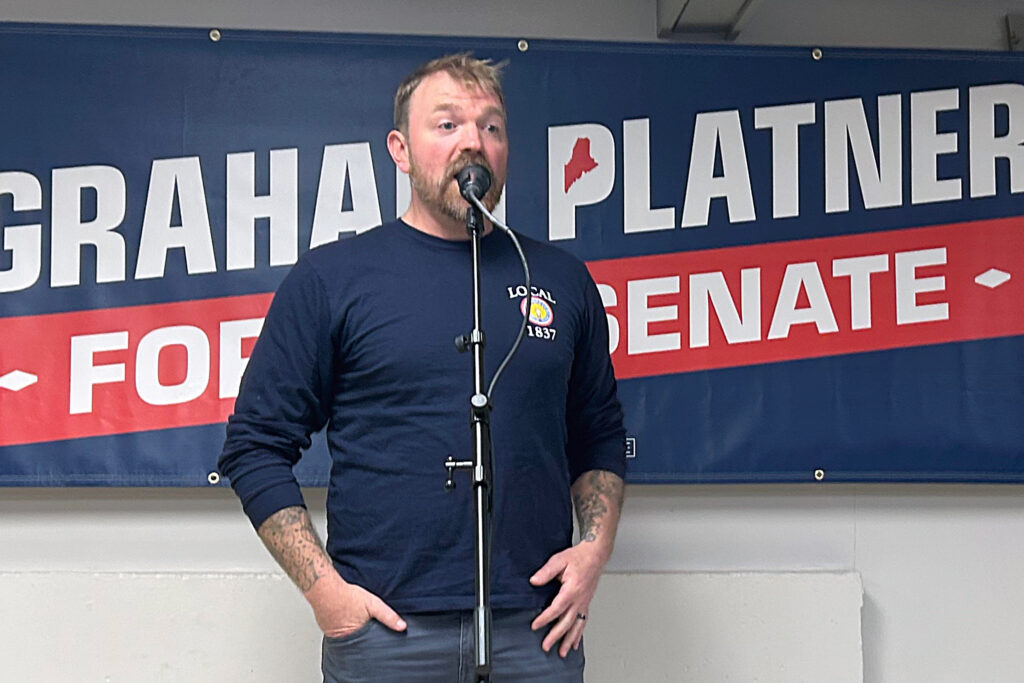
The second is through use of the Defense Production Act—a law by which the feds can compel the private sector to produce goods essential to national security—to ramp up manufacturing of parts and supplies for those projects. That law was notably used to speed up production of personal protective equipment and vaccines during the COVID-19 pandemic.
Such ideas might raise fears of being tarred with the brush of “waste, fraud, and abuse” that the Trump Administration has assiduously applied, with scant evidence, while gutting foreign aid and domestic clean energy assistance programs.
Eanes said that such initiatives should come with guardrails to prevent fraud or abuse but, echoing 18th-century Jewish mystic Rabbi Nachman of Bratslav, suggested that the important thing is not to be afraid.
“I think a lot of folks look back to the Solyndra days of the Obama administration, and the investment that got made there, and the fact that Solyndra later failed, and people, I think, have over learned that lesson. And they’ve gotten so cautious about making investments that might fail that they forget that the private sector does this all the time,” Eanes said.
Solyndra was a California maker of advanced solar panels loaned over $500 million by the Obama Administration, which subsequently went bankrupt without repaying the vast bulk of the loan. The program through which those loans were made also supported several successful companies and eventually turned a profit for the government.
Instead of “‘Can government bat 1.000?,’” Eanes went on, “The question is, can government deliver on the outcomes that we all agree are socially urgent and necessary?”
“If you’re trying to deal with the urgent crisis that we are facing, then you need a full-throated public commitment to providing the resources, the funding to achieve the mission.”
— Stephanie Kelton, former chief economist to the Senate Budget Committee
These elements of the plan drew a mix of praise and targeted criticism from several energy and economic policy experts.
Ari Peskoe, director of the Electricity Law Initiative at Harvard Law School, applauded the energy infrastructure fund, calling government funding one of the “tried and true ways to bring down the cost of investment in needed infrastructure” like transmission lines.
Stephanie Kelton, an academic who served as chief economist to the Senate Budget Committee under Bernie Sanders’ chairmanship in the first two years of the Biden Administration, supported the spending efforts. But she said that Platner was “really painting himself into a corner” by linking each new spending proposal in the plan to a new source of revenue, such as taxes on oil profits or wealth.
“If you’re trying to deal with the urgent crisis that we are facing, then you need a full-throated public commitment to providing the resources, the funding to achieve the mission,” said Kelton, a proponent of “modern monetary theory” who believes in deficit spending to pursue socially beneficial goods like clean energy or housing.
Naming an Enemy
Platner’s thinking on how to pay for green infrastructure is part of an approach to climate politics foreshadowed in his now-famous campaign launch video, when he says, between swings of the kettlebell, “I’m not afraid to name an enemy. And the enemy is the oligarchy.”
And, according to Platner, for climate change, the oligarchy is Big Oil and Gas.
“We also need to tax the ever-living hell out of the companies that made a lot of money on fossil fuels while they destroyed the planet,” he said at the Sabattus town hall.
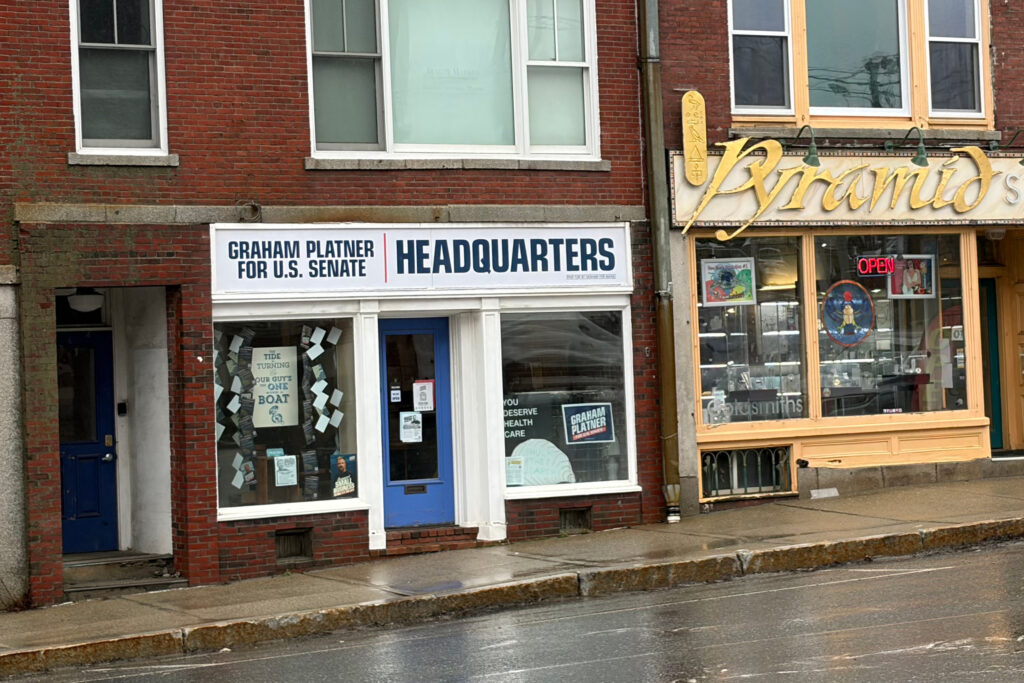
Similarly, Eanes said that one of the benefits to linking new spending to a tax on oil profits is reinforcing this connection in voters’ minds. “It’s important if we want to win people’s trust and credibility that we can name an enemy, and we can name who’s standing in our way, and we can name who’s profiting off of the backs of everyday working people,” he said.
Energy analysts note that moving an economy off fossil fuels is more difficult than simply blaming the producers of those fuels for the climate crisis. It’s even harder than building massive amounts of new clean energy and transmission lines. It involves the individual decisions of hundreds of millions of Americans choosing how to heat their homes and what kinds of cars to drive, although, to be sure, fossil fuel industry groups continue to attempt to shape those choices, often with misinformation.
The energy plan does seek to help with at least the former, calling for federal funding for a “Whole Home Repair Program” modeled off Pennsylvania’s, to fund the types of repairs to a building’s envelope and electric wiring that are necessary first steps before an electric heat pump can be effective, while also making the house more comfortable and valuable.
Eanes suggested that a dedicated climate plan the Platner campaign intends to release later in the summer may contain further proposals to address these issues.
Forging Alliances
The focus on housing is also at the core of an organizing strategy pursued by Platner and his allies, including Eanes’s organization, one that demonstrates a wide-angle lens on what a climate movement should do.
The Maine Labor Climate Coalition was organizing in Searsport to build support for construction of a staging ground for the floating offshore wind turbines the state of Maine hopes to build. When that effort was paused, in large part due to the Trump Administration’s efforts to thwart offshore wind, the group pivoted to supporting local residents of mobile homes’ campaign to pass a law stabilizing rents in their communities—an effort that succeeded.
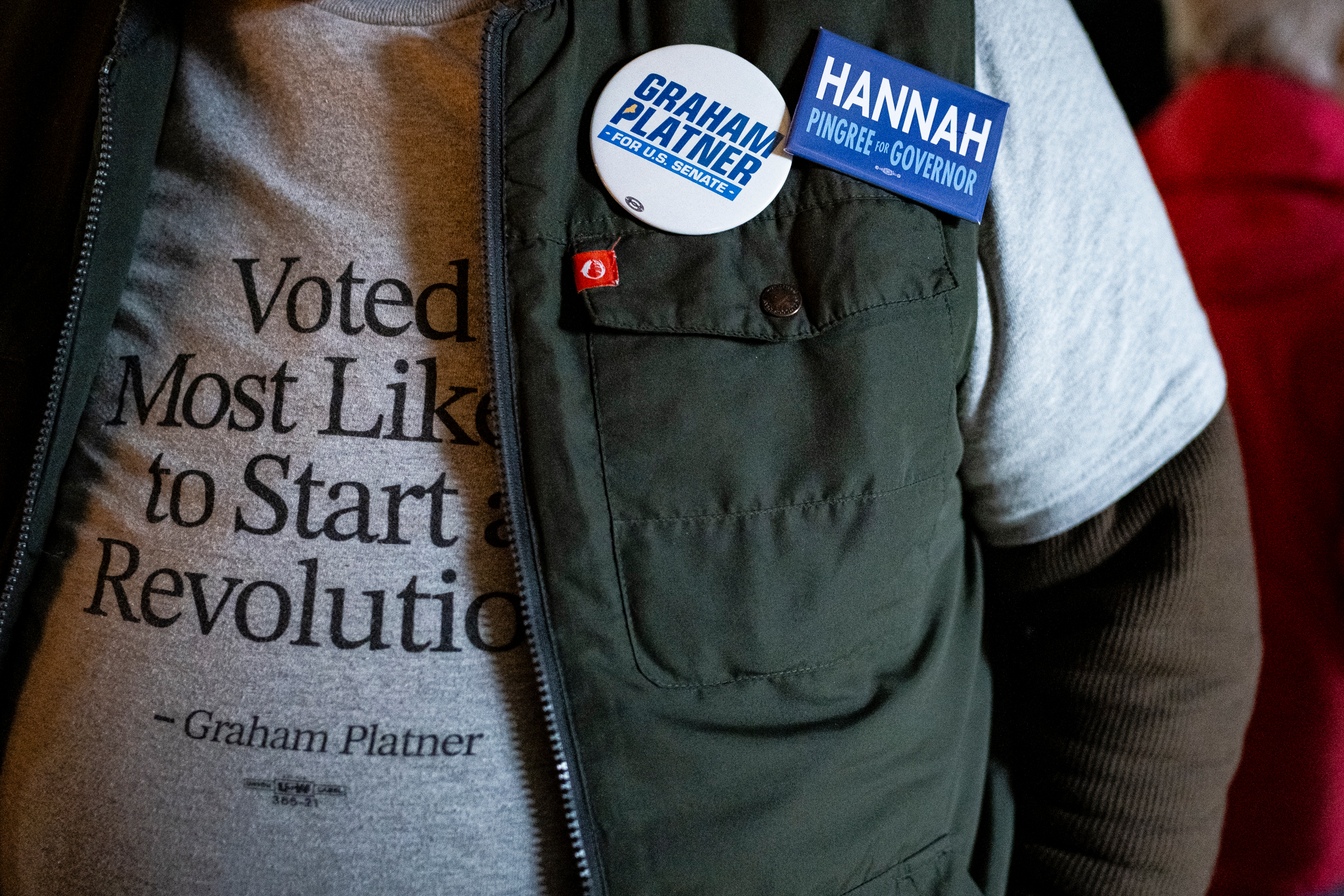
Platner said he simply attended one of the organizing meetings in Searsport and that “other people… deserve the credit” for the success there, although he did canvass in support of similar efforts in other parts of the state.
As a result of these wider campaigns, Eanes said his group is “in regular organizing relationships with between 1,000 to 2,000 of the most vulnerable, low-income residents across our state who feel alienated from the political system, feel generally deeply alienated from questions of climate and clean energy, because they’re facing crises today that they want answers to.”
He sees the best climate strategy as one that helps people address current problems while simultaneously building support for addressing the biggest planetary crisis of them all.
“I see just huge opportunity for anyone or any organization that cares about climate to think about where and how we can broaden our lane,” Eanes said.
Younger climate-conscious voters gave Platner high marks for publicly supporting restoration of full sovereignty rights for Maine’s native Wabanaki tribes. Platner testified in support of two state bills earlier this year that would have ended the current exclusion of the tribes from the full benefits of federal laws that include several rights core to self-determination.
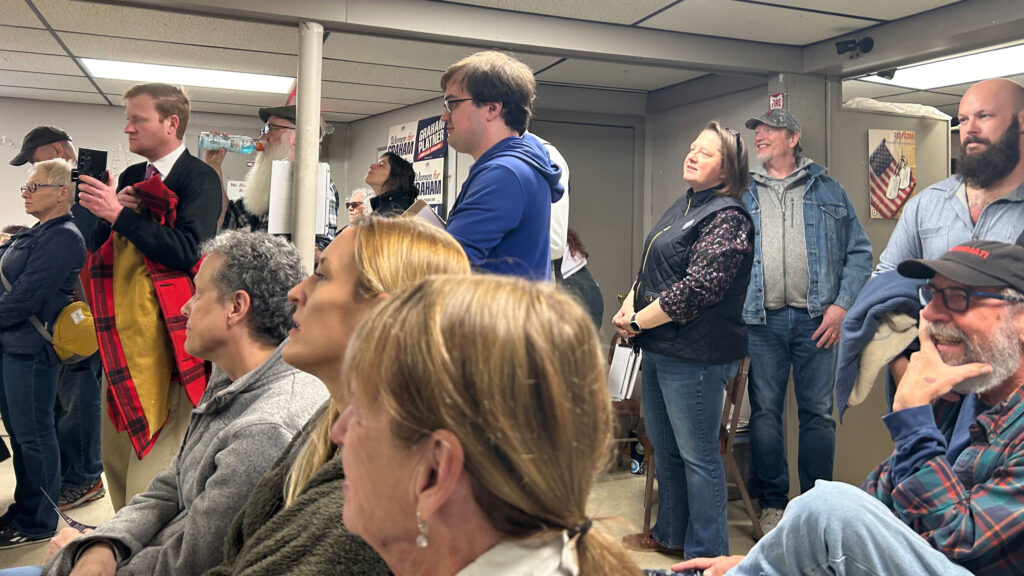
Roz O’Reilly said she appreciated Platner “being this messenger to communicate things that some people unfortunately just need [to hear from] someone who they see themselves in.”
O’Reilly, 18, is advocacy and storytelling manager for JustME for JustUS, a group organizing rural Maine youth “to create lasting power for their rural communities and the natural environment.” She sees tribal sovereignty as “inextricably woven” with climate justice.
“We have a lot to learn as climate advocates from the relationship that Indigenous peoples have held with the land for so long,” O’Reilly said.
Contrasting Approaches
David Costello, a former acting secretary of the Maryland Department of the Environment running against Platner in the Democratic primary, also supported tribal sovereignty rights at a candidate forum hosted by the Penobscot Nation he attended with Platner.
Costello lags almost impossibly behind Platner in the polls. His environmental bona fides include helping craft Maryland’s initial climate action plan and moving some of the state’s earliest large-scale wind, solar and battery storage projects forward. His ideas provide a helpful contrast with some of the more unorthodox policy ideas of Platner.
For instance, in speaking to ICN, Costello said he supported putting a “price on carbon,” echoing his website’s call for “strict greenhouse gas emissions caps”—quintessential long-time asks for climate advocates.
This story is funded by readers like you.
Our nonprofit newsroom provides award-winning climate coverage free of charge and advertising. We rely on donations from readers like you to keep going. Please donate now to support our work.
Many, perhaps most, economists say that a carbon tax is the most efficient and fastest way to shift the economy to cleaner forms of energy. But many U.S. political observers say that calling for such a tax is the most efficient and fastest way to shift a seat to Republicans.
Costello acknowledged that “maybe it is bad politics,” but also believes a cap or tax on carbon is “more sellable than we ever thought,” with a focus on investing the proceeds to benefit low-income households. That was how top Senate Democrats tried—and failed—to sell such a policy to the White House under President Joe Biden in 2021.
In contrast to Costello, and despite his call to “tax the ever-living hell out of” fossil fuel companies, Platner’s energy platform calls for eliminating the federal gasoline excise tax.
He thus falls broadly into the camp of emphasizing energy and housing affordability while celebrating incidental benefits to the climate that many populist Democrats are running on in this election.
Unlike some advocates of that approach, he isn’t afraid to use the words “climate change.” He told ICN that, at least in Maine, those words no longer are as alienating to independent or conservative-minded voters as they once might have been.
“I don’t think [the words climate change] are as much of a shut off as they used to be, primarily just because of the material realities that we’re seeing,” Platner said.
No Bunkers
Platner’s campaign has tapped into two major currents—progressive outrage over Trump and working-class anger about unaffordability and elite capture of politics. He is now beginning to weave a familiar Green New Deal style labor-climate-social welfare set of proposals into those currents, including at the Sabattus Town Hall.
“As we build all of this [infrastructure],” Platner said at that event, “it better be built with union labor.”
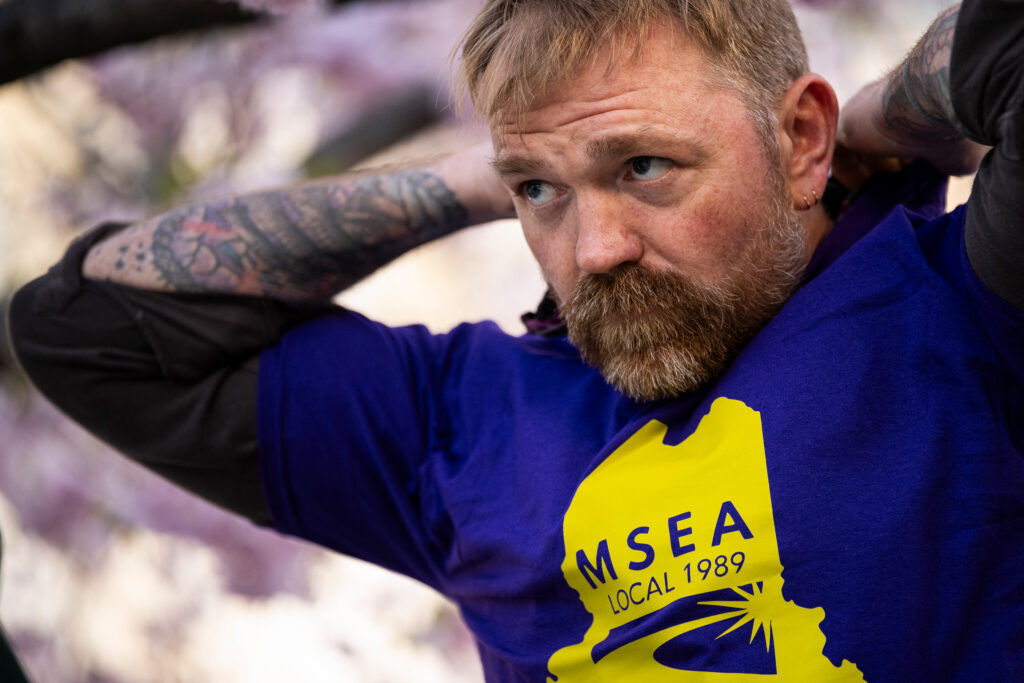
That drew whoops from the crowd, including from Lynn Gougeon, a retired corrections officer and union member from Gardiner.
Gougeon told ICN that the marriage of labor and environmental concerns was core to her support for Platner, sounding a lot like him as she did.
“We are the ones that are affected—the laborers—by environmental decisions that are being made. We’re the ones that are threatened—if the oligarchs win, they’re going to destroy the whole world in order to extract as much profit as they can from the earth. But if we win, we’re going to take care of it because it is our backyard,” Gougeon said. “We don’t have a bunker to go to.”
About This Story
Perhaps you noticed: This story, like all the news we publish, is free to read. That’s because Inside Climate News is a 501c3 nonprofit organization. We do not charge a subscription fee, lock our news behind a paywall, or clutter our website with ads. We make our news on climate and the environment freely available to you and anyone who wants it.
That’s not all. We also share our news for free with scores of other media organizations around the country. Many of them can’t afford to do environmental journalism of their own. We’ve built bureaus from coast to coast to report local stories, collaborate with local newsrooms and co-publish articles so that this vital work is shared as widely as possible.
Two of us launched ICN in 2007. Six years later we earned a Pulitzer Prize for National Reporting, and now we run the oldest and largest dedicated climate newsroom in the nation. We tell the story in all its complexity. We hold polluters accountable. We expose environmental injustice. We debunk misinformation. We scrutinize solutions and inspire action.
Donations from readers like you fund every aspect of what we do. If you don’t already, will you support our ongoing work, our reporting on the biggest crisis facing our planet, and help us reach even more readers in more places?
Please take a moment to make a tax-deductible donation. Every one of them makes a difference.
Thank you,