

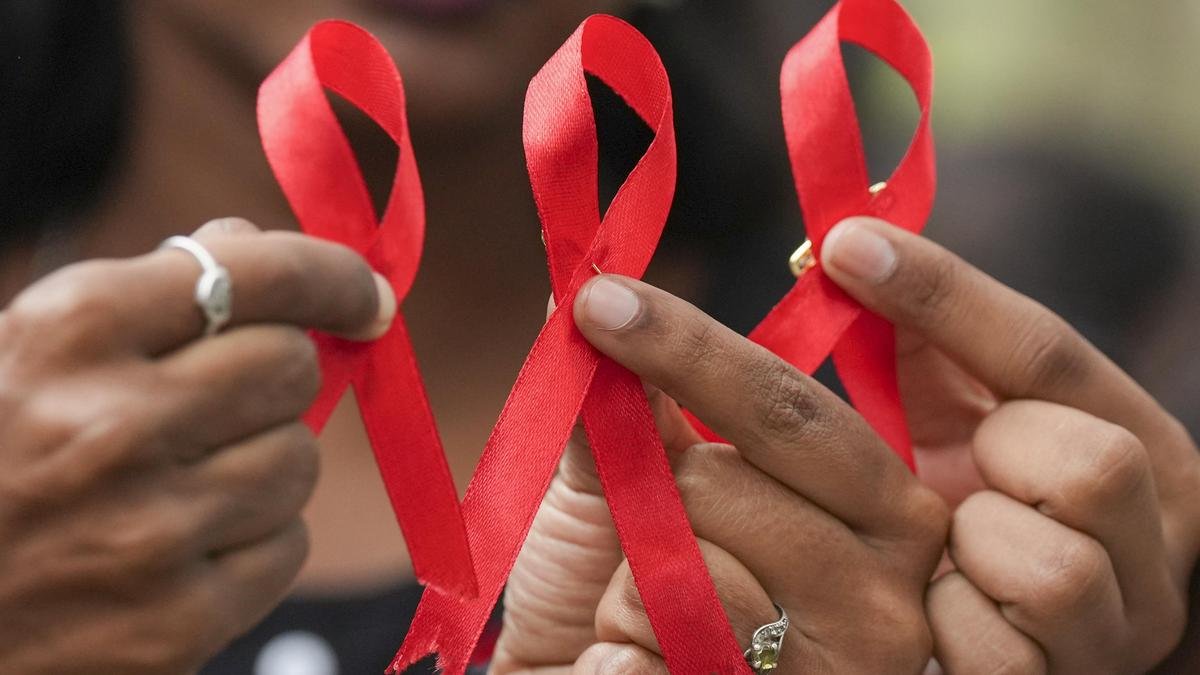
More than 56,000 people in Karnataka are estimated to be living with HIV without knowing their status, the highest such number among States in the country. This is posing a major challenge to the State’s HIV control programme despite free testing and treatment services being widely available, with the changing nature of sexual networks adding to the complexity.
As per estimates from the Karnataka State AIDS Prevention Society (KSAPS), 56,406 people are unaware of their HIV-positive status, making early diagnosis and linkage to treatment a key public health priority. While over two lakh people are already receiving treatment, officials said the focus is now on identifying those who remain outside the healthcare system.

Dating applications
KSAPS Project Director Padma Basavanthappa told The Hindu that one of the biggest hurdles is the changing nature of sexual networks, with increasing numbers of people meeting partners through dating apps.

“Earlier, when a person tested HIV positive, we could counsel them and identify their sexual partners for testing. Today, many people meet through dating apps or casual encounters and often do not know each other’s identities. This makes contact tracing extremely difficult,” she said.
She said the challenge was particularly acute in Bengaluru because of its highly mobile population and the anonymity offered by digital platforms.
No voluntary testing
Ms. Basavanthappa said the problem was compounded by the reluctance of people to voluntarily undergo HIV testing.
“People still do not walk into testing centres on their own. Many believe they are not at risk, while others avoid testing because they fear stigma and discrimination,” she said, pointing out that awareness about HIV transmission also remained inadequate, particularly among young people.
“Many young men are still unaware that unprotected sex between men also carries the risk of HIV transmission. Safe sex messages have to reach everyone irrespective of sexual orientation,” she said, stressing that prevention messages should focus on all forms of unprotected sex.
MAS campaign
To address the gap, KSAPS has launched the Mobilisation for AIDS Suraksha (MAS) campaign, centred around the message “Know Your Status.” As part of the campaign, initiated by the National AIDS Control Organisation (NACO), KSAPS has introduced a BreakFree QR code that links users to a confidential self-risk assessment, nearby HIV testing centres and counsellors.
The self-assessment tool on https://breakfreeindia.org asks users a series of questions to determine whether they may be at risk and guides them to appropriate services while protecting their identity under the provisions of the HIV and AIDS (Prevention and Control) Act, 2017, which mandates confidentiality.
Beyond hospitals
The campaign is also expanding beyond hospitals into engineering and medical colleges, workplaces, industries and transport hubs. Red Ribbon Clubs in colleges are being used to conduct debates, skits and awareness activities, while integrated health camps are being organised to encourage people to seek HIV testing alongside other health services.

KSAPS is also adapting its outreach strategies to the digital era by engaging peer educators to connect with vulnerable groups through online platforms and dating applications. However, building trust in such spaces is a slow process, said Ms. Basavanthappa.
Emphasising that HIV today is no longer the fatal disease it once was, she said: “A person diagnosed early and started on antiretroviral therapy can lead a normal, healthy life. Effective treatment also prevents sexual transmission of HIV. The first step, however, is knowing one’s HIV status.”
According to KSAPS data, Karnataka has 2,05,350 people receiving antiretroviral therapy (ART) as of June 28, 2026. During 2025-26, over 37.57 lakh people underwent HIV testing in the general population, leading to the detection of 11,322 new HIV-positive cases. In the first two months of 2026-27, another 4.11 lakh people were tested, with 2,057 testing positive.
Published – July 10, 2026 06:00 am IST