

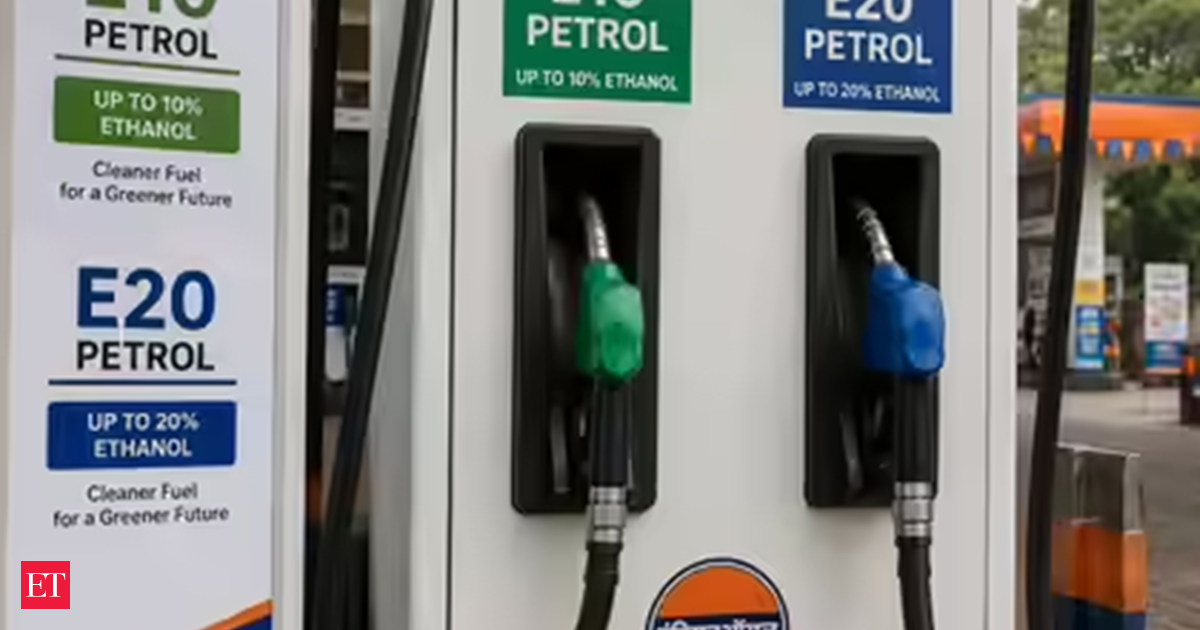
It comes amid an intensifying national debate in recent days over the impact of higher ethanol blending on vehicle mileage and engine performance. Claims of damage to vehicle body parts and engines have circulated on social media, prompting the government to mount a broader defence of its ethanol policy.
“It is true that in some vehicles there may be a 3-5% reduction in fuel economy,” the ministry admitted, but rejected claims that ethanol damages vehicle parts. “Every few months, a new rumour surfaces: rubber hoses will fail, engines will seize, fuel tanks will corrode. None of these claims stand the test of scientific evidence.”
E20 Costlier than Pure Petrol
Defending its policy, the government warned of the risk of stranding massive investments made in ethanol infrastructure over the past few years.

To avoid margins getting drenched, Companies fold back discounts as cost clouds hang low
“If, after creating this capacity, we were to arbitrarily revert to E10, what happens to these investments?” the ministry asked.
“What happens to the surplus production capacity? What happens to thousands of crores invested by farmers, cooperatives, entrepreneurs, financial institutions and public sector companies in good faith based on a national policy?”

Public policy “must balance consumer interest with energy security, environmental sustainability, farmer welfare and prudent use of national resources”, the statement said.
The ministry also rejected suggestions from various quarters that consumers should be allowed to choose between pure petrol, E10 and E20, just as they can currently opt for regular or premium petrol.
Bank credit growth at two-year high at 18.6% as debt market turns costlier
“That comparison (with premium petrol) is misplaced,” it said. “Maintaining multiple grades of base petrol across this vast supply chain would create an enormous logistical challenge, increase handling costs, complicate inventory management and reduce operational efficiency.”
Responding to concerns that ethanol is priced on a par with petrol despite its lower energy content, the ministry said ethanol has become costlier over the years. “If international crude oil is trading at around $70 per barrel, E20 is actually costlier to produce than pure petrol,” it said, adding that if crude prices rise to $120-130 a barrel, ethanol becomes cheaper.
“The Government purchases ethanol at remunerative prices so that Indian farmers are fairly compensated,” the ministry said.
The government sets ethanol prices according to the feedstock used. For the current supply year, prices range from Rs 57.97 per litre for ethanol produced from C-molasses to Rs 71.86 per litre for output from maize.