

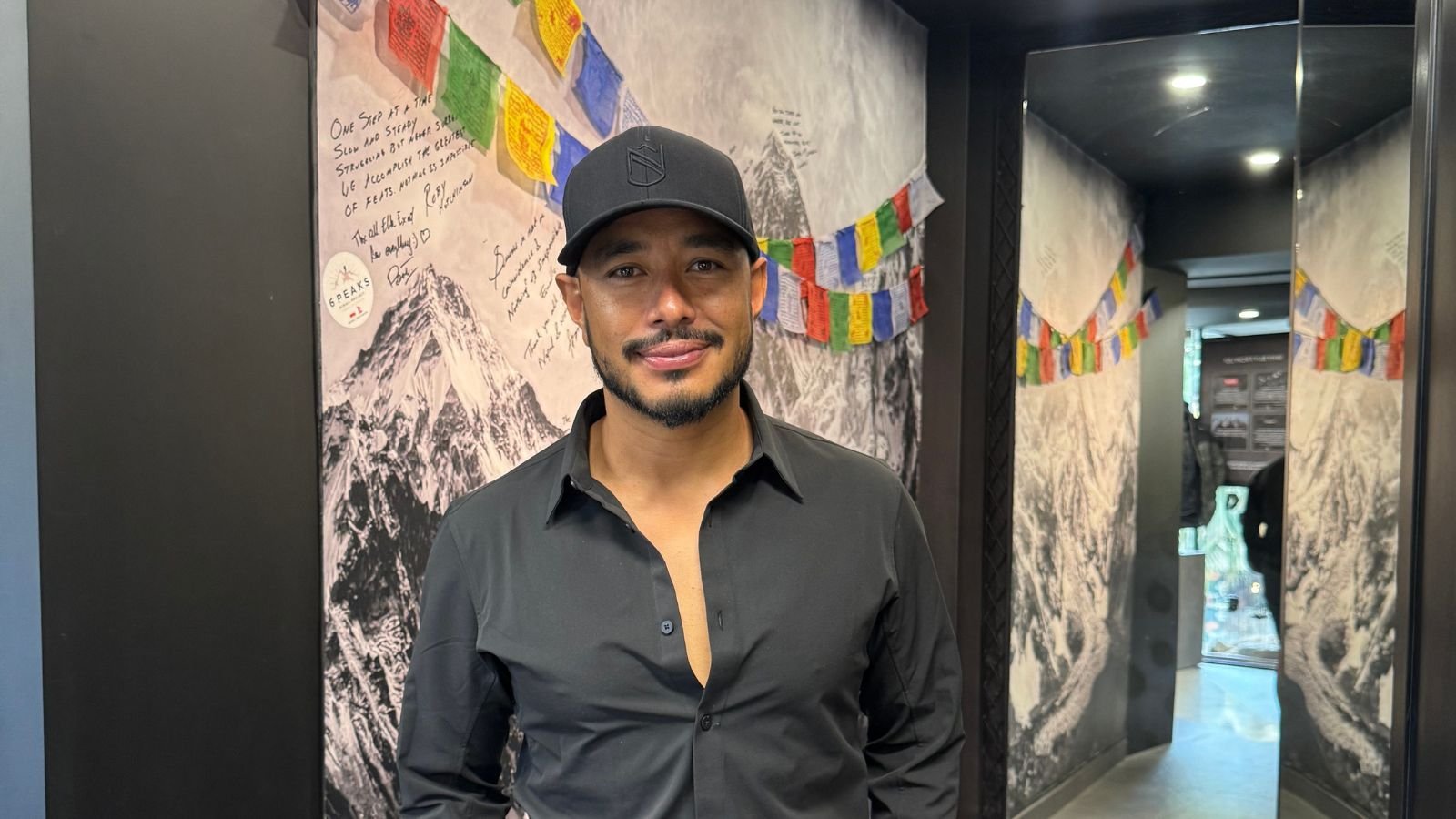
Nirmal Purja had built an extraordinary life long before he ever set foot on a mountain. Born into a humble family in Nepal, Purja had once recalled growing up without even being able to afford a pair of flip-flops. He joined the Brigade of Gurkhas in 2003 and, six years later, was accepted into the Royal Navy’s Special Boat Service, reportedly becoming the first Gurkha to join the elite British unit.
Then came the mountains. He climbed all 14 of the world’s eight-thousanders — peaks rising above 8,000 metres — in six months and six days. He became the first person to summit Mount Everest, Lhotse and Makalu within 48 hours. In 2021, he was part of the 10-member all-Nepali team that completed the first winter ascent of K2.

 Project Possible was completed on October 29, 2019, in six months and six days, smashing the previous record by more than seven years.
Purja, 43, died last week when an avalanche swept him and nine fellow climbers and guides down Broad Peak, the 8,051-metre mountain in Pakistan’s Karakoram range. Just days earlier, in a post on X, he had shared that he had added Broad Peak last minute to an expedition schedule that was meant to end with Cho Oyu, a climb that would have made him the first person to summit all 14 of the world’s eight-thousanders twice.
Journey that began with a question
When The Indian Express met Purja in Kathmandu in October 2024, he said his journey in mountaineering began with a question. “Every time I told people in the UK that I am from Nepal, they would ask, “Have you climbed it? Have you seen it?’” he said. “It” was Mount Everest.
At first, Purja would simply say no. But after about half a dozen people had asked him the same question, he began to feel he should at least see the mountain for himself. “So, in 2012, during my Christmas holiday, I booked a flight to Nepal with one purpose: to trek to Everest Base Camp,” he recalled. “But during that trip, things changed.”
THE MISSION SHIFTS. THE COMPASS HOLDS.
This was never the plan. Initially, the plan was to climb just G2. But just before setting off for Pakistan, I ran the numbers on my 8000m summits. That’s when it hit me: if I tick off Broad Peak whilst I’m here , only one remains “Cho… pic.twitter.com/rovJzFcazP
— Nirmal Purja MBE (@nimsdai) July 27, 2026
As he trekked through the Himalayas and looked up at the mountains, another question began to take hold: What could I see from the top? He eventually climbed Lobuche East, a peak rising more than 6,000 metres above sea level.
“My whole perception started to change,” he said. “Imagine me about 15 years ago — the first Nepalese guy in the Special Forces, so much ego, feeling invincible. But then I went into the mountains, and everything changed. I feel more alive on the big mountains.”
Turning the clock back
Two years back, at the height of his fame, Purja had spoken to The Indian Express at length about the life that took him from a poor neighbourhood in Nepal to some of the world’s highest summits. Returning to his words now offers a glimpse not only of the climber the world admired, but also of the ideas that drove him.
Story continues below this ad
After his first expedition in 2012, Purja shared that he returned to the Special Forces and requested a transfer to the mountain troop, which specialised in extreme cold-weather warfare. “I started diving into that, and at one point became an instructor before I left my career,” he said.
Then, in 2018, he decided to attempt something that sounded almost impossible: climb all 14 eight-thousanders in less than seven months. Purja had no social media following, little public recognition and no wealthy backers. When he pitched the idea to potential sponsors, he said they compared it to announcing that he planned to swim to the moon.
“I remortgaged my house and put the money towards (climbing) the first three mountains,” he said. “I told my wife and family: if someone like me — a Gurkha, in the Special Forces for 10 years — is scared to do this, what about normal people? Even if I fail, I have a tent, I have food from the Army for a week. After a week, I will find a job. We don’t need to worry.”
He did not fail.
Project Possible was completed on October 29, 2019, in six months and six days, smashing the previous record by more than seven years. The feat was later documented in the Netflix film 14 Peaks: Nothing Is Impossible, and his book, Beyond Possible.
Story continues below this ad
But the project, Purja said, was never only about setting a record.
“What I realised was that Nepalese climbers — the Sherpas — were the pioneers of 8,000-metre climbing, but their names weren’t recognised enough. I wanted to put them on the global platform, so I came up with a project nobody could imagine — nobody had even thought of it.”
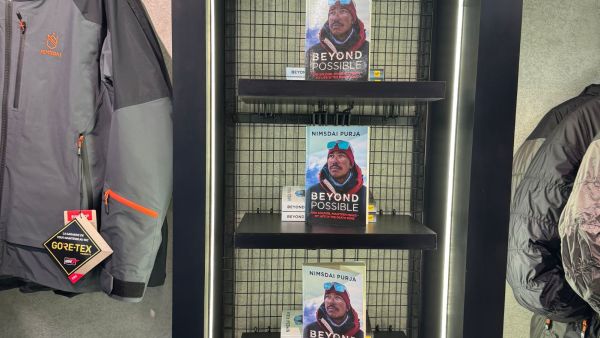 Purjs’s feat was later documented in the Netflix film 14 Peaks: Nothing Is Impossible, and his book, Beyond Possible. (Express photo)
For Purja, the success of Project Possible was also proof that people from modest backgrounds could imagine extraordinary lives.
“I truly believed in the vision: to raise the name of Nepalese climbers and, in parallel, to show the world that nothing is impossible,” he said, adding, “Look at me today — I had no rich parents, no connections, nothing. When someone from a really poor street looks at me, they can dream too. They can dream that they can be that guy, that they can do better.”
Story continues below this ad
Purja believed Project Possible had also transformed opportunities for Nepalese climbers. Before the project, he said, many Sherpas earned little and had work only during a limited climbing season. As interest in records and expeditions grew, more climbers began arriving in Nepal, creating better-paying opportunities for guides and support staff.
“Being first to do something is a ground-breaking evolution, not just a record,” he said. “Records can always be broken, but being first to show a concept, a vision, benefits the whole industry and community. I think I managed to open the door for everybody.”
He also worried about the future of mountain labour. The Sherpa community, he said, remained small, while younger generations were increasingly choosing different careers.
“The fathers work so hard to send their kids to school, and those kids aren’t going to carry 40 kg loads for the pay porters get,” he said. “I think the government and the industry need to start protecting them.”
Story continues below this ad
That concern led him to build a porterhouse in Lobuche, near the Everest Base Camp route. Previously, he said, porters carrying supplies from Pheriche to Lobuche had nowhere to stay and were forced to return to Pheriche at night before beginning the journey again the next morning.
“What I believe in is helping the helpless,” he said. “Fifteen years ago, even if I had worked day and night, I couldn’t have done this. But now I have that opportunity, so why should I stop?”
Through his NGO, Nimsdai Foundation, Purja said he contributed 5 per cent of his earnings — from guiding, clothing, skydiving, speaking engagements and books — to community work. The foundation had supported people affected by floods in Pakistan, built homes and helped vulnerable families.
“That’s what motivates me now,” he said. “I live for the people, as I say, and I do what I can within my ability to help.”
Story continues below this ad
His belief in collective achievement was perhaps most visible during the first winter ascent of K2 on January 16, 2021. The mountain was the last of the world’s 14 eight-thousanders to remain unclimbed in winter.
“The other 13 had all been climbed by Western climbers — Europeans, Americans,” Purja said. “I felt we needed at least one title for the country and for the Sherpas.”
Although he led the expedition, he wanted all 10 Nepalese climbers to reach the summit together. “When you share equal glory and equal success, happiness multiplies,” he said. “I wanted to show the world the power of unity. When we summited K2 in winter, honestly, I wasn’t focused on the view. It was the energy I felt from my friends, doing it together… that happiness. I can barely describe those moments.”
Away from the mountains, Purja remained relentlessly driven. He spoke of waking at 3.30 am and finishing much of his work before his staff arrived at 8 am. He worked for 11 months a year and turned to skydiving and paragliding when he needed to clear his mind. But becoming a father had changed his relationship with risk.
Story continues below this ad
“I definitely take a bit less risk than before; I used to just go full-on,” he said. “Now I think about what happens given that I have a daughter, so I’m more conscious of it.”
His daughter was two-and-a-half when we met him. He spoke of wanting, as she grew older, to take her skiing and paragliding. He viewed the sacrifices demanded by his work as part of a larger purpose. “If you want to do something for society, for a bigger and greater good, you have to sacrifice,” he said. “This is my sacrifice.”
He believed humanity had much to learn from nature, particularly in an era of climate crisis. “No matter how powerful you are, you cannot fight nature,” he said. “If we don’t listen, nature will teach us the lesson.”
A loss mourned globally
Purja’s death, along with that of nine fellow climbers and guides, has been mourned from Kathmandu to London and across the mountaineering world. For a man who spent much of his life insisting that no mountain was impossible, the ending feels painfully literal.
Story continues below this ad
Prince William issued a statement saying he was “truly saddened to hear of the tragic death” of Purja, who he said “served with distinction in the British Armed Forces before becoming one of the world’s greatest mountaineers, putting Nepalese climbers on the map.”
Purja was also awarded an MBE – Member of the Order of the British Empire – by Queen Elizabeth II in 2022 for his services to mountaineering.
UK Defence Secretary Wes Streeting said in a post on X: “Incredibly sad to learn of the passing of Nirmal (Nims) Purja and those he was climbing with. He was an inspirational man who served in our Armed Forces for many years – and whose incredible mountaineering adventures are known the world over.”