

The committee also retained its neutral stance.
As a result:
- Repo rate: 5.25%
- Standing Deposit Facility (SDF): 5.00%
- Marginal Standing Facility (MSF): 5.50%
- Bank Rate: 5.50%
RBI MPC members who attended the August 2026 meeting
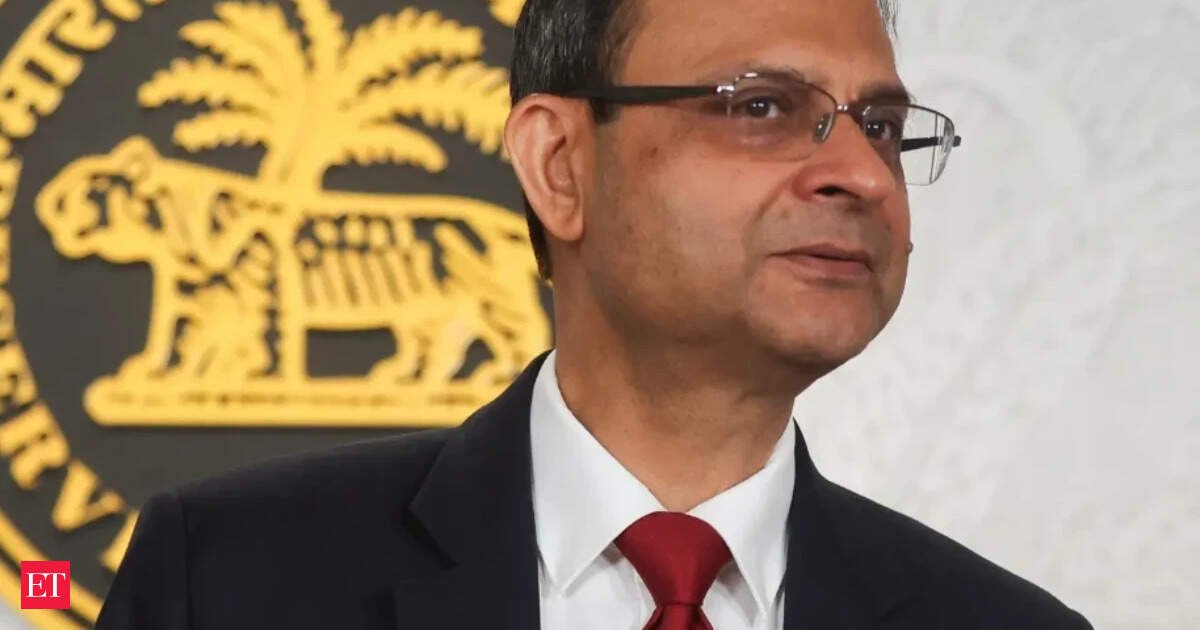
The meeting was chaired by RBI Governor Sanjay Malhotra. Other members included:
- Dr Nagesh Kumar
- Saugata Bhattacharya
- Prof Ram Singh
- Dr Poonam Gupta
- Indranil Bhattacharyya
Read more – RBI MPC Meeting at a Glance: Your one-stop guide for all key decisions

Why did the RBI leave interest rates unchanged?
The MPC said it decided to maintain the current policy rate because:
- Inflation is expected to rise in the near term but remains largely driven by food and fuel prices.
- Core inflation continues to remain moderate.
- India’s economy remains resilient despite global uncertainties.
- Greater clarity is needed on inflation, global trade and geopolitical developments before any policy action.
The RBI said it will continue to closely monitor macroeconomic developments while remaining committed to bringing inflation towards its target.Read more – RBI’s rate, GDP and inflation verdict also comes with a stark warning
RBI GDP growth forecast for FY27
The central bank projected real GDP growth at 6.7 per cent for 2026-27.
Quarterly GDP projections
- Q1: 7.0%
- Q2: 6.4%
- Q3: 6.5%
- Q4: 6.8%
- Q1 FY28: 7.3%
The RBI said risks to growth remain evenly balanced.
RBI revises inflation forecast
The RBI projected consumer price index (CPI) inflation at 5.0 per cent for FY27.
Quarterly inflation projections
- Q2: 4.7%
- Q3: 5.9%
- Q4: 5.5%
- Q1 FY28: 5.3%
The central bank said risks to inflation are also evenly balanced.
What is driving inflation, according to the RBI?
The RBI noted that headline inflation rose to 4.4 per cent in June 2026, mainly because of higher food and fuel prices.
Key observations include:
- Food inflation increased across most categories during May and June.
- Fuel inflation rose following higher international energy prices.
- Core inflation remained at 3.9 per cent during May and June.
- Core inflation excluding precious metals remained even lower at 2.3-2.5 per cent.
The MPC said the rise in inflation is not broad-based and demand-side pressures remain contained.
Global risks highlighted by RBI Governor Sanjay Malhotra
The RBI flagged several global developments that continue to pose risks to the economy, including:
- Ongoing conflict in West Asia.
- Volatile crude oil prices.
- Persistent global inflation.
- Uncertainty surrounding global trade policy.
- Stronger US dollar and elevated US bond yields.
- Fragile public finances in major economies.
The central bank said these factors continue to cloud the global economic outlook.
Domestic economy remains resilient
According to the RBI, India’s economy continues to perform well despite external challenges.
Key positives highlighted by the MPC include:
- Strong private consumption.
- Resilient investment activity.
- Healthy manufacturing and services sectors.
- Robust exports.
- Stable employment conditions.
- Continued government infrastructure spending.
- Strong credit growth.
The RBI said these factors reaffirm India’s position as the world’s fastest-growing major economy.
El Niño and monsoon remain key concerns
The central bank cautioned that deficient and uneven south-west monsoon conditions associated with El Niño could affect agriculture and rural demand.
However, it said government initiatives such as crop diversification, climate-resilient farming and water conservation are expected to help reduce the impact.
What’s next for RBI monetary policy?
The MPC said the outlook remains uncertain because of:
- Inflation risks.
- El Niño and monsoon conditions.
- Geopolitical tensions.
- Global trade uncertainty.
It said future policy decisions will depend on how inflation and growth evolve over the coming months.
The minutes of the August MPC meeting will be released on 19 August 2026, while the next RBI MPC meeting is scheduled to take place from 5 to 7 October 2026.