

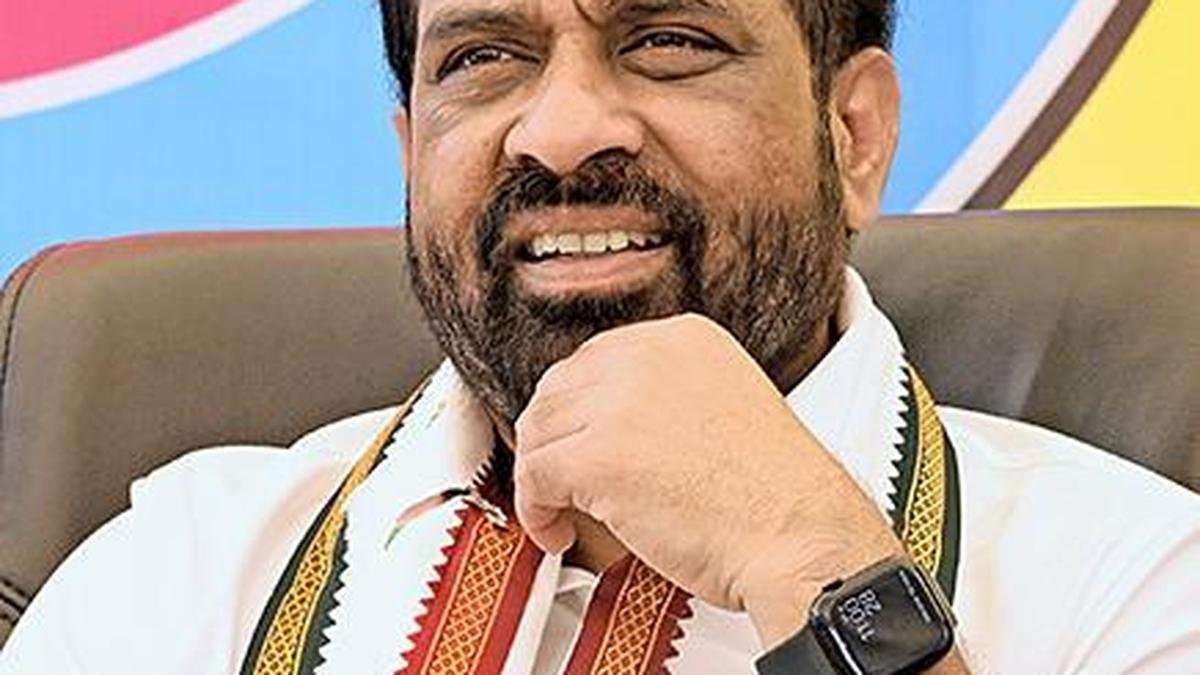

Health Minister Satya Kumar Yadav.
| Photo Credit: File Photo
Following the landmark judgment of the Supreme Court in 2018, when it held that the right to die with dignity was a fundamental right under Article 21, the State government had taken a significant decision to provide relief to patients suffering from severe illness with no prospects of recovery.
In 2023, the Supreme Court had laid down structured guidelines and subsequently modified them to ensure clarity.
On Wednesday (July 8, 2026), Minister for Health, Medical and Family Welfare Satya Kumar Yadav approved a set of guidelines governing the withdrawal of life support for terminally ill patients after discussing the subject with senior officials.

These guidelines would ensure that terminally-ill patients received a dignified natural death through withdrawal of life-sustaining treatment.
According to a press release from the Department of Health, Medical and Family Welfare, until now, there were no guidelines in place, which created confusion among doctors and caregivers.
According to the guidelines, when a patient becomes terminally ill, doctors should first check for an Advance Medical Directive, which is a written declaration by a person (while healthy) stating how they wish to be treated or not to be treated if they lose decision-making capacity.
The Advance Medical Directives must be prepared and signed by the patient voluntarily and in sound mind, in the presence of two independent witnesses, and attested before a Notary/Gazetted Officer. A copy must be handed to the local authority (Municipality/Corporation/Panchayat), which will appoint a custodian.
The guidelines also mandate formation of primary and secondary medical boards by the treating hospital in making a decision. The decision of both the boards and consent of nominated persons are important before giving the nod for the withdrawal treatment.
In the event of the absence of the Advance Medical Directives, the treating hospital has to constitute a Primary Medical Board and discuss with the family physician (if any) and the patient’s next of kin/next friend/guardian about all the pros and cons of withdrawal or refusal of further medical treatment to the patient.
If the guardian gives their consent in writing to the withdrawal of the life-support system, the Primary Medical Board will form an opinion and inform the same to the Secondary Medical Board, which also examines the patient.
If the boards refuse to agree to the withdrawal, the nominated person or the guardian may approach the High Court.
Director of Medical Education (DME) A. Vishnu Vardhan, Director of Secondary Health K.V.N. Chakradhar, and District Medical and Health Officers (DMHOs) have been asked to oversee such processes and to ensure that these guidelines are followed.
Published – July 09, 2026 12:21 am IST