

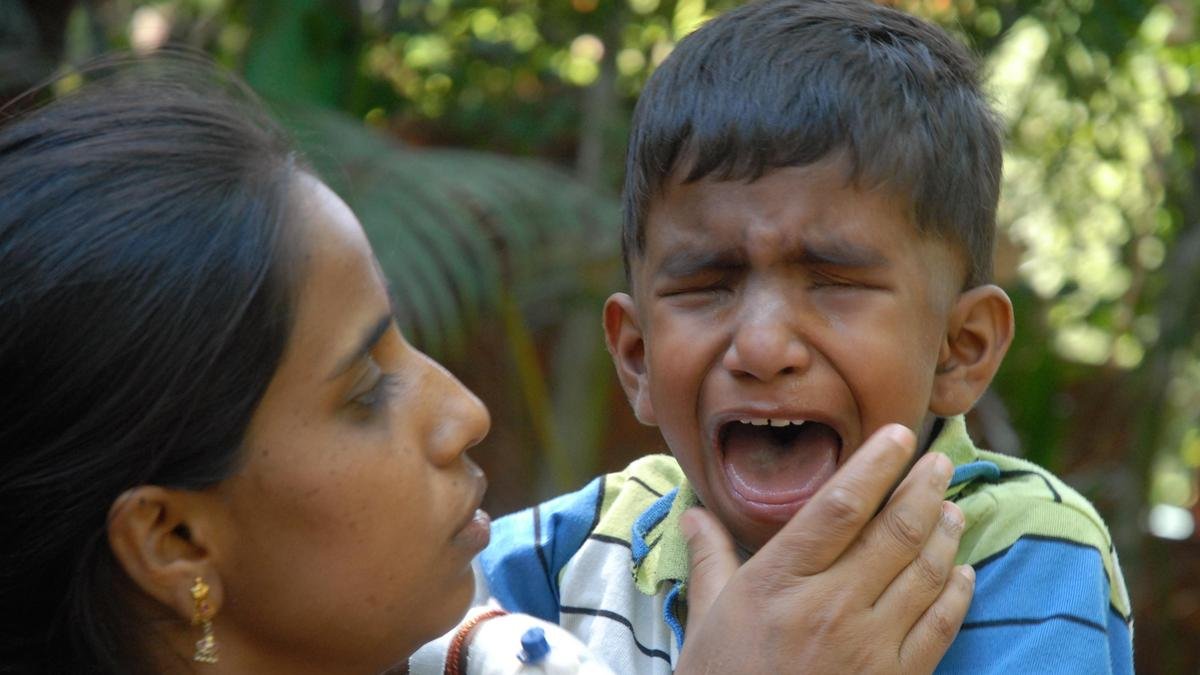
Seeing children in pain is distressing for almost everybody, but especially for their parents. Whether it is the sharp, acute pain of a stubbed toe or the long, lingering, sometimes unbearable pain of cancer, children are a vulnerable population, dependent on adults to recognise their pain, evaluate it, and to treat it.
One of the reasons children are vulnerable is because of the many myths regarding pain in children such as: children do not feel pain; children’s pain cannot be quantified, children do not remember pain, children exaggerate their pain and newborns cannot feel pain at all.
These are all untrue.

The bio-social model of pain
Pain is defined as an unpleasant, sensory, subjective, emotional experience due to actual or potential tissue damage or described in terms of such damage. But pain is not just a physical experience, and the amount of pain a child feels is not linearly linked to the amount of damaged tissue. There are other important factors that influence how a child perceives pain.
Psychological factors include the child’s personality, past painful experiences, anxiety, pain catastrophising, and self-efficacy, i.e. their assessment of their ability to manage the pain.
Children’s thoughts, beliefs, and behaviour in response to a painful experience are influenced by their observations of their parents’ beliefs and responses to pain. Cultural beliefs such as normalising suffering as a part of life and enduring pain without ‘complaining’ as a sign of strength, also influence how a child expresses pain.

Pain management in ancient times
Ancient physicians recognised crying and irritability as pain behaviour. Their treatment was holistic and natural, including herbal external, internal therapies and comfort measures.
Unfortunately, during the 19th and early 20th centuries, scientific advances, including studying the nervous system of embryos, led to an erroneous conclusion that infants were unable to perceive pain and remember it. Crying and grimacing were thought to be mere reflexes. The focus changed to finding the cause of pain in a child, and not on its treatment. There was no understanding of the long-term adverse effects of unaddressed pain. The result was that infants were subjected to invasive procedures and surgery with minimal or no anaesthesia.
It was the advocacy of one mother whose preterm baby, Jeffrey Lawson, was subjected to open heart surgery without anaesthesia in 1985, followed by the published article of Anand and Hickey on ‘Pain and its effects on the neonate and fetus’ in 1987, that led to radical changes in managing pain in infants and children.
From the 1990s onwards, pain began to be assessed as the ‘fifth vital sign’ and paediatric pain management came to be considered a specialised discipline. Knowing children feel pain led to the development of standardised tools such as the FLACC scale to measure their pain.

How pain affects children
Immediate effects of pain in children include disturbances in sleep, play, mood, memory, concentration, appetite, social interaction, and in their activities of daily living. They may misinterpret the pain to mean something catastrophic, and they can even feel guilty, blaming themselves for causing their family distress.
Long-term effects of unmanaged pain, especially in babies subjected to days and weeks of painful procedures in the NICU, and in children who experience chronic pain include poor cognitive and motor function, increased sensitivity to pain, needle phobia, learning difficulties, stress-related complications, anxiety and depression.
Managing pain relieves distress, decreases long-term negative consequences, and increases quality of life even in the presence of a serious illness such as cancer.

Barriers to optimal management
Although anaesthetists, interventional pain specialists, orthopaedicians, neurologists and palliative care physicians are trained in pain management, most medical staff who routinely see children have inadequate training.
This is evidenced in one of the most common causes of paediatric pain — procedural pain. Procedural pain prevention and management for vaccinations, blood tests, intravenous lines and lumbar punctures is woefully inadequate. The reasons cited are the short duration of the procedure, the lack of time and personnel, and the cost.
Multimodal approaches
The World Health Organization (WHO) and the International Association for the Study of Pain (IASP) have issued guidelines for the management of paediatric pain.
The treatment of pain follows from the bio-psychosocial model of pain. It includes not only pharmacotherapy — the use of various drugs through various routes to relieve pain, but also, physical and psychological therapies: the 3P approach.
This multimodal approach acts synergistically to provide better pain management with fewer side effects.
Analgesia used in children includes the use of sucrose given to babies before a needle prick, up to and including the use of opioids to manage severe pain. The oral route of drug administration is preferred whenever possible, as it is the least distressing for a child.
Physical therapies include application of heat or cold packs, comfort positioning for vaccinations and procedures, non-nutritive sucking for babies, massage, therapeutic exercises for muscle conditioning and strengthening, and TENS (transcutaneous electrical nerve stimulation).
Psychological interventions include cognitive and behavioural measures. Cognitive or mind-based therapy includes education about pain, including using metaphors and analogies — e.g. malfunctioning car alarms — thus reducing anxiety.
Other helpful strategies include preparing the child for procedures, reassurance, using distraction techniques based on the age of the child, encouraging self-coping statements, and guided imagery.
Some behavioural techniques include deep breathing and progressive muscle relaxation, parental coaching and presence, desensitisation through procedural preparation, and positive reinforcement.
Complementary and alternative therapies include acupressure, acupuncture, music therapy, art therapy, therapeutic play, aroma therapy, and mindfulness.
Normalising life by encouraging attending school, participating in social and sports activities, and optimising sleep is of significant therapeutic benefit.
Parental empowerment: the fourth ‘P’
A child in pain leaves parents feeling anxious and helpless.
Many times, parents are not allowed to be with their child during painful procedures because of the concern that their reaction will worsen the child’s distress. Children are like sponges: they absorb and imitate their parents’ model. The parents’ response to their child’s pain depends on their own previous experiences with pain, their emotional response, and coping skills.
In children suffering from chronic pain, certain parental practices such as doing everything for the child or asking about the pain frequently are known to reinforce pain cycles.
Research suggests that psychological interventions that teach parents how to change their own responses to their child’s pain and to develop pain — or illness-specific problem-solving skills have a lasting effect on how a child manages pain.
What the future holds
Pain medicine has advanced greatly, especially in the Western world. The use of AI has led to many beneficial innovations. For example, PainChek Infant is an AI tool to detect pain in neonates who cannot express their pain verbally.
Interventions using gamification shifts focus away from pain, engage the child in activities that stimulate the reward systems in the brain and give him/her a sense of control.
Immersive therapeutic interventions including virtual reality (VR), augmented reality (AR) and mixed reality (MR) provide children with games or a calming environment that act as deep distractions, decreasing anxiety and increasing comfort and cooperation. This also lessens the need for drugs like opioids to relieve pain.
Digital and wearable technology helps to monitor the child’s pain and provides the child with self-management strategies.
Advances in pharmacogenetics now enable physicians to make individualised pain medications. For example, genetic testing can predict how a child will metabolise certain pain medications, thus reducing the risk of side effects and improving efficacy. Nanotechnology uses nano materials as drug carriers to specific target organs or tissue, maximising its effect and decreasing its dose and side-effects.
These new technologies are expensive, however, and inaccessible to most families in the Indian context. Investments by philanthropic organisations could help make them a reality for our children.
Towards better pain management
In the amended words of 19th century physician Edward Livingston Trudeau, helping children manage pain involves completely curing it sometimes, relieving it often, and comforting them always.
It requires an individualised approach that includes listening empathetically and validating the child’s experiences and beliefs, providing age-appropriate information that can help children understand their pain, and ensuring adequate pain relief using multiple modalities to aid recovery, rehabilitation and return to activities they enjoy. The presence of parents, who have been prepared and empowered, provides one of the greatest pain management strategies.
(Dr. Sabitha Binu Ninan is a paediatric palliative care consultant working with the VHS- RCM PAASAM Centre team in Chennai that provides home care for seriously ill children.)
(This article was first published in The Hindu’s e-book, Pain and Relief: Demystifying the Science of Suffering)