

Federal safety regulators are now investigating the fatal Tesla crash in Katy, Texas, where a Model 3 left a residential road, tore through a brick home, and killed a 76-year-old woman inside.
The National Highway Traffic Safety Administration said Monday it is examining the June 20 crash, after the driver told deputies his Tesla was on Autopilot at the moment of impact.
What’s new since Friday
When we first reported the crash, authorities had released few details beyond the driver’s claim. Three things have changed since.
NHTSA has now opened its own review of the incident, federalizing what began as a local investigation by the Harris County Sheriff’s Office Vehicular Crimes Division.
The victim has been identified as Martha Avila Mantilla, 76, who was standing in the front room of her family’s home when the car came through the wall. Her family described her as in excellent health and on no medication. She had lived with her daughter’s family since the birth of her first grandchild.
The driver has been identified as Michael Butler, 44. He told Harris County deputies the vehicle was on Autopilot, showed no signs of intoxication, and was cooperating with investigators. No charges had been filed as of Sunday.
Surveillance video shows a high-speed run
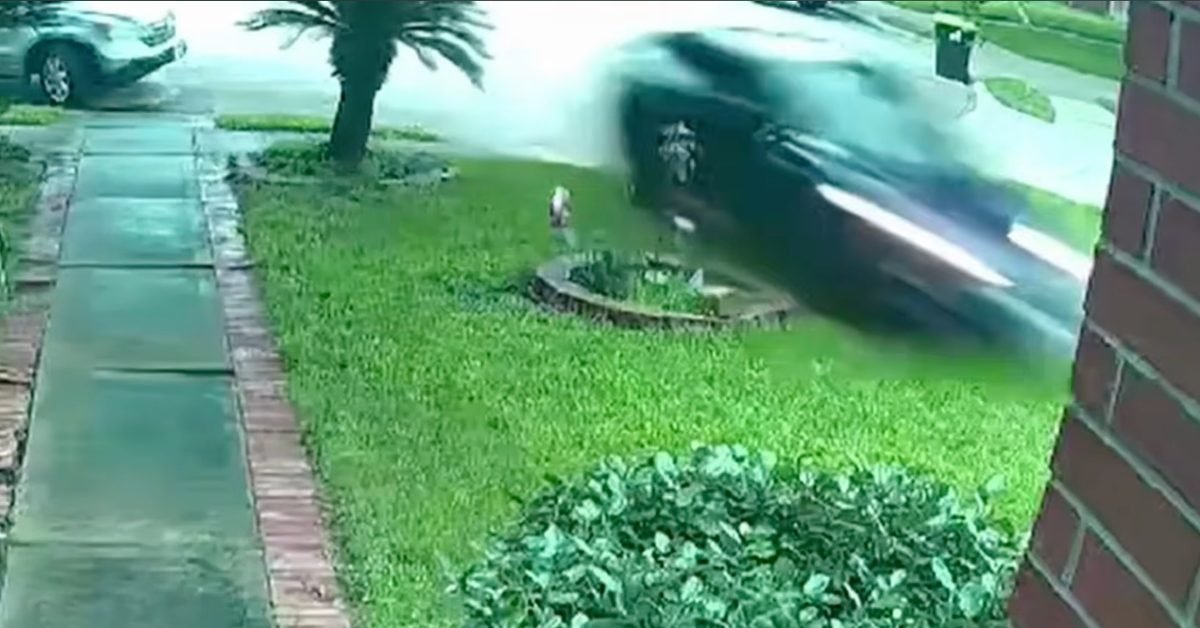
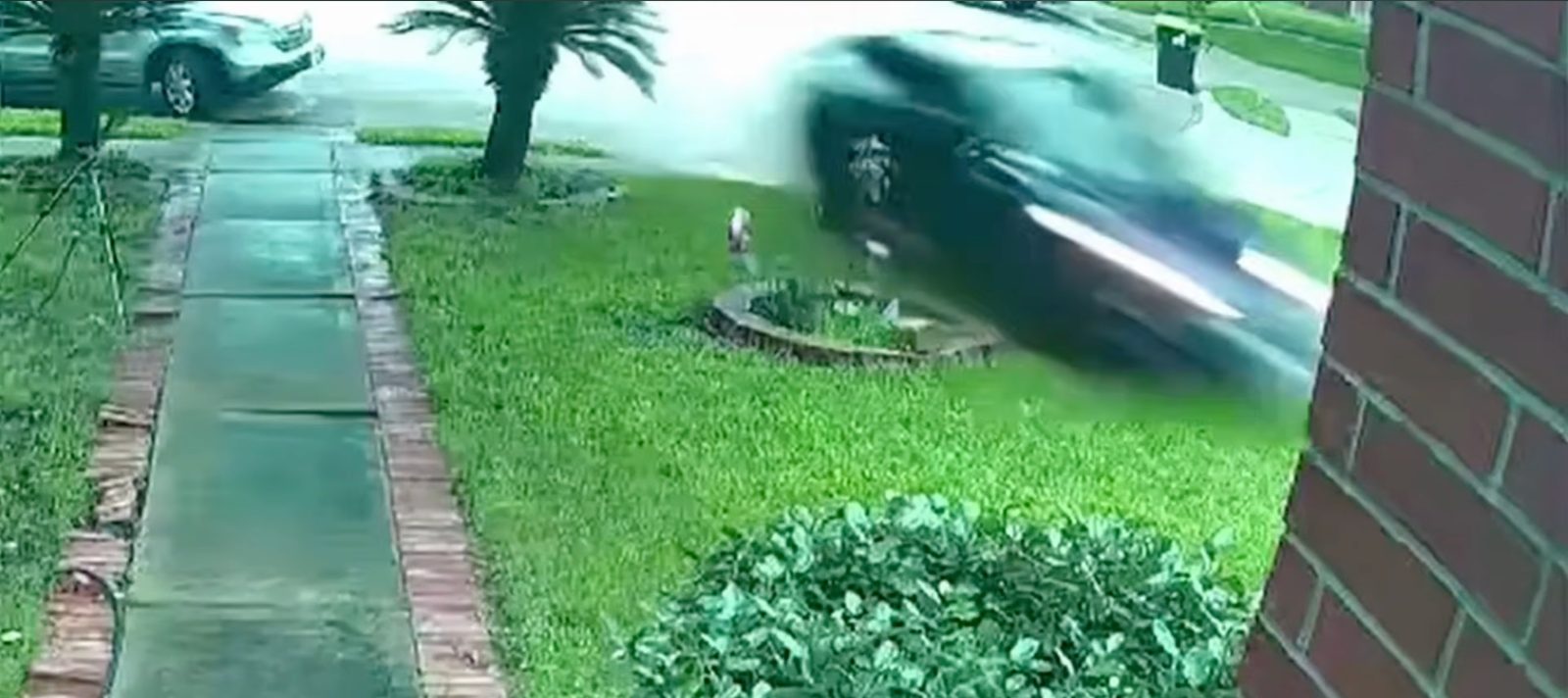
Surveillance footage shared by Avila Mantilla’s daughter, Jennifer Barbour, and obtained by local outlets shows the Model 3 accelerating down Rose Hollow Lane before striking a curb and plowing through the two-story brick facade. A witness at a nearby party estimated the car was traveling 60 to 70 mph.
“This is the car flying into my home. My mom didn’t deserve this,” Barbour wrote in a post sharing the video.
The home was rendered uninhabitable, and the family — two parents, three young children, and Avila Mantilla — is now in temporary housing. A GoFundMe has been set up.
Investigators say they will pull the vehicle’s event data recorder and onboard logs to determine whether a driver-assistance system was engaged, at what speed, and what inputs the driver made in the seconds before the crash. The driver’s Autopilot claim has not been independently confirmed.
A system already one step from a recall
The federal interest is not happening in a vacuum. In March, NHTSA upgraded its Tesla “Full Self-Driving” investigation to an Engineering Analysis covering roughly 3.2 million vehicles — the last procedural step before the agency can demand a recall. That probe covers 2017-through-2026 Model 3 sedans, the same model involved in the Katy crash.
A separate, still-open NHTSA evaluation covers about 2.88 million Teslas for FSD committing traffic violations like running red lights and crossing into oncoming lanes. Tesla is also under scrutiny for failing to properly report crashes involving Autopilot and FSD.
There’s a naming wrinkle, too. Tesla discontinued “Autopilot” for new vehicles in January 2026 after a California ruling forced it to drop the misleading marketing to avoid a 30-day sales suspension. But millions of existing cars still carry the software, so whether the system was Autopilot or FSD (Supervised) depends on the Model 3’s age. Both are Level 2 systems that require an attentive driver at all times — neither makes a Tesla autonomous.
Electrek’s Take
The federal investigation raises the stakes, but it doesn’t change the core problem. We still don’t know whether a driver-assistance system was actually engaged — that’s Butler’s claim, and the data recorder will settle it. NHTSA getting involved means that data is far more likely to become public, which matters.
What the surveillance video adds is the hardest part. A Model 3 doing 60 to 70 mph down a residential street, missing a turn, and going through the front of a house is not a subtle edge case. If the car was driving itself, this is a catastrophic failure. If it wasn’t, it’s a driver who badly misjudged what his car was doing — and the question becomes why he believed it would make that turn for him.
To me, it looks like a pedal error. However, Tesla’s ADAS system, Autopilot or FSD, might still have been involved. It might have screwed up and the driver might have pressed the wrong pedal trying to correct it.
That belief doesn’t come from nowhere. The names, the marketing, and the easily-gamed driver monitoring all push owners toward exactly the complacency that I’ve written about candidly with FSD v14. The system is good enough to lull you and nowhere near good enough to trust. With an Engineering Analysis already on the books and a fatality now attached to a Tesla in the federal record, the cost of overpromising keeps landing on people who never signed up for it — this time, a grandmother standing in her own living room.
If you’re a Tesla owner, powering your EV with home solar is one of the smartest ways to lock in low fuel costs. With electricity rates climbing nearly 10% last year, home solar protects you against future rate increases. And with lease and PPA options, you can go solar with zero upfront cost and start saving immediately. If you want to find the best deal, check out EnergySage. It’s a free service with hundreds of pre-vetted installers competing for your business, so you save 20 to 30% compared to going it alone. No sales calls until you pick an installer. Get your free quotes here.


FTC: We use income earning auto affiliate links. More.