

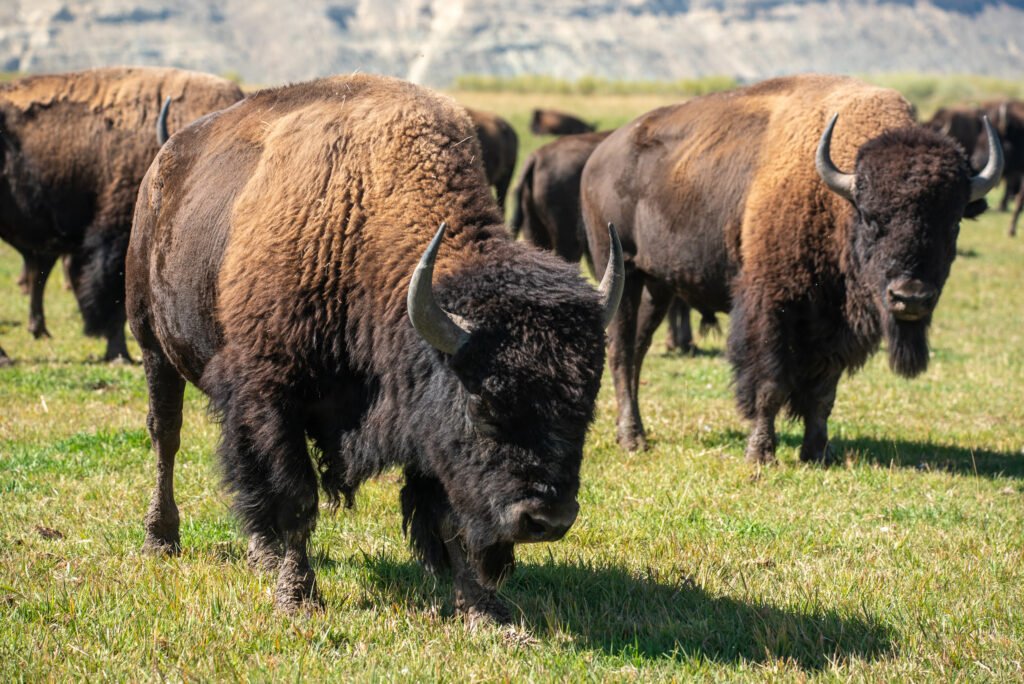
SEATTLE—Tribal bison were on an extraordinary roll before the second term of President Donald J. Trump.
Herds were expanding across Indian Country, as was Native consumption of bison meat, which is less fatty than beef. Science has confirmed that bison are better for prairie ecosystems than cattle. Most importantly to the tribes, public grazing land was opening up under an expansive federal Biden-era order to “restore wild and healthy populations of American bison.”
The 2023 order, by Interior Secretary Deb Haaland, the first Native American to hold the office, said federal agencies will “prioritize Tribally led opportunities to establish new, large herds” and “advance shared stewardship with Tribes on Federal land.”
That order, though, has become a dead letter. The Interior Department last month proposed new grazing rules that appear to deny tribal bison access to federal land in favor of “production-oriented livestock.” Since tribally managed bison are raised for many purposes, including land conservation, they don’t meet that commodity-producing requirement.
That language is “code for anything but indigenously managed bison,” according to the Coalition of Large Tribes (COLT), which represents more than 50 tribes managing 25,000 bison on land that accounts for about 95 percent of Indian Country. The coalition objects to the proposed rules, which it describes as “DEI for cows” and which were published without prior consultation with tribes.
“We are hoping a light bulb will go off in their heads and they will agree that they really need to reconsider this terminology or they need to grant an exclusion to the tribes,” said OJ Semans Sr., executive director of COLT and a member of the Rosebud Sioux in South Dakota.
Tribes that have treaties with the U.S. are urgently seeking government-to-government negotiations with officials at Interior, and their primary demand is an exemption from the new rules. No negotiations have yet been scheduled, and the comment period for the new grazing rules ends in mid-July.
Tribal bison herds are located primarily on reservation land and are growing. Many tribes had expected to move some of their animals to Bureau of Land Management grazing land, which is threaded through and around many reservations. Two California tribes, the Fort Bidwell Indian Community and the Pit River Tribe, are actively seeking BLM grazing leases.
Livestock management on BLM land is governed by the Taylor Grazing Act, a Dust Bowl-era law intended to halt destructive overgrazing, restore the prairie and stabilize the livestock industry. Semans said the Interior Department, in interpreting the act, has “taken a nearly hundred-year-old law and is changing what the words mean. Being Indian, we see that all the time.”
The phrase “production-oriented livestock” does not appear in the Taylor Grazing Act, nor has it been the deciding factor in leasing BLM grazing land—until it appeared in January in a proposed order by Interior Secretary Doug Burgum.
That order, at first, seemed to be narrowly drawn. Interior said it was aimed only at seven federal lease allotments for bison held in Montana by American Prairie, a nonprofit foundation largely funded by wealthy coastal environmentalists. American Prairie had long irked Montana cattle ranchers and Republican politicians by buying cattle ranches and promoting the revival of the Great Plains ecosystem with bison and other megafauna.
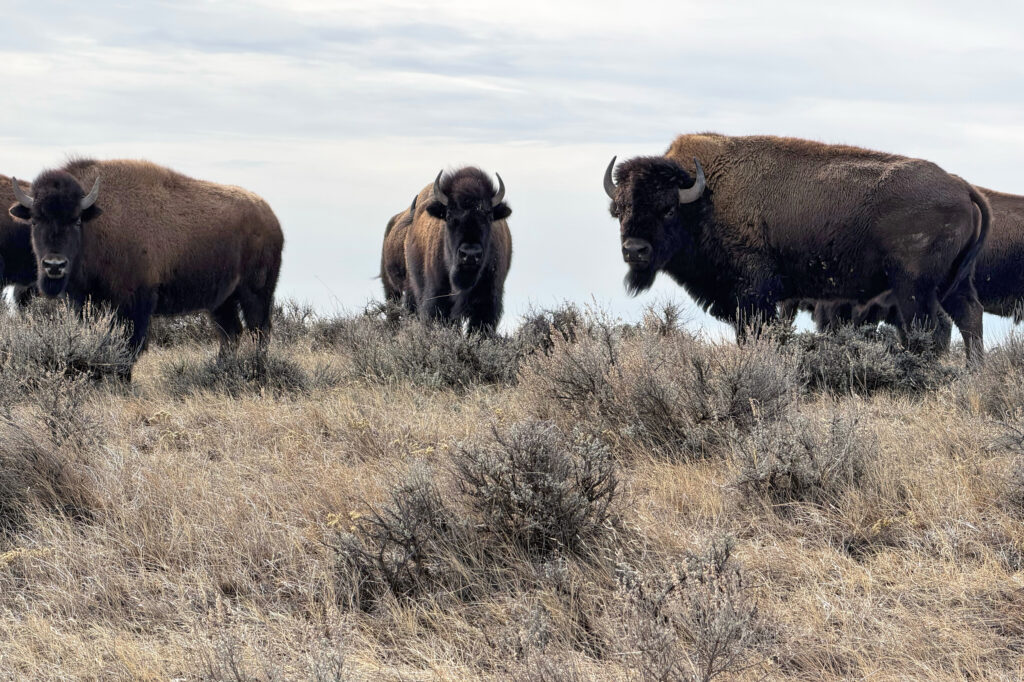
When the bison ban on BLM land leased by American Prairie was made final on May 8, Interior’s announcement assured tribes that “the BLM is not adjudicating the rights of any tribal government.” It also said that Interior would be pleased “to engage with tribes…and encourage and welcome feedback.”
At the time, the coalition of bison-raising tribes found those assurances “heartening.”
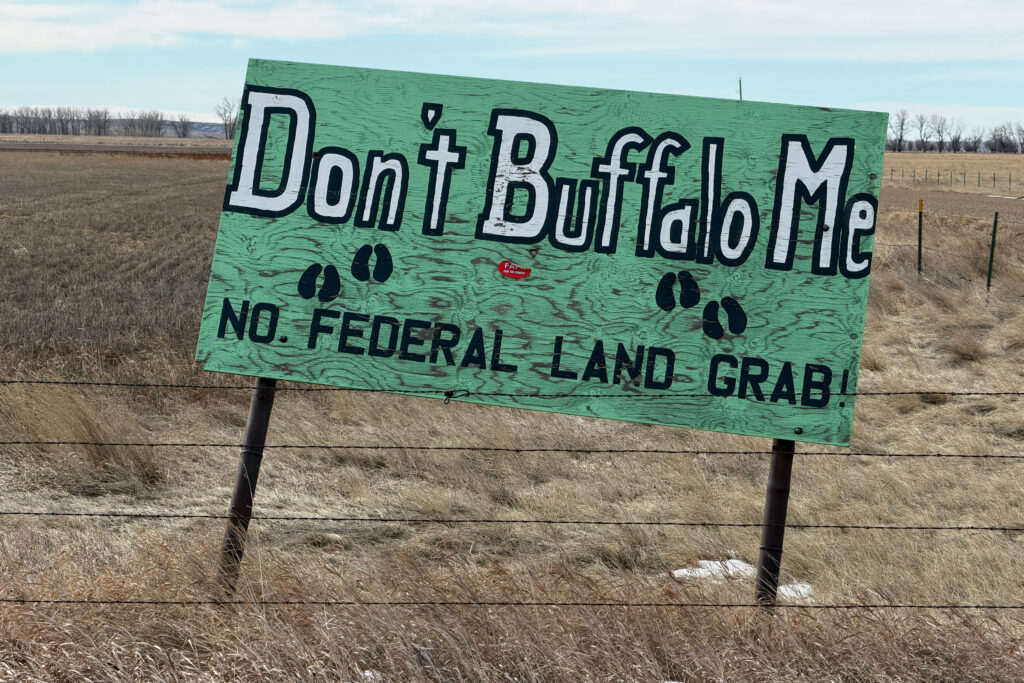
But four days later, without consulting the tribes, Interior published in the federal register proposed grazing rules that limit BLM leases to “production-oriented livestock.” The rules apply to all BLM land, with no exclusion for tribes.
For nearly half a century, BLM grazing permits for indigenous animals had been allowed at the discretion of federal officers working locally. But the new regulations, according to the federal register, include “no separate allowance for grazing by indigenous animals.”
“If these rules are finalized as written, they will concentrate management of public lands in the hands of the livestock industry,” said Martin Nie, a professor of public lands and wildlife policy at the University of Montana.
This story is funded by readers like you.
Our nonprofit newsroom provides award-winning climate coverage free of charge and advertising. We rely on donations from readers like you to keep going. Please donate now to support our work.
Nie said that the proposed rules mark a significant federal retreat from what had been “strong affirmative steps to restore bison herds” across the Great Plains. On the same day that Interior published the pro-cattle grazing rules, it repealed the Public Lands Rule, which had put conservation of federal land on an equal footing with mining, oil drilling and logging.
“The conservation rule had more provisions for tribal input than ever before in the history of the BLM,” said Nie. “It was rescinded without any tribal consultation. There are absolutely profound tribal implications from all of this.”
Native Americans sometimes raise bison as “production-oriented livestock” that they fatten up and sell commercially. But most tribes raise bison for emotionally resonant reasons that connect to their history, culture, religious beliefs and passion for protecting their land.
They also raise bison for personal consumption in hard times. During the government shutdown last fall, at a time when federal food aid was interrupted on rural reservations, tribes including the Blackfeet, the Lower Brule Sioux, the Cheyenne River Sioux and the Crow fed thousands of reservation residents by slaughtering bison.
Those animals came from tribal herds that have been slowly restored in recent decades. Hunters in the 1800s all but exterminated the North American buffalo, killing as many as 60 million, which were concentrated in what is now the central United States. There are about half a million bison in the United States now.
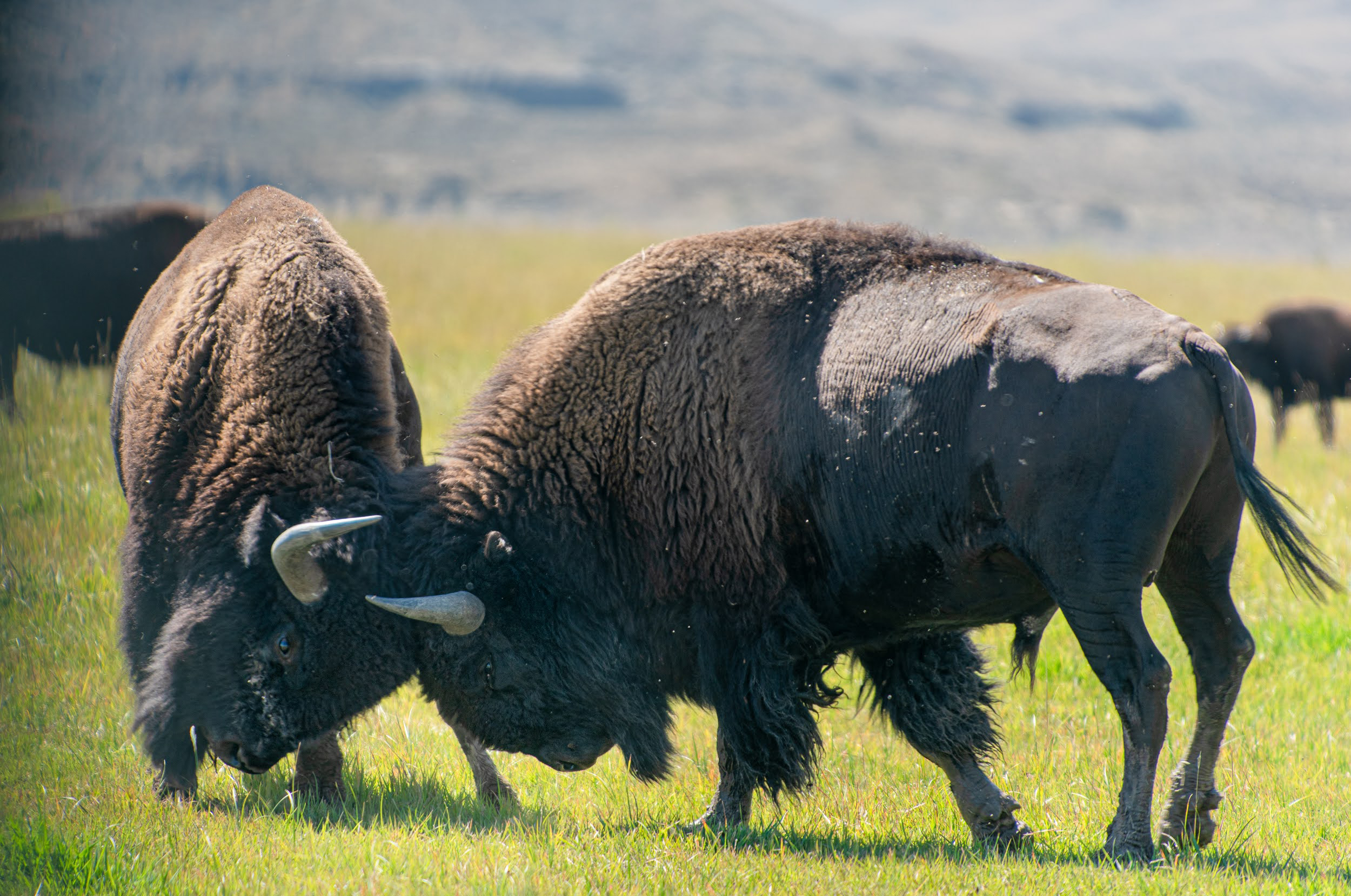
For more than a century, the Interior Department celebrated its role in helping to revive the population of buffalo, which are the official mammal of the United States. A buffalo remains on the department’s official seal.
The idea of limiting federal grazing leases to “production” livestock appears to have originated in Montana. Pro-ranching groups there, including the Montana Stockgrowers Association, challenged a 2022 decision by the Biden administration to allow bison grazing on BLM land leased by American Prairie. The challenge was contained in a 53-page appeal written by Karen Budd-Falen, a private attorney and rancher at the time but now the third-highest-ranking official in the Interior Department.
Budd-Falen’s argument—that the Taylor Grazing Act does not give the BLM authority to lease land for “non-production oriented” livestock—found its way into Interior’s argument for canceling American Prairie’s bison leases. It is also the principal argument for the proposed rule that limits all BLM grazing leases.
“This production-oriented thing is essentially made up from whole cloth,” said Josh Osher, public policy director of the Western Watersheds Project, a nonprofit conservation group. “Livestock is a powerful lobby that no one wants to take on.”
The Interior Department says its proposed grazing policy “would give ranchers more flexibility, improve the health of rangelands and support rural communities across the West.”
About This Story
Perhaps you noticed: This story, like all the news we publish, is free to read. That’s because Inside Climate News is a 501c3 nonprofit organization. We do not charge a subscription fee, lock our news behind a paywall, or clutter our website with ads. We make our news on climate and the environment freely available to you and anyone who wants it.
That’s not all. We also share our news for free with scores of other media organizations around the country. Many of them can’t afford to do environmental journalism of their own. We’ve built bureaus from coast to coast to report local stories, collaborate with local newsrooms and co-publish articles so that this vital work is shared as widely as possible.
Two of us launched ICN in 2007. Six years later we earned a Pulitzer Prize for National Reporting, and now we run the oldest and largest dedicated climate newsroom in the nation. We tell the story in all its complexity. We hold polluters accountable. We expose environmental injustice. We debunk misinformation. We scrutinize solutions and inspire action.
Donations from readers like you fund every aspect of what we do. If you don’t already, will you support our ongoing work, our reporting on the biggest crisis facing our planet, and help us reach even more readers in more places?
Please take a moment to make a tax-deductible donation. Every one of them makes a difference.
Thank you,
Contributor
Blaine Harden, who writes about the Pacific Northwest for ICN, is the author of six books and was a longtime foreign correspondent for the Washington Post in Africa, Eastern Europe and Northeast Asia, as well as a national correspondent for the New York Times. Born in Moses Lake, Washington, he’s the son of a welder who worked on Grand Coulee Dam and the Hanford nuclear site. Two of Blaine’s books focus on the history of the Pacific Northwest, three are about North Korea, and one is about Africa. He lives in Seattle. His website is Blaineharden.com