

A new memo from NASA’s Office of Inspector General has revealed how major pieces of Artemis program hardware became costly components of lunar missions that no longer align with the agency’s new plans to return astronauts to the moon and have since been canceled.
NASA announced a major shakeup to its Artemis plans earlier this year at its “Ignition Day” event, restructuring its mission goals in order to streamline the return of astronauts to the lunar surface and simplify the architecture needed to get them there. Most notably, the program’s first crewed moon landing was shifted from Artemis 3 to Artemis 4, and upgraded variations of NASA’s Space Launch System (SLS) rocket were abandoned for a single uniform design. The Gateway space station planned for lunar orbit was also canceled in favor of a stronger focus on establishing a base on the moon’s surface.
The switch-up left behind a trail of expensive hardware, including SLS’s upgraded Exploration Upper Stage (EUS) and the adapter meant to fit it to the SLS rocket, a larger launch tower, and Gateway’s Habitation and Logistics Outpost (HALO) module. Now, an interim Office of Inspector General (OIG) memo released June 24 offers a striking snapshot of just what NASA is walking away from. It calculates that NASA’s final investment into the canceled hardware, which was originally contracted at a combined $2.9 billion, reached $5.9 billion by the time work was ceased, and concludes that, had NASA continued its support, costs and timelines would have continued to grow.
The report outlines rising costs and developmental delays for each of the aforementioned pieces of hardware, and shows how some Artemis systems were years late, billions of dollars over their original estimates and facing major technical problems. NASA is currently targeting 2028 for the program’s first lunar landing on Artemis 4. Had the agency not restructured its mission plans, NASA’s goal of landing astronauts on the moon before the end of the decade would have very likely been unobtainable.
Under the old Artemis plan, the Boeing-built EUS was intended for bigger, future versions of SLS, and would have increased the rocket’s capabilities to send Orion and heavier cargo to the moon by 40%. Boeing is also responsible for developing and assembling the SLS core stage, and was selected to design and manufacture EUS in February 2017. EUS was added to Boeing’s existing SLS contract, and folded into the work order to the tune of $962 million, with a delivery date set for March 2021.
In March 2026, after NASA announced its new Artemis plans, Boeing still had not delivered EUS, nor could it specify when it expected to do so and was issued a stop work order. By that time, the EUS allocations in Boeing’s contract had risen to nearly $2 billion, with the company estimating that the number would rise to $3.7 billion by the project’s completion. According to the OIG report’s findings, Boeing wouldn’t have been able to deliver the first flight-ready EUS to NASA until the end of 2028 — 7.5 years after its original due date.
Part of the continued EUS delays were a result of NASA’s reprioritization of Boeing’s efforts in 2018 to expedite completion of the SLS core stage, according to the OIG. The memo also cites the evolving design of Artemis missions, supply chain shortages and development issues that eroded the agency’s confidence in Boeing. “NASA noted significant weaknesses related to EUS production efficiency, including unrealistic production schedules and the lack of a clear plan for improvement,” the memo states.

Another scrapped component of the now-canceled SLS variants — and, perhaps, one of the most jaw-dropping, given the component’s size and apparent simplicity — is the Universal Stage Adapter (USA). Designed by Dynetics, Inc., the USA was a conical section of SLS positioned to connect EUS to Orion and carry additional mission payloads. NASA contracted Dynetics to manufacture the USA for $131 million in 2017, and added another $9 million for the incorporation of the adapter’s environmentally-controlled secondary payload deployment capability in 2022. That number had reached $353 million when NASA issued Dynetics’ stop work order in February, and would have climbed to $497 million before the USA’s completion, which the OIG report estimates would have been delayed to May 2030.
“The USA contract’s cost and schedule estimates grew beyond original estimates due to both NASA directed modifications and Dynetics’ performance issues,” the OIG memo concluded, but notes that NASA’s satisfaction with Dynetics steadily declined from “very good” in 2024, to “unsatisfactory” by the end of 2025.

Mobile Launcher 2 (ML-2), the huge tower connecting power and fuel umbilicals to SLS during assembly and prior to liftoff, followed a similar pattern. ML-2 was being constructed to support the taller SLS configurations that would have been incompatible with the current mobile launcher. That contract was awarded to Bechtel National, Inc. in June 2019 for $383 million.
NASA expected delivery in March 2023, but increasing cost evaluations from Bechtel delayed ML-2’s completion and ballooned the contract to $1.6 billion by the start of 2026. The company was expected to complete ML-2 by this summer, but the OIG report estimates it would have been closer to December, with another one to two years of validation testing for NASA to ready the tower to support a launch, and costs reaching $2 billion.
The OIG asserts that Bechtel was unprepared for the intricacies of ML-2 design needs, and placed an additional financial burden on NASA during an extended development process. “Bechtel’s reluctance to utilize NASA expertise, failure to track risks, challenges with managing the launcher’s weight, and lack of a certified earned value management system impacted the contractor’s cost, schedule, and performance,” the report states.

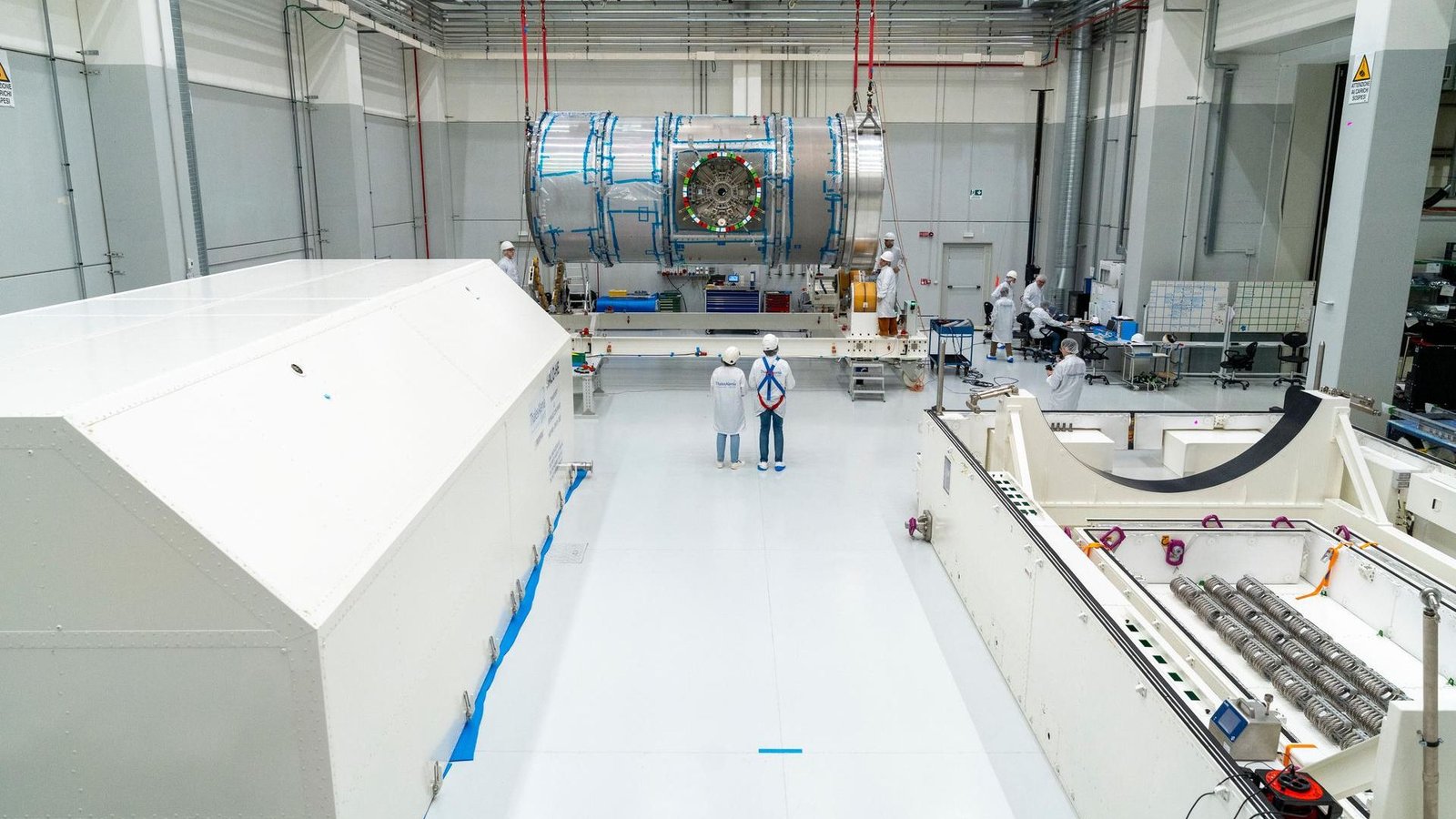
The HALO module for the defunct Gateway space station was another casualty of NASA’s altered Artemis plans, but had already incurred some injuries along the way. After its delivery to the United States from subcontractor Thales Alenia Space, in Turin, Italy in April 2025, Northrop Grumman discovered “widespread corrosion throughout the module,” the OIG report says.
NASA’s contract for HALO with Northrop Grumman Innovation Systems began as a $187 million sole-source acquisition in 2019, which had increased to $1.8 billion by September 2024. It reached $1.9 billion by the time NASA issued their stop work order in April, but was projected to continue to rise as delivery estimates were pushed to 2031.

Some of the blame for HALO’s mismanagement falls on NASA, which the OIG memo says put unrealistic expectations on Northrop’s progress. “Driven by the necessity to meet Artemis launch schedules, the Gateway Program worked toward unrealistic schedules throughout the life cycle of HALO,” OIG’s memo states, and cites a quote from Gateway’s own independent Standing Review Board that says, “lack of schedule realism may be driving suboptimal engineering decisions during development.”
The OIG report was issued amid an audit of “NASA’s management of developed assets for programs and projects terminated prior to launch or operations,” it says.
We are doing things differently now. NASA cannot take years longer than expected and spend billions more than planned when the world is waiting for the headlines only NASA can deliver. The programs covered in the report will free up more than $3 billion in the years ahead for… https://t.co/lx5fm1ZlEyJune 24, 2026
The OIG release included NASA’s reply to a draft of the memo, acknowledging the role of shifting mission parameters, resource shortages and issues within each contractor that contributed to rising costs and ongoing delays, but maintained that the restructuring of Artemis was designed specifically to move the agency away from such costly practices.
“These projections rely on past performance under outdated architectural assumptions that do not reflect the Ignition Day principles of discipline, affordability, simplification, and speed,” NASA’s response says.