


4 min readNew DelhiJul 24, 2026 06:00 AM IST
You check your blood sugar two hours after a meal, and it’s well within the target range. But the next morning, before you’ve even had breakfast, it’s significantly higher. If your post-meal blood sugar is around 6.5 mmol/L but your fasting reading is 8.5 mmol/L, you’re not alone. A similar query was posted on Quora as well: My blood sugar is 6.5 two hours after I eat, but it is 8.5 in the morning. Why?
Experts say this pattern is fairly common, especially among people with prediabetes and type 2 diabetes. The reason often has less to do with breakfast and more to do with what your body is doing overnight.

According to Dr Rajiv Kovil, Diabetes & Obesity Specialist at Zandra Healthcare, elevated morning blood sugar is usually linked to excess glucose production by the liver during the night rather than to what you ate the previous day.
DISCLAIMER: This article is based on information from the public domain and/or the experts we spoke to. Always consult your health practitioner before starting any routine.
Why it’s not always your dinner
During the early hours of the morning, hormones such as cortisol and growth hormone naturally signal the liver to release glucose into the bloodstream—a process known as the dawn phenomenon.
“A high fasting blood sugar despite a reasonable post-meal value usually reflects excess glucose production by the liver overnight rather than what was eaten at breakfast,” says Dr Kovil.
If the liver is insulin-resistant, it may release more glucose than the body needs, raising fasting blood sugar. He adds that this is not something to ignore, as fasting glucose reflects the body’s metabolic health overnight and deserves careful evaluation.
Story continues below this ad
What else can make your morning blood sugar rise?
 Triggers: Late dinners, carbohydrate-rich evening snacks, desserts after dinner, inadequate physical activity, poor sleep (Pexels)
Besides the dawn phenomenon, late dinners, carbohydrate-rich evening snacks, desserts after dinner, inadequate physical activity, poor sleep, stress, shift work, insulin resistance and certain medications such as corticosteroids can all contribute.
“In many people, the liver—not the last meal alone—is the main contributor to elevated morning blood sugar. Improving the evening routine can significantly improve fasting glucose,” he explains.
When should you be concerned?
If your fasting blood sugar consistently remains above 7.0 mmol/L (126 mg/dL) or continues to rise despite otherwise good glucose control, consult your doctor.
Dr Kovil recommends an HbA1c test to assess long-term blood sugar control and continuous glucose monitoring (CGM) to identify overnight glucose patterns. Your doctor may also review the timing or dose of your diabetes medication.
Story continues below this ad
Persistently elevated fasting blood sugar often points to significant insulin resistance and increased overnight glucose production by the liver, both of which should be addressed early to reduce long-term cardiovascular and metabolic risks.
How to keep fasting blood sugar under control
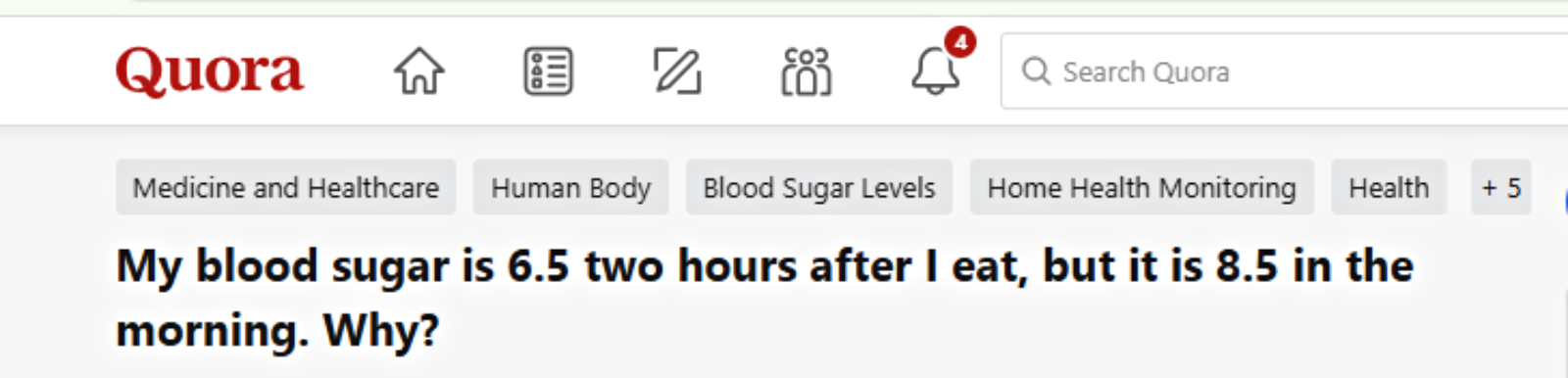 Screenshot of a health query posted on Quora
“The overnight period is one of the most important windows for metabolic health,” says Dr Kovil.
He recommends eating dinner at least two to three hours before bedtime, keeping it lower in refined carbohydrates and richer in protein, vegetables and fibre. Eating salad and vegetables first, protein next and carbohydrates last may also help reduce blood sugar spikes.
Other simple habits include avoiding desserts and late-night snacks, taking a 15-20 minute walk after dinner, getting adequate sleep, managing stress and exercising regularly. Bedtime snacks should be avoided unless a doctor has specifically advised them, such as for people at risk of nocturnal hypoglycaemia.
Story continues below this ad
“If fasting glucose remains high despite these measures, review medications with your physician rather than simply focusing on breakfast,” says Dr Kovil.
A high morning blood sugar reading doesn’t necessarily mean you’ve made the wrong breakfast choices. Often, it’s a reflection of overnight hormonal changes, liver activity and evening habits. Identifying the cause early and making targeted lifestyle changes can go a long way in improving blood sugar control and reducing the risk of future complications.
DISCLAIMER: This article is based on information from the public domain and/or the experts we spoke to. Always consult your health practitioner before starting any routine.