

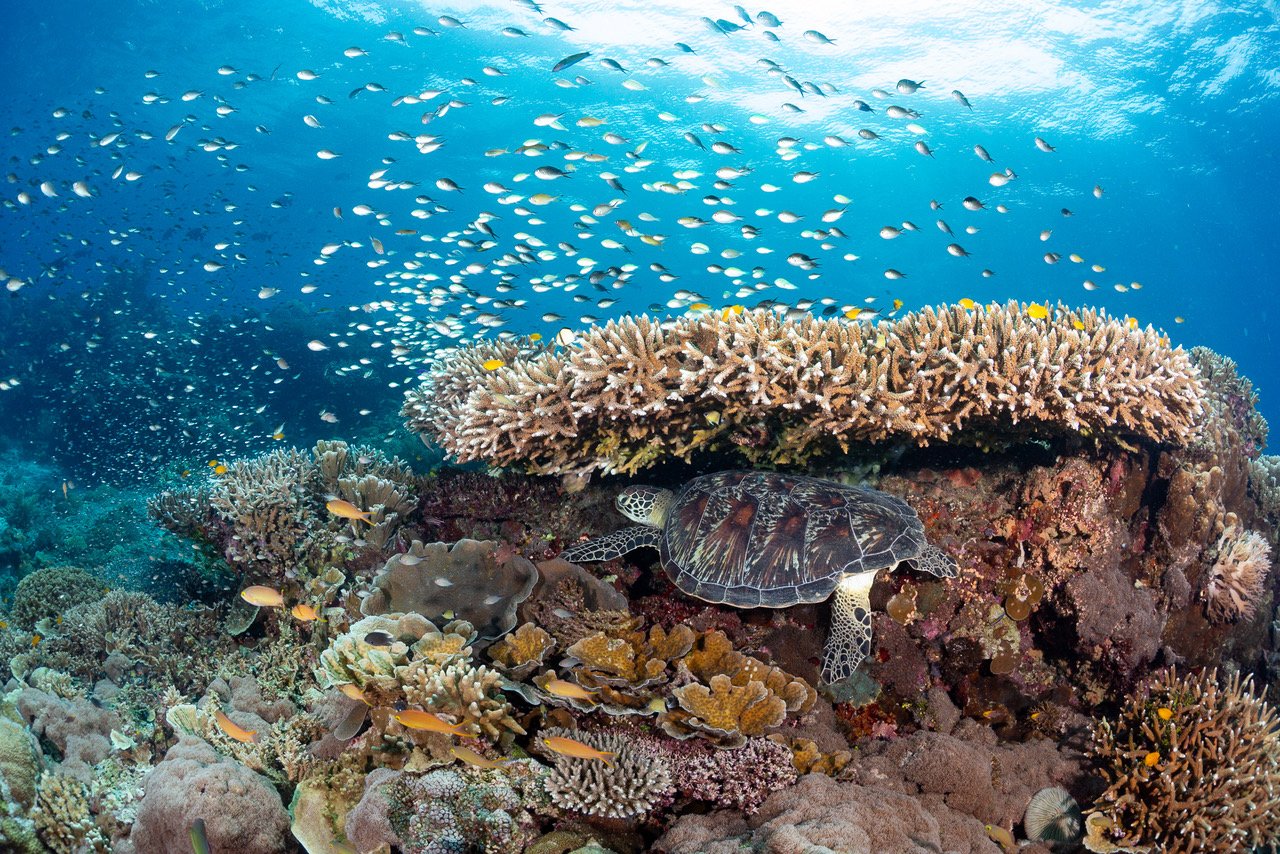
For years, the outlook for coral reefs has been increasingly bleak. Mass coral bleaching events caused by severe marine heatwaves have fueled repeated warnings that reefs are rapidly on an irreversible path of decline. But new research is challenging that narrative.
In a landmark study unveiled Tuesday, scientists have identified more than 64,000 square miles of coral reefs they believe have the potential to endure future warming. Spanning 71 countries and 100 territories, these resilient reefs make up roughly a third of the world’s reef systems.
“Coral reefs are often framed as ecosystems beyond saving,” said Emily Darling, a co-author of the study and director of coral reefs at the Wildlife Conservation Society. “Our research shows that there are three times more reefs that may be capable of surviving the climate crisis than previously thought.”
The research, known as the 50 Reefs+ study, includes a scientific paper and a detailed global map of some of the world’s most resilient reefs, created by SkyTruth, a technology nonprofit that uses satellite imagery and artificial intelligence to track environmental threats and protect biodiversity.
Using data from more than 45,000 coral field observations collected between 1960 and 2025, along with climate, oceanographic and human-impact data, researchers from the Wildlife Conservation Society and Macquarie University have produced the most detailed global assessment yet of coral reefs that show signs of being able to avoid, resist or recuperate from heat stress and other climate-related disturbances like cyclones.
“This is an important and encouraging contribution that reinforces our growing recognition that coral reef futures are not binary and that opportunities remain to identify and protect places where corals are most likely to survive and recover,” said Anne Cohen, a tenured scientist at the Woods Hole Oceanographic Institution, who was not involved in the 50 Reefs+ study.
The study builds on the original 50 Reefs assessment published in 2018, which provided the first overview of coral reefs most likely to withstand climate change. That initiative helped secure more than $100 million in funding dedicated to conserving these precious ecosystems.
The new analysis includes climate-resilient reefs across 30 additional countries and 54 territories and jurisdictions, highlighting a much broader range of reefs that can endure future warming.
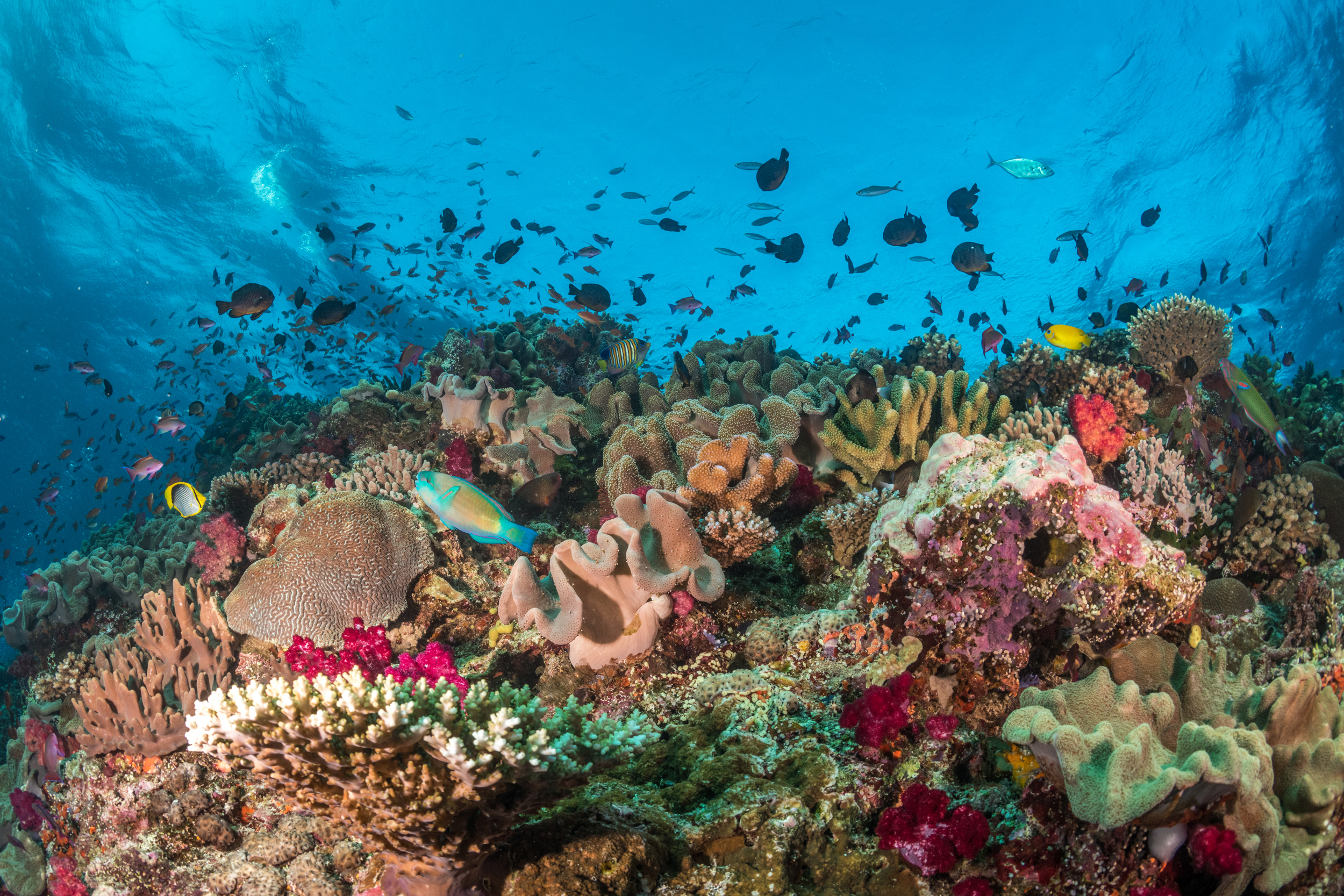
More than half of these are concentrated in just five countries: Australia, the Bahamas, Cuba, Indonesia and the Philippines. Researchers also located areas of resilience in Belize, Panama and the Turks and Caicos Islands that were not captured in the original assessment.
In the Turks and Caicos Islands, the findings were met with both optimism and caution from Alizee Zimmermann, executive director of the Turks and Caicos Reef Fund, a non-government organization that works to protect the British overseas territory’s coral reefs.
“The narrative that Caribbean reefs are simply ‘dead’ is inaccurate and can be harmful to progress on reef restoration and protection initiatives in the region,” she said. “However, it would be equally disingenuous to say that they are thriving.”
Over the last few decades, Caribbean reefs have been devastated by heat stress, disease and increasing pressures from coastal development, boating and tourism. Despite these challenges, Zimmermann said, many reefs in Turks and Caicos continue to support diverse fish communities and show signs of recruiting new coral larvae.
Still, she said, there is a significant lack of long-term data about coral reefs there, which makes her curious to know how the study concluded Turks and Caicos hosts climate-resilient reefs.
“Knowing how data deficient our historic monitoring and datasets makes me cautious of such a broad claim,” she said. “I would be interested in having more information on the surveys conducted and ground-truth the predictions made in this study so that we can use them to drive meaningful conservation action.”
This story is funded by readers like you.
Our nonprofit newsroom provides award-winning climate coverage free of charge and advertising. We rely on donations from readers like you to keep going. Please donate now to support our work.
The study’s findings were presented at the Our Ocean Conference in Kenya, a global summit aimed at bringing together governments, scientists, conservation groups and business leaders to advance ocean protection efforts. The conference, being held June 16-18 in the coastal city of Mombasa, is expected to generate new commitments on marine conservation, sustainable fisheries and climate resilience, including those aimed at protecting climate resilient reefs.
Just 28 percent of the climate-resilient reefs identified in the study fall within protected or conserved areas, according to the study. That leaves about 46,000 square miles of vulnerable ecosystems without formal safeguards from threats like water pollution from sewage, agricultural runoff and sediment loss, destructive and unsustainable fishing practices and poorly managed tourism and coastal development projects.
Now, the study’s authors are calling on governments to prioritize the protection of these reefs in national strategies aimed at tackling climate change and biodiversity loss, including efforts to meet the “30 by 30” target under the Kunming-Montreal Global Biodiversity Framework. The agreement, adopted by nearly 200 countries in 2022, calls for conserving at least 30 percent of the world’s land, inland waters and oceans by 2030.
“They can combine these global predictions with their own data, local knowledge and priorities to inform their decisions,” said Joseph Maina, a co-author of the study and associate professor at Macquarie University in New South Wales, Australia.
The Wildlife Conservation Society has already begun to work with individual countries to use the new data to “drive real conservation commitments,” Darling said.
On Tuesday, she said, Kenya signed the first high-level global commitment to protect climate-resilient coral reefs, joining more than a dozen other governments who have already pledged to use this type of science to determine which reefs to prioritize in future conservation efforts.
About This Story
Perhaps you noticed: This story, like all the news we publish, is free to read. That’s because Inside Climate News is a 501c3 nonprofit organization. We do not charge a subscription fee, lock our news behind a paywall, or clutter our website with ads. We make our news on climate and the environment freely available to you and anyone who wants it.
That’s not all. We also share our news for free with scores of other media organizations around the country. Many of them can’t afford to do environmental journalism of their own. We’ve built bureaus from coast to coast to report local stories, collaborate with local newsrooms and co-publish articles so that this vital work is shared as widely as possible.
Two of us launched ICN in 2007. Six years later we earned a Pulitzer Prize for National Reporting, and now we run the oldest and largest dedicated climate newsroom in the nation. We tell the story in all its complexity. We hold polluters accountable. We expose environmental injustice. We debunk misinformation. We scrutinize solutions and inspire action.
Donations from readers like you fund every aspect of what we do. If you don’t already, will you support our ongoing work, our reporting on the biggest crisis facing our planet, and help us reach even more readers in more places?
Please take a moment to make a tax-deductible donation. Every one of them makes a difference.
Thank you,

Oceans Correspondent
Teresa Tomassoni is an environmental journalist covering the intersections between oceans, climate change, coastal communities and wildlife for Inside Climate News. Her previous work has appeared in The Washington Post, NPR, NBC Latino and the Smithsonian American Indian Magazine. Teresa holds a master’s degree in Journalism from the Craig Newmark Graduate School of Journalism. She is also a recipient of the Stone & Holt Weeks Social Justice Reporting Fellowship. She has taught journalism for Long Island University and the School of the New York Times. She is an avid scuba diver and spends much of her free time underwater.