

By Michaela Küchler, Secretary General of the International Holocaust Remembrance Alliance
Published on
The opinions expressed in this article are those of the author and do not represent in any way the editorial position of Euronews.
Victims of persecution can be lost twice: first when their lives are taken, and then when their names are quietly mislaid by history.

ADVERTISEMENT
ADVERTISEMENT
For decades, one of the most haunting images of Nazi persecution was known simply as the “girl with the headscarf”. She was filmed looking through the closing doors of a train leaving the Westerbork transit camp and widely assumed to be Jewish. The image became famous. The girl did not. Only years later did historical research restore her identity.
Her name was Settela Steinbach. She was Sinti.
Settela was nine when she and her family were deported to Auschwitz-Birkenau in May 1944. She was most likely murdered there with her mother, two brothers, and two sisters on the night of 2-3 August 1944. Only the photograph survived. Her name, her identity, and the history of the people to whom she belonged almost vanished from the story attached to it.
Hundreds of thousands of Roma and Sinti people were persecuted and murdered during the Nazi era
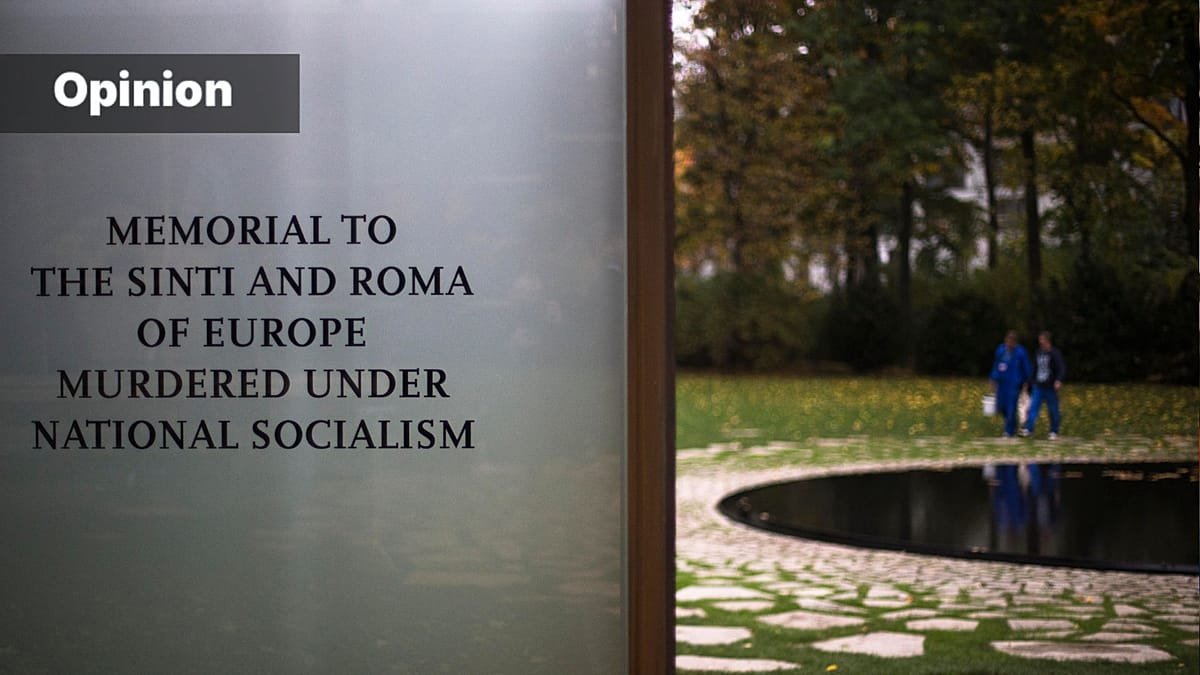
Every year on 2nd August, Genocide of the Roma Memorial Day, Europe remembers Settela and the hundreds of thousands of Roma and Sinti people persecuted and murdered during the Nazi era. The real question is what happens on 3rd August – and every day thereafter. It is crucial not to allow a memorial day to become an annual exercise in solemn words followed by institutional amnesia.
Roma and Sinti people were subjected to racist laws, imprisonment, forced labour, deportation, mass shootings and murder across Europe – yet their genocide remains one of the least recognised chapters of Nazi persecution.
That neglect did not end in 1945 – for decades, Roma and Sinti victims were denied recognition from national histories. Many survivors received neither justice nor proper acknowledgement. The prejudices that had helped make persecution possible did not obligingly disappear when the war ended.
Recognition remains patchy
Of course, some progress has been made. Some memorials have been established and research has certainly deepened. Survivors, descendants, scholars and organisations have painstakingly recovered names and histories. Indeed, it was such difficult and important work that gave the “girl with the headscarf” her name again.
But recognition remains patchy. In too many classrooms and museums, the genocide is still presented as an optional appendix to the history of the Nazi era rather than an integral part of it. Ask what happened to Roma and Sinti people under Nazi rule and the answer may still be a blank look. That silence is not the fault of young people born decades later – they cannot know what they have never been taught.
Nazi crimes did not begin with mass murder. They began with stereotypes, exclusion, paperwork, racial classification, and the steady removal of rights – the bureaucratic preliminaries to barbarism. Teaching this history shows how prejudice emerges as administrative and legal and eventually becomes lethal.
Teaching history must show Roma and Sinti as more than anonymous victims
It must also show Roma and Sinti people as more than anonymous victims. They had families, professions, communities, and ambitions. They resisted persecution and rebuilt lives afterwards. Settela was not merely the frightened child caught on film for a few seconds: she was a daughter and sister; her father was a trader and violinist. These facts restore the individuality that persecution tried to erase – they are not decorative detail.
As opportunities to hear directly from living survivors and witnesses become fewer, responsibility passes increasingly to institutions. Because recognition came so late, many Roma and Sinti voices were never recorded in the first place, making the testimonies that remain all the more precious. We must preserve the historical record while continuing to document the experiences of those who are still able to share them. Archives must be opened, sites connected to the genocide safeguarded, photographs correctly identified, and Roma and Sinti perspectives placed at the centre of education and commemoration.
Europe’s commitment to remembrance cannot be measured only by ceremonies held on 2nd August
The International Holocaust Remembrance Alliance’s “Recommendations for Teaching and Learning about the Persecution and Genocide of the Roma during the Nazi Era” were developed to turn that obligation into something more useful than good intentions. Designed for governments, policymakers, teachers, museums, memorial sites, archives and civil-society educators, they provide a practical framework for why this history should be taught, what students should learn, and how it can be approached responsibly. The Recommendations help countries bring this history into mainstream education and memory culture, safeguard the historical record, counter distortion, and ensure that teaching includes Roma voices, resistance and crucially – agency. They also offer guidance on curricula, educational resources, and teacher training, while recognising national and local experiences and involving Roma communities themselves.
But our Recommendations cannot manufacture political will. They can, however, remove the excuse that nobody knows what practical action looks like. Europe’s commitment to remembrance cannot be measured only by ceremonies held on 2nd August, however moving or well attended. It must be measured by what happens in classrooms, archives, museums, and public institutions throughout the year.
The test is whether future students will still encounter silence where this history should be taught– and whether people like Settela remain merely an anonymous face in an old film, or are remembered as people with names, families, and a history.
Europe cannot return those who were murdered. It can at least refuse to lose them twice.
A career diplomat, Michaela Küchler has held a range of positions including Press Attaché in Santiago de Chile, Cultural Attaché in former Czechoslovakia, and Consul General in Chennai. She also served as a negotiator for European Union enlargement and as a European policy adviser to two Federal Chancellors and three Federal Presidents. As Chair of the International Holocaust Remembrance Alliance (IHRA) German presidency in 2020, she spearheaded initiatives to counter distortion of the Holocaust and the genocide of the Roma.